Category: America

  • Elvis Presley birth anniversary: Rocking tribute to the King

    Published in Free Press Journal; Date: 07.01.2018

    As a teenager, Elvis Presley used to hang around at the iconic Beale Street, the hub of the music scene in Memphis. Little did he know then that in few years he would become not only Rock ‘n’ Roll’s biggest star, but also a cultural force of the 50s. Kalyani Majumdar pays tribute to the King.
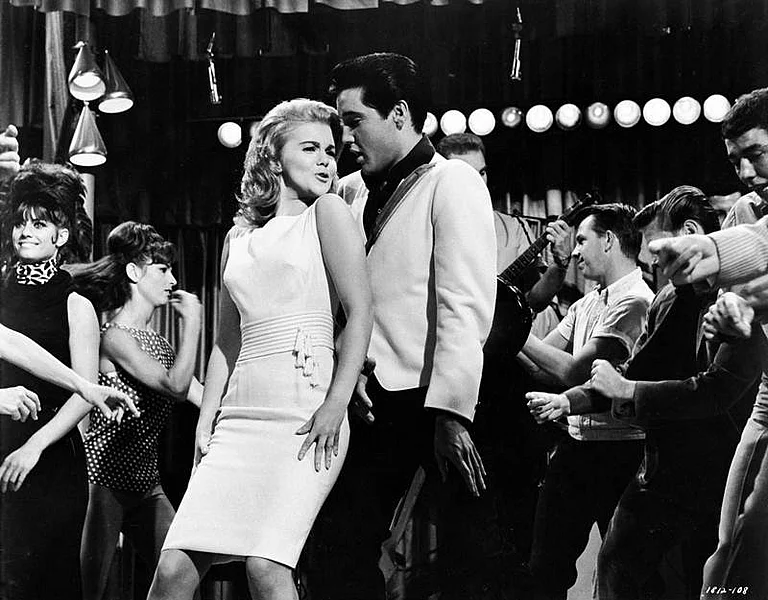
    Even today Elvis Presley’s soulful voice evoke the same magic that made him a star when the audience heard him on air for the first time. His music, dance moves and persona was something of a shock for the conservative 50’s American society, and it is safe to say that he did pave the way for the rock ‘n’ roll stars of the 60s. “Before Elvis there was nothing,” said John Lennon. That is just how big the Elvis phenomenon was.

    A humble beginning

    Elvis Presley was born on January 8, 1935 in Tupelo, Mississippi to Gladys and Vernon Presley. He had a twin brother who was still born. His parents did several day jobs to get by. On his eleventh birthday he wanted a bicycle and apparently his second choice was a rifle. The bicycle was too expensive and the gun obviously was a bad idea, so his mother got him a guitar instead. In 1948, the family moved to Memphis, and it was here that young Presley got his music influences from. During his teenage years he spent his free time at the black part of Memphis. Beale Street was known for its Blues and Jazz clubs. He would regularly go there to listen to B.B King and other popular black artists of the time. He finished his schooling from Humes High in 1953. He took up a job as a truck driver, but he never quit singing.

    Meteoric rise of Elvis Presley to stardom
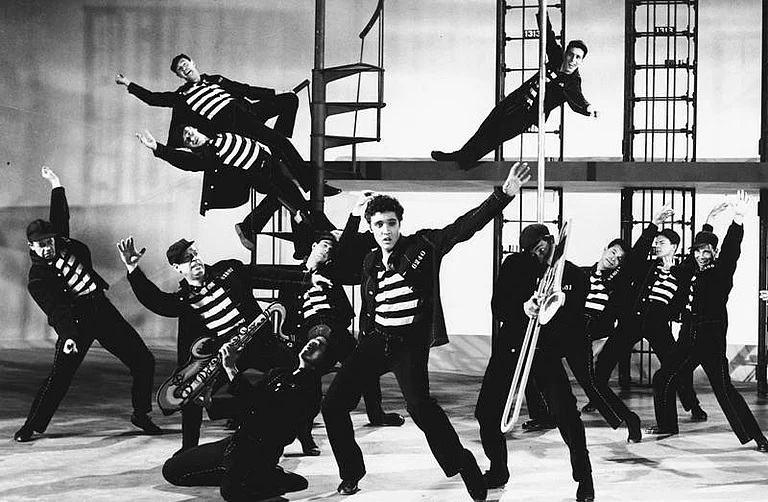
    Elvis Presley performing Jailhouse Rock

    In 1954, DJ Dewey Philips played Presley’s version of That’s All Right on his radio show for the first time. It was recorded at the legendary Sun Studio situated at downtown Memphis. After the song was aired the phones won’t stop ringing. The listeners were ecstatic and numerous requests poured in to play the song again. This was only the beginning of Presley’s popularity. In 1956, Presley became a national star. His songs, Heartbreak Hotel, Don’t Be Cruel, Hound Dog, Love Me Tender were all chart toppers. He was unstoppable.  He made his TV appearance with the Dorsey Brothers’ Stage Show and then on The Ed Sullivan Show. After conquering the radio and television, it was his turn to light up the big screen. Love Me Tender released in 1956 did not do that well. However, Jailhouse Rock in 1957 made an impact on the big screen. It had a strong storyline, fantastic songs along with Presley’s signature dance moves. One could even say that the title track of this movie was perhaps the first music video ever made.

    Elvis, the cultural movement

    It was the 1950s when Elvis Presley arrived in the music scene. The American society was conservative then. The demarcation between Black and White people was very stark. Cultural biases were very evident. However, Presley managed to blur that colour line between what was considered Black music and White music. No one before Presley had ever blended African-American R & B with country blues and gospel music, let alone a white Southerner. Unknowingly, he had broken the racial barrier through his music. His dance moves were considered provocative and he exuded sex appeal. He was not conventional and his music did not conform to the norms of that time. He was shaking and stirring the American society. His distinct edgy hairstyle and clothing were becoming a fashion statement for the teenagers. His fame was a clear sign that the youth wanted a change and he was epitome of that change.
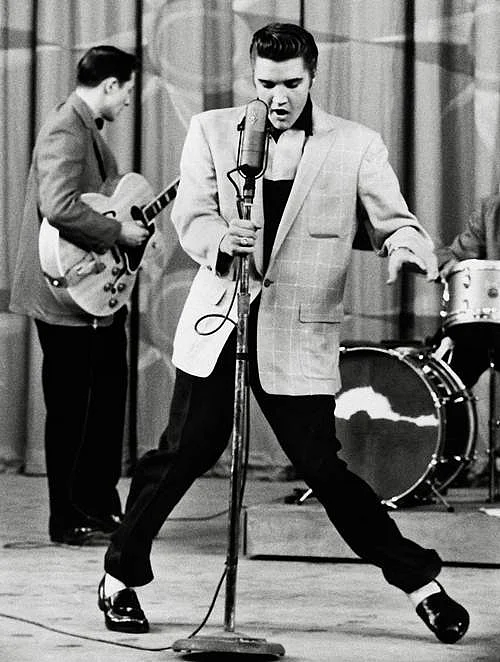
    His dance moves were considered provocative and he exuded sex appeal.

    The King had arrived

    People would either like or dislike him, but no one could ignore Elvis Presley. Initially, the popular family television programme, The Ed Sullivan Show had announced that he would not feature Elvis Presley on his show because his music and dance was considered vulgar and was posing a threat to the American society, especially the youth. But seeing the viewership ratings for other shows featuring Presley, Ed Sullivan could not ignore him anymore. However, Presley was shown performing waist up and even then the viewership was phenomenal for that particular episode. Never before had the world seen such hysteria at a music concert. His good looks coupled with his voice made women go frenzy at the sight of him. Teenagers were tattooing his name. America didn’t know what to make of it. Elvis Presley was a phenomenon and was creating the same magic internationally too. Presley was nominated 14 times for Grammy and had won the Grammy three times and was also the recipient of the Grammy Lifetime Achievement Award. He is believed to have sold more than one billion records worldwide, and his American sales alone had earned him gold and platinum awards.
    The U.S Army and Personal Life

    He was at the pinnacle of his music career when in 1958 he had to join the U.S Army. He served his country till 1960. It was also at that time that he met his future wife Priscilla Beaulieu. Post his stint in the army, Presley continued to give hits such as Are You Lonesome Tonight in 1960 and Can’t Help Falling In Love in 1961 to name a few. He married Priscilla in 1967, however the marriage didn’t last long and they divorced in 1972.

    If I can dream

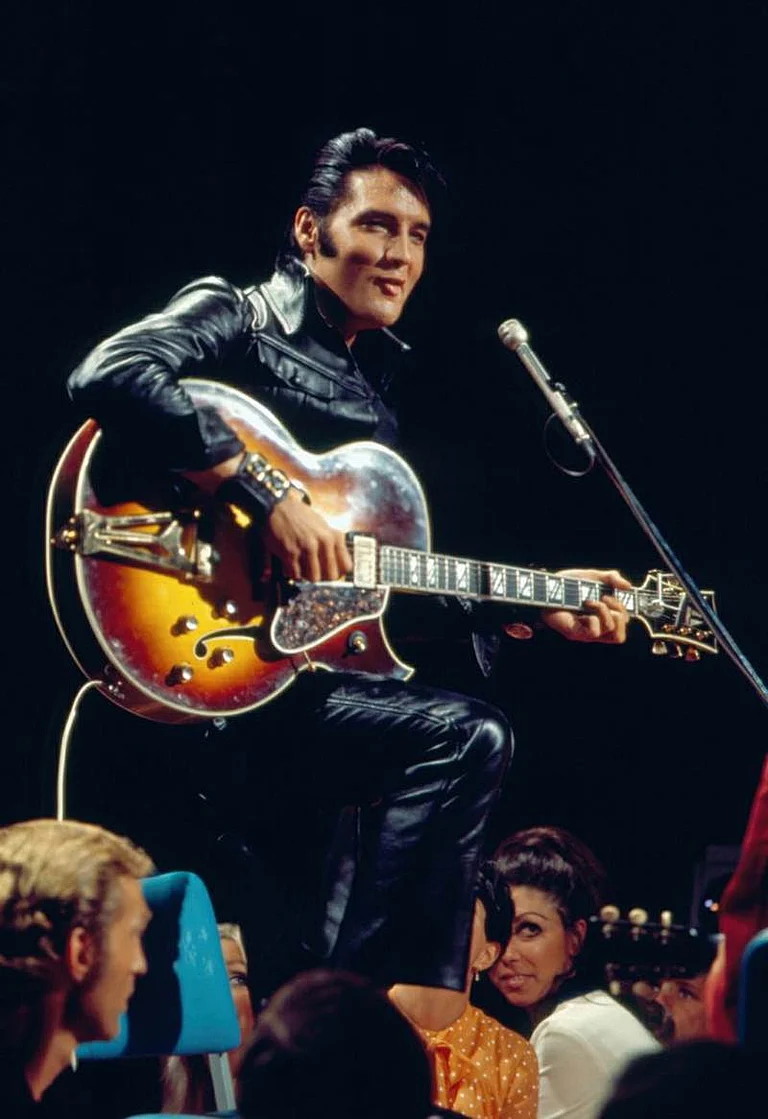
    In 1968, Presley came out with his comeback special with a soul searching and socially conscious song, If I Can Dream. Till this day, it is one of the most powerful and emotional performances by him. It was recorded two months after Martin Luther King Junior’s assassination and it made the lyrics and the song even more relevant for the time.

    Graceland

    In 1957, Presley bought the stately mansion, Graceland. It is now Elvis Presley museum and is one of the most visited houses in the United States. Millions of fans from all over the world visit his house which is now a pilgrimage of sorts. Elvis Presley was known for his kindness, humility and generosity. He would often give money to strangers and was always dedicated to his fans.

    On August 16, 1977 he was found dead by his then girlfriend, Ginger Alden in his bathroom in Graceland, reportedly of a heart attack. He was only 42.

    Play it again, Elvis

    While we may or may not see the ghost of Elvis walking in Memphis, he surely comes alive the moment his deep and heartfelt voice floats from the speakers and we can’t help falling in love with him all over again.

  • 2020 World of War: Review

    Published in Free Press Journal; Date: 12.11.2017; Reviewed by Kalyani Majumdar

    Are we heading towards the third world war? If yes, then will it be in the year 2020? Paul Cornish and Kingsley Donaldson in their book, 2020 World Of War, intricately poses all the different scenarios in the current world order that might eventually lead to the world going to war.

    The book offers a comprehensive account of the changing nature of war in today’s world. As we all understand that linear warfare is a thing of the past. It has become far more complex, from cyber security to rapid up gradation and development in weapon technology. The impact of automation technologies on battlefield, such as the unmanned drones are changing the nature of conflicts. Economics and geopolitics have their intricate roles in initiating a war-like situation almost in any part of the world. It helps that both, Cornish and Donaldson come from army backgrounds.

    Paul Cornish was educated at the University of St Andrews and the London School of Economics. He then served in the British Army (Royal Tank Regiment) and the Foreign and Commonwealth Office. Kingsley Donaldson is a retired Army officer. He has served on operations in a number of European and Middle Eastern countries in various roles that span from countering weapons of mass destruction through to negotiating with armed groups in Iraq.

    2020 World Of War, makes for a compelling read as the authors bring their personal experiences and inside knowledge to every plot that they talk about. Does the book give an impression of a grim future? Yes, it does to some extent, as Cornish and Donaldson says, “This book is knowingly and deliberately an exercise in worst-case analysis and as such it is, arguably, precisely how security and policy-makers and analysts should be spending much of their time in a chaotic and often confusing world.”

    Will there be a cyber-attack on the pentagon that might crash the greatest military power in the world? Will there be a standoff between India and Pakistan over Afghanistan? What will happen in Putin’s Russia? And what would be the repercussion of Trump’s policy of isolating US gradually from the rest of the world? Not to forget the pressing issues pertaining to mass migration in Europe due to ISIS. These and many more questions would rise in the reader’s mind while reading 2020 World Of War.

    The book says, “Across Europe, established political systems are experiencing a crisis in public confidence, resulting in the rise of anti-establishment figures, parties and movements, as evinced in extreme right-wing movements gaining popularity, in the Scottish referendum and in the UK ‘Brexit’ referendum in June 2016, and the US Presidential election later the same year.” The book provides a good understanding on why the world is struggling to contain conflicts and offers expert analysis and solutions to combat these situations.

    The book is thought-provoking and insightful. However, some of the scenarios provided in the book seems a bit far-fetched, although time will only tell if everything that 2020 World Of War says is plausible or not. We can only hope for the best, but plan for the worst.  It is a must read for those who are eager to understand how our world would look like in the near future.

    Book: 2020 World of War

    Authors: Paul Cornish and Kingsley Donaldson

    Publisher: Hodder & Stoughton/ Hachette

    Pages: 320; Price: Rs 699

  • The ‘spirit’ of America

    The ‘spirit’ of America

    From its humble beginnings to becoming a magnificent spirit, we embark on a quest to understand and celebrate the true ‘spirit’ of bourbon.

    Text: Kalyani Majumdar

    Published in Liquid (a bi-monthly magazine) pdf file of the pages ; Date: Nov-Dec 2013

    Maker’s Mark, Kentucky straight Bourbon; Picture credit: Maker’s Mark

    Mark Twain’s famous quote, “If I cannot drink bourbon and smoke cigars in heaven then I shall not go”, speaks volume about the all American spirit—bourbon. So, why is bourbon considered the native spirit of America? The answer lies in the American history itself, as bourbon is closely entangled with the story of United States of America, and has been an active catalyst in the political and economic struggle that created the nation. And, it is a fact that very few whisky drinkers outside the United States of America know the process of how Bourbon is made, and its difference from other whiskies of the world—in terms of its taste, colour and ingredients. It all began with the early settlers who travelled from England, Ireland, Scotland, Germany, France and Spain in the hope of making it big in the promising land. Along with them came their many skills, and distilling was one of them. The primary grain that farmers in the new land were growing was corn, and it was transported from the west of the Allegheny Mountains to the east for trading purposes. The horses could carry only a limited amount of grain on the mountainous and difficult terrain, so, converting the grain into whiskey was more profitable for these local farmers. But, in 1791, Congress levied excise taxes on all distilled spirits. And, the taxes levied by the central government escalated a feeling of injustice amongst the farmers of the west and led to a revolution that is known as the Whiskey Rebellion of 1794. Protests continued and many small-time distillers from the British colonies moved towards Kentucky, as the land was fertile to grow corn, and it was not until 1803 that the tax was repealed by Thomas Jefferson—the third president of USA. And, in 1964 the U.S. Congress recognised bourbon as America’s Native Spirit.

    The spirit Bourbon when poured in a glass has the colour of the sunset, and has distinctly oaky, woody notes coupled with a sweet and smooth taste, with flavours of vanilla and caramel, and is savoured perfectly on the rocks or with water. Unlike other whiskies, bourbon is aged in barrels that are for one-time use only, and the oak is charred, giving the liquor richness, spice and its brownness. As a result of its strong oak flavour, bourbon makes a great cocktail because it is not muted by any number of mixes. When making bourbon, the only thing that can be added is water and that too to bring down the proof, whereas other whisky makers can add colours and flavours. Interestingly, there are strict guidelines laid by the Federal Government, as to what could be called ‘bourbon’. For instance, the label cannot say ‘Kentucky Bourbon’ if it is not distilled in Kentucky, and it cannot be called ‘bourbon’ if it is not distilled in the United States. Also, it must contain at least 51 per cent corn in the fermented grain mash, and it must be aged for a minimum of two years, in new American white oak barrels that have been charred on the inside. It is believed that around 80 per cent of the flavour of bourbon whiskey comes from the oak barrels used to store them in, and temperature plays an important

    role in the final product. The premium bourbon whiskey labels are usually distilled in small batches and the main ingredients in making bourbon traditionally are corn, rye and barley. But, there are bourbons that replace rye with wheat. While talking about the true American spirit, it would be a travesty if we don’t mention the Maker’s Mark Distillery that has been recognised as ‘the world’s oldest operating bourbon whisky distillery’ by Guinness World Records. And, Maker’s Mark is the only bourbon that spells ‘whisky’ without an ‘e’ on their bottles, clearly, displaying the Scottish lineage of the family. Robert Samuels was a farmer by trade, and made Kentucky whisky only for personal use and close friends. He had arrived in Kentucky in the year 1780 and insisted on spelling whisky the Scottish way. Till 1840, the Samuels family was not commercial producers of bourbon. It was only when his grandson T. W. Samuels constructed a distillery at Samuels Depot, Kentucky that they started to produce bourbon commercially. But, the Maker’s Mark (warehouse image) that we know of today was created by Bill Samuels Sr., as he wanted to produce a bourbon without the bitterness, and so he did. In 1954, he made the first 19 barrels of whisk(e)y, using limestone water from the distillery’s spring-fed lake and a mash consisting of corn, barley and soft, red, gentle winter wheat. And, bourbon was rediscovered. Fifty years later, his son Bill Samuels, Jr. introduced Maker’s 46, a handcrafted, full-bodied bourbon without any bitterness, and it begins when fully matured Maker’s Mark is emptied from the barrel so that 10 seared French oak staves can be affixed to the sides. Then, Maker’s Mark, which is made with red winter wheat for a smooth taste, is put back in the barrel and aged for several more months, allowing the natural caramel, vanilla and spice flavours released by the staves to enhance the end product. Maker’s Mark bottles are easily known for their wax seal and each bottle is individually sealed to this day. Most bourbon whiskies are named after familial legends and every bottle narrates a story of the iconic bourbon that it is. Jim Beam has its own share of legends, and this bourbon was started by Jacob Beam in 1795. The Boehm family from Germany landed in America in 1740, and would later change their name to Beam and the rest as we know is history. The Beam family created one of the world’s finest and best-selling bourbons, and also a brand that has come to be a prominent presence all over the world including India. Jim Beam

    also creates small-batch bourbons for example, Knob Creek®, Basil Hayden’s®, Booker’s® and Baker’s® that are each handcrafted from their own special, time-honoured recipes in limited quantities, and is aged somewhere between six to eight years. In 2011, Fred Noe’s personal addition to the Beam collection, the Jim Beam® Devil’s Cut®, is made from the rich whiskey trapped inside the barrel wood after they’re emptied. This barrel-treated extract is blended with 6 YO Jim Beam® bourbon and bottled at 90 proof. The result is a robust, premium bourbon with deep colour, aroma and character. As aforementioned, bourbon because of its distinct taste can be a great mixer for cocktails, the brand that comes to mind is Wild Turkey. Although the Ripy Brothers’ distillery was already
    making bourbon whiskey for a long time, it was only in 1940 that Wild Turkey Bourbon got its name from a distillery executive during an annual Wild Turkey hunting trip. Try cocktails such as the 56 Julep that contains Wild Turkey® 101 Bourbon, or the Black Demure made with Wild Turkey® 81 Bourbon for a sweet palate, or enjoy a spicy cocktail with 1873 Manhattan—a wonderful concoction of Wild Turkey® 101 Bourbon with Carpano Antica Vermouth and Orange Curaçao. Buffalo Trace Bourbon Whiskey is another one to look out for, and one should consider themselves lucky if they can get their hands on a 15 YO Pappy Van Winkle, another Kentucky classic. So, next time you go for a drink, try this brilliant amber-coloured whiskey, and roll it in your mouth and enjoy the myriad flavours in every sip. Cheers!