Published in Free Press Journal; Date: 07.01.2018
As a teenager, Elvis Presley used to hang around at the iconic Beale Street, the hub of the music scene in Memphis. Little did he know then that in few years he would become not only Rock ‘n’ Roll’s biggest star, but also a cultural force of the 50s. Kalyani Majumdar pays tribute to the King.
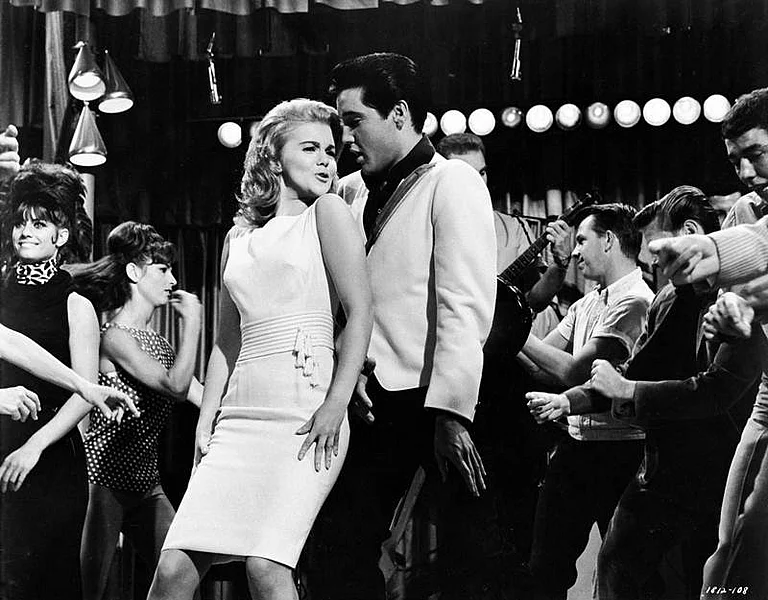
Even today Elvis Presley’s soulful voice evoke the same magic that made him a star when the audience heard him on air for the first time. His music, dance moves and persona was something of a shock for the conservative 50’s American society, and it is safe to say that he did pave the way for the rock ‘n’ roll stars of the 60s. “Before Elvis there was nothing,” said John Lennon. That is just how big the Elvis phenomenon was.
A humble beginning
Elvis Presley was born on January 8, 1935 in Tupelo, Mississippi to Gladys and Vernon Presley. He had a twin brother who was still born. His parents did several day jobs to get by. On his eleventh birthday he wanted a bicycle and apparently his second choice was a rifle. The bicycle was too expensive and the gun obviously was a bad idea, so his mother got him a guitar instead. In 1948, the family moved to Memphis, and it was here that young Presley got his music influences from. During his teenage years he spent his free time at the black part of Memphis. Beale Street was known for its Blues and Jazz clubs. He would regularly go there to listen to B.B King and other popular black artists of the time. He finished his schooling from Humes High in 1953. He took up a job as a truck driver, but he never quit singing.
Meteoric rise of Elvis Presley to stardom
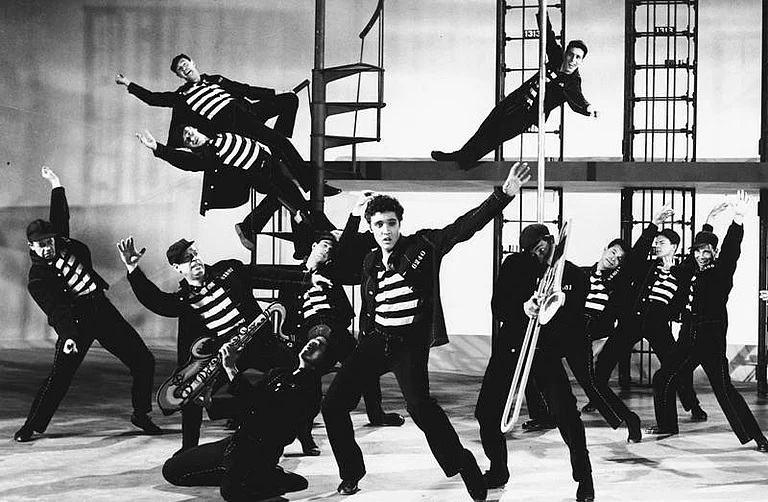
In 1954, DJ Dewey Philips played Presley’s version of That’s All Right on his radio show for the first time. It was recorded at the legendary Sun Studio situated at downtown Memphis. After the song was aired the phones won’t stop ringing. The listeners were ecstatic and numerous requests poured in to play the song again. This was only the beginning of Presley’s popularity. In 1956, Presley became a national star. His songs, Heartbreak Hotel, Don’t Be Cruel, Hound Dog, Love Me Tender were all chart toppers. He was unstoppable. He made his TV appearance with the Dorsey Brothers’ Stage Show and then on The Ed Sullivan Show. After conquering the radio and television, it was his turn to light up the big screen. Love Me Tender released in 1956 did not do that well. However, Jailhouse Rock in 1957 made an impact on the big screen. It had a strong storyline, fantastic songs along with Presley’s signature dance moves. One could even say that the title track of this movie was perhaps the first music video ever made.
Elvis, the cultural movement
It was the 1950s when Elvis Presley arrived in the music scene. The American society was conservative then. The demarcation between Black and White people was very stark. Cultural biases were very evident. However, Presley managed to blur that colour line between what was considered Black music and White music. No one before Presley had ever blended African-American R & B with country blues and gospel music, let alone a white Southerner. Unknowingly, he had broken the racial barrier through his music. His dance moves were considered provocative and he exuded sex appeal. He was not conventional and his music did not conform to the norms of that time. He was shaking and stirring the American society. His distinct edgy hairstyle and clothing were becoming a fashion statement for the teenagers. His fame was a clear sign that the youth wanted a change and he was epitome of that change.
The King had arrived
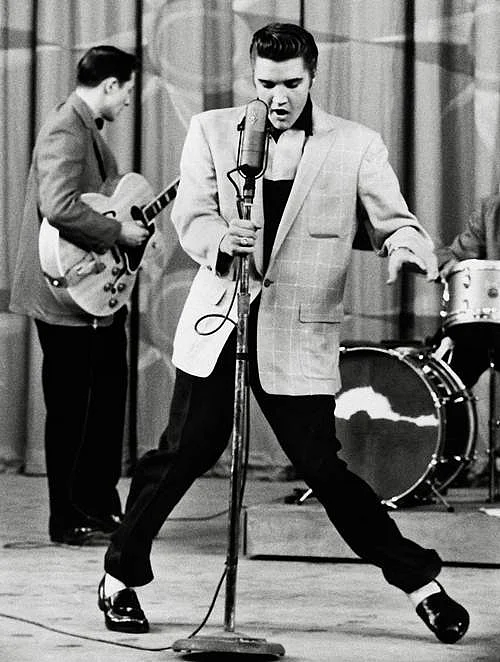
People would either like or dislike him, but no one could ignore Elvis Presley. Initially, the popular family television programme, The Ed Sullivan Show had announced that he would not feature Elvis Presley on his show because his music and dance was considered vulgar and was posing a threat to the American society, especially the youth. But seeing the viewership ratings for other shows featuring Presley, Ed Sullivan could not ignore him anymore. However, Presley was shown performing waist up and even then the viewership was phenomenal for that particular episode. Never before had the world seen such hysteria at a music concert. His good looks coupled with his voice made women go frenzy at the sight of him. Teenagers were tattooing his name. America didn’t know what to make of it. Elvis Presley was a phenomenon and was creating the same magic internationally too. Presley was nominated 14 times for Grammy and had won the Grammy three times and was also the recipient of the Grammy Lifetime Achievement Award. He is believed to have sold more than one billion records worldwide, and his American sales alone had earned him gold and platinum awards.
The U.S Army and Personal Life
He was at the pinnacle of his music career when in 1958 he had to join the U.S Army. He served his country till 1960. It was also at that time that he met his future wife Priscilla Beaulieu. Post his stint in the army, Presley continued to give hits such as Are You Lonesome Tonight in 1960 and Can’t Help Falling In Love in 1961 to name a few. He married Priscilla in 1967, however the marriage didn’t last long and they divorced in 1972.
If I can dream
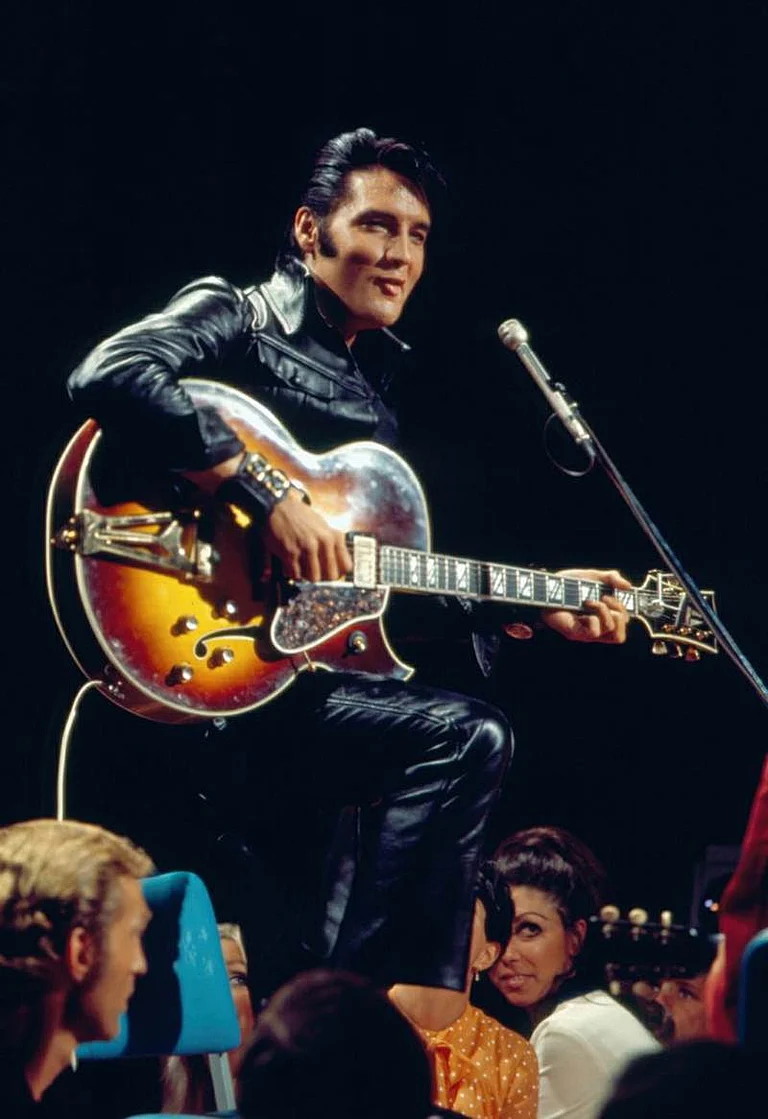
In 1968, Presley came out with his comeback special with a soul searching and socially conscious song, If I Can Dream. Till this day, it is one of the most powerful and emotional performances by him. It was recorded two months after Martin Luther King Junior’s assassination and it made the lyrics and the song even more relevant for the time.
Graceland
In 1957, Presley bought the stately mansion, Graceland. It is now Elvis Presley museum and is one of the most visited houses in the United States. Millions of fans from all over the world visit his house which is now a pilgrimage of sorts. Elvis Presley was known for his kindness, humility and generosity. He would often give money to strangers and was always dedicated to his fans.
On August 16, 1977 he was found dead by his then girlfriend, Ginger Alden in his bathroom in Graceland, reportedly of a heart attack. He was only 42.
Play it again, Elvis
While we may or may not see the ghost of Elvis walking in Memphis, he surely comes alive the moment his deep and heartfelt voice floats from the speakers and we can’t help falling in love with him all over again.

