Category: Published Articles

  • Why Oise in Northern France is a revelation

    Why Oise in Northern France is a revelation

    Even though Oise in Northern France, not far from Paris is usually missing from most travel itinerary, it is a revelation as KALYANI MAJUMDAR found out after visiting this picturesque place with its landscape, people and history.

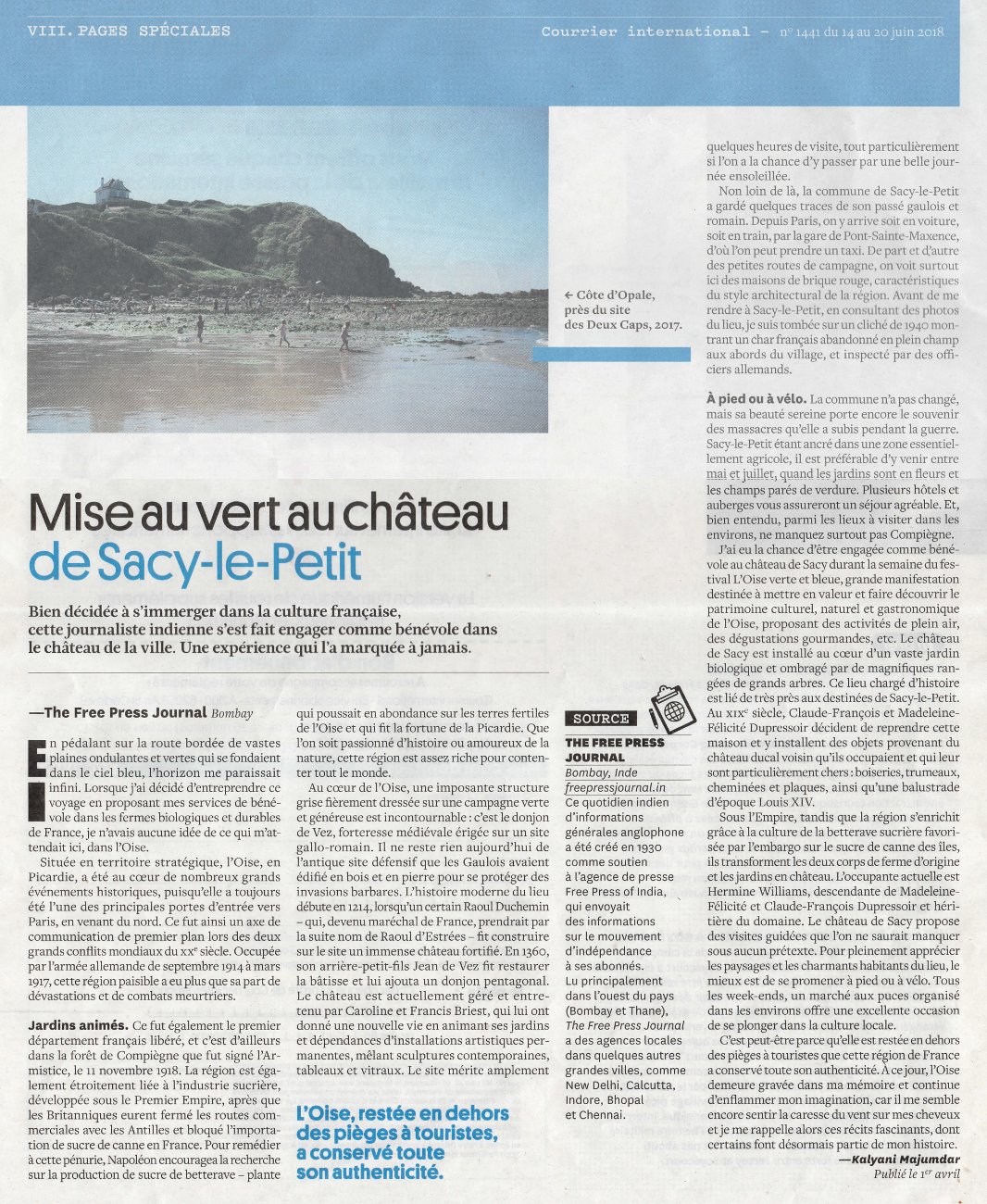
    Published in Free Press Journal; Date: 01.04.2018; My article has been translated by a French Magazine Courier International. Click here to read it in French

    The serene beauty of Sacy-le-Petit in Oise; Image credit: Kalyani Majumdar

    As I bicycled my way through the expansive undulating green flatland on both sides of the road that met the blue sky, it seemed like an endless horizon. When I decided to undertake immersive travelling through volunteering on sustainable and organic farms across France, I had no idea what was in store for me here in Oise.

    Digging into the history

    The geographic location of Oise in Picardy region is strategic to many important events in history as it has always been the passage to Paris and thus played an important role in communication during the two World Wars. Occupied from September 1914 to March 1917, ravaged by the battles of 1918, this peaceful region has had its share of bloodshed and war.

     It was also the first French department to be liberated, and even the signing of the Armistice took place in Compiègne Forest in Oise on 11 November 1918. Moreover, this region is also associated with the sugar embargo of the 19th century. During the Napoleonic war in the 1800s, the British had blocked the French trade routes with the Caribbean Islands which led to massive shortage of sugar in France. As a solution, Napoleon I introduced sugar beet to counter the sugar embargo. The fertile lands of Oise grew it in abundance and the region grew rich. Whether you are a history enthusiast or a nature lover, there is something here for everyone.

    Unmissable dungeon 

    Donjon de Vez; Image credit: Kalyani Majumdar

    Located in the middle of Oise, Donjon de Vez is hard to miss with its imposing grey structure that is surrounded by lush green landscape. It is a medieval dungeon dating back to Gallo-Roman period. Initially, it was a structure mainly made of wood and stone that was built to protect the Gauls against the invasions by the Barbarians, of which nothing is left today. In 1214, Raoul Ducheim, who later Latinised his name and came to be known as d’ Estrees, re-planned, fortified and restored the structure.

    He added the three-storied living quarters, some of which still remains. In 1360, his great-grandson Jehan de Vez added the pentagonal-shaped tower. The terrace consists of machicolations and perhaps it was the primary defense system. At its present state, it is maintained by Caroline and Francis Briest. Because of their efforts they have given a new lease of life to the structure. It showcases permanent art installations—sculptures, paintings and stained glass artworks. Especially on a nice sunny day one could easily spend few hours at the Vez.

    Sacy-le-Petit 

    The expansive flatland in Sacy-le-Petit; Image credit: Kalyani Majumdar

    Sacy-le-Petit is a commune in Oise and dates back to pre-historic and Roman period. One can either drive down from Paris or board a train from Paris to Pont-Sainte-Maxence. There are taxis available at the station. The winding roads are dotted with houses made of red bricks mostly. The villages of Picardy region has a distinct culture and architectural style that can be seen in this commune as well. Before visiting this place while looking through images I had come across a photograph from 1940, of an abandoned French tank sitting on a farmland in Sacy-le-Petit, being inspected by the Germans.

    It is the same commune, yet its serene beauty belies the gruesome bloodshed that this region has seen. From May to July would be the best time to visit this region when the flowers are in full bloom in the gardens, and farm lands are green. Sacy-le-Petit is majorly an agricultural area. There are inns and hotels available here for a comfortable stay. The popular places to visit nearby includes Compiègne.

    Chateau de Sacy 

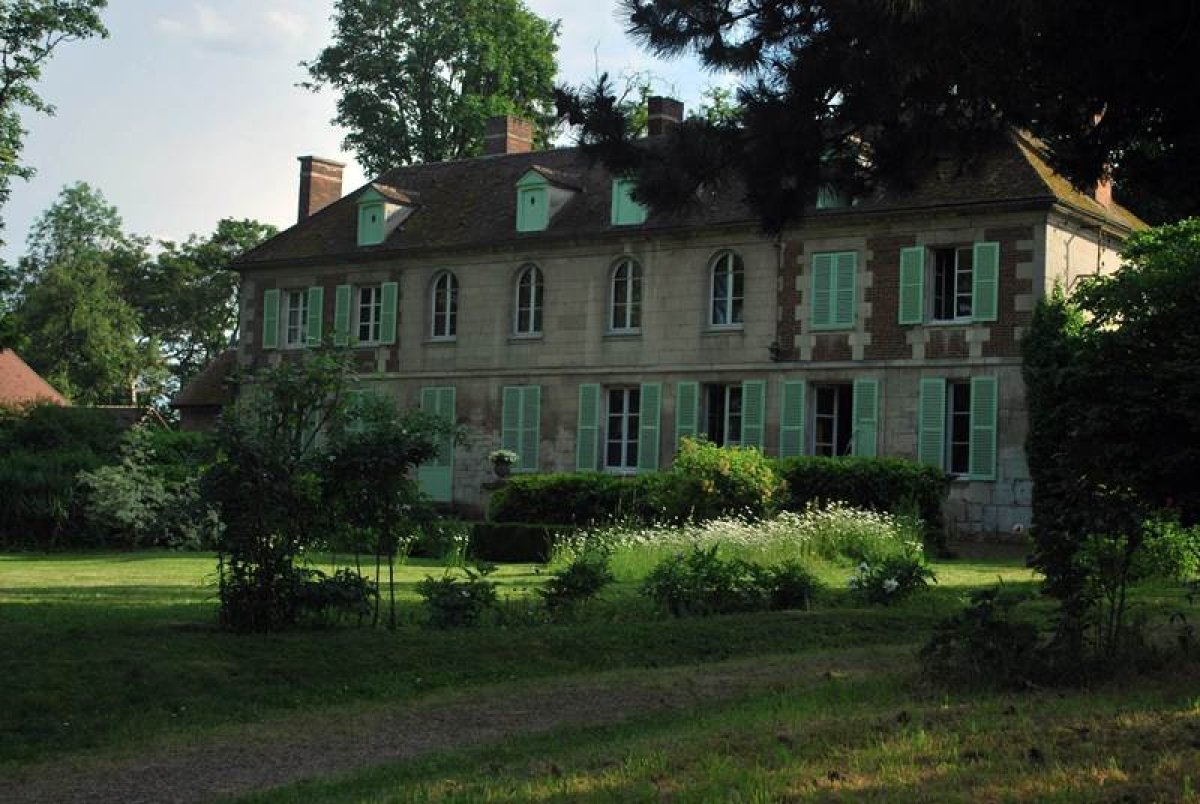
    Chateau de Sacy; Image credit: Kalyani Majumdar

    I was fortunate to volunteer at the Chateau de Sacy in Sacy-le-Petit during the same week as the festival of L’Oise Verte et Bleu, L’événement Grandeur. It is a festival to celebrate and discover the culture of Oise that includes outdoor activities, local culinary feasts and so on. Chateau de Sacy is situated in the middle of a large organic garden and is surrounded by a lovely collection of tall trees. The chateau is steeped in history and is closely linked to the history of Sacy-le-Petit. In the 19th century, Claude-François and Madeleine-Félicité Dupressoir had decided to take over this house and brought along things that were dear to them from their old castle, items such as, woodwork, trumeau, fireplaces and plates, the balustrade Louis XIV.

    Later on, as the region became rich by growing sugar beet during the sugar embargo they turned the two farms and a garden into a chateau. The current occupant is Hermine Williams, who inherited the house and is a descendant of Madeleine-Félicité and Claude-François Dupressoir.  There are organised tours of the Chateau de Sacy that should not be missed. Cycling and walking are the best way to see the sights and mingle with the friendly locals. Every weekend there is a flea market nearby, and is a great opportunity to immerse into the local culture.

    Perhaps the fact that this region of France has remained free from tourist traps, that it is still in its pristine form. For me, even now, Oise is embedded in my memory. It still continues to stir my imagination as I can still feel the wind in my hair and remember the intriguing stories that I have heard, some of which are now part of my story.

  • Yoga shows the way

    As Yoga mats with different colours are ready to be rolled out around the world, on the International Day of Yoga, KALYANI MAJUMDAR, explores the incredible journey of Yoga through the ages.

    Published in Free Press Journal; Date: 17.06.2018

    Whether it is Delhi, Mumbai, New York or any other city in the world, these days it is a common sight to see people walking around with sling bags, over their shoulders in a variety of patterns, holding their yoga mats. And, the phenomenal popularity of this ancient knowledge is evident from the number of yoga studios mushrooming around the world. Unfortunately, with yoga being a billion dollar industry now, it is not uncommon to find new styles of yoga being introduced every other day. Hence, it has become even more important to create awareness among people for the real understanding of the ancient roots of yoga, and its philosophies.

    A step towards the right direction was taken back in December 11, 2014, when United Nation decided to dedicate 21st June as the International Day of Yoga, thanks to the initiative of the Indian Prime Minister, Narendra Modi. This will not only help in spreading awareness, but also, provide a platform for the organisations, institutes and practitioners that are dedicated in imparting the authentic system of yogic practices, and showcase it to the masses.

    United we stand

    The word ‘yoga’ is derived from the Sanskrit root ‘yuj’, meaning ‘to join’ or ‘to unite’. To put it simply, yoga leads to the union of individual consciousness with that of the universal consciousness, and thus, creating a perfect harmony of the body and mind, with nature. It is a subtle science and should not be limited by calling it a set of exercises, it is rather a very subtle process to control and focus, one’s energy in a particular direction. Thousands of years ago, when yoga originated in India, it was mostly practised by sages and monks. Eventually, some great practitioners of yoga helped in the spreading of this ancient knowledge around the world, and they were, Swami Sivananda and his disciple Swami Vishnudevananda, T. Krishnamacharya, B.K.S Iyengar, Shri Yogendra, and so on.

    World beyond boundaries

    In 1893, Swami Vivekananda had landed on American soil after a long voyage, to give his famous speech in Chicago, wherein, he introduced Indian philosophy and heritage, to the world. Then in 1920, Paramhansa Yogananda, went to the United States. His book Autobiography of a Yogi, introduced the concepts of meditation and Kriya Yoga to the westerners.

    Fast forward to 1957, Swami Vishnudevananda, arrived in San Francisco and rose to be one of the most popular Yoga teacher in the West. He founded the Sivananda Yoga Vedanta Centers, headquartered in Montreal, one of the largest networks of Yoga schools in the world. For those, who would like a deeper understanding of Yoga, The Complete Illustrated Book of Yoga by Swami Vishnudevananda is a wonderful book to read.

    Another name to be reckoned with, when it comes to spreading Yoga in the West, is B.K.S Iyengar. His teaching technique focused on body alignment and commonly used props such as, blocks and belts. In 1966, B.K.S. Iyengar’s book, Light on Yoga was published. By the 70s, yoga and spiritual teachings were spreading in the West like a wildfire.

    At the UN Headquarters

    Coming back to 2018, the United Nations, Headquarters in New York is gearing up to celebrate the International Day of Yoga. It has scheduled several yoga asana classes, lectures on yogic philosophies and presentations. This year, Sivananda Yoga session at the UN, will be taught by Swami Paramananda. He is the leading Hatha Yoga Teacher at the Sivananda Yoga Vedanta Center in New York, and the Sivananda Yoga Ranch, which he also manages. When asked about the benefits of practising yoga, he said, “The regular practice of Yoga enables one to experience a deeper and more subtle dimension of oneself. A space which is always peaceful and positive, and is completely independent of external circumstances. So, as we become more aware of that treasure within, it reduces anxiety, anger, and jealousy. Daily practice of yoga, does not just make you healthier, stronger and more flexible, but also, it frees you from all the different causes of suffering. Don’t wait! Start yoga, today!”

    What you seek is seeking you!

    While talking to several yogis and yoginis from all over the world, it is interesting to see how yoga practitioners are making it a better world, bit by bit. Leticia Ruiz, from Mexico is a Yoga practitioner and the associate owner, at the Solaris Yoga School in San Luis Potosi, Mexico. She says, “Yoga came into my life in my early 20s. At the beginning, I only got to know the physical part of it, and gradually came to know the philosophy that changed my way of viewing the world and brought happiness in my life. During my training, my first students were cancer patients and that motivated me to learn more. Nowadays, I am also leading a volunteer group of yoga teachers for cancer patients at a local hospital.”

    Carl Codling, from London is a yoga practitioner and teacher. While sharing his yogic journey, he stated, “Yoga for me, was a profound healing process, I arrived at the practice looking to both get in shape and to learn some simple relaxation techniques to help deal with stress. I soon found however, that twisting and stretching my body in to these strange new positions was also helping me to confront and release a lot of pent up emotion and baggage from way back in my past. Now, a few years down the road, this is a primary driving force behind being a yoga instructor: To help others face and move beyond their demons.”

    The path to yoga is different for different people. Sometimes one might find yoga on their own, and sometimes it is introduced by others, like, how it happened with Kaushlendra Kumar Thakur, as he shared his story, “Physically I was active since my collage days. I was boxing at district level, swimming, windsurfing and so on. But, I realised that all these sports involve a lot of aggression, which eventually became a part of my life. I thank my father and elder sister, for suggesting yoga to me, that’s when I started my journey.” Thakur teaches yoga at SwaSwara in Gokarna, India. He added, “Bending your body is not as important as the bending of your mind, it has often been misinterpreted in the West. You cannot control what goes on, outside. But, you can always control what goes on, inside.”

    Newbies, come here!

    Once you start with your daily yoga practices, you will eventually realise that you cannot leave yoga confined to the yoga-mat. But at the same time you will also realise that investing on a good yoga-mat is important — thickness, grip and most importantly, if you are clinging on to your mat, afraid that you might slip, then it is not the mat for you. Also, hydrating yourself is important, hence, buy an eco-friendly water bottle that you can refill.

    Be patient and compassionate towards yourself and as you progress in yoga, it will reflect in your daily actions, diet, behaviour and you will become more blissful. On that note, just close your eyes and take a deep breath and relax.

  • Printmaking in Bengal

    Printmaking in Bengal

    The ongoing exhibition at Project 88 on Prints from Bengal: Modernism in Colonial India explores the process of printmaking in Bengal and its role in understanding the socio-political climate in British India of the early to mid-20th century. Kalyani Majumdar brings the story.

    Published in Free Press Journal; Date: 10.06.2018

    Ramkinkar Baij, Untitled, Woodcut on Paper, 5 x 7.5 inch

    An active art space now, Project 88 was once a century-old metal printing press, situated in Colaba, Mumbai. So, when the art gallery decided to organise an art show on prints from Bengal, it came full circle with its own history. The exhibition explores the nuances involved in printmaking as an art form, by some of the stalwarts from the art world who changed the modern Indian art scene of the twentieth century.

    Art as an expression

    Artists have often used art to express their observations especially during the time of unrest, human suffering and oppression. Hence, when one looks at the series of prints exhibited at Project 88, it provides a keen understanding of the social life of Bengal and also the political scene in colonial India. The artists whose prints are exhibited at the gallery are, Gaganendranath Tagore (1867 – 1938), Mukul Chandra Dey (1895 – 1989), Ramendranath Chakravorty (1902-1955), Ramkinkar Baij (1906 – 1980) and Rani (Dey) Chanda (1912 – 1997). They were all born in the undivided Bengal in British India and were all associated to Santiniketan.

    Ramendranath Chakravarty, Untitled, 1935, Woodcut

    They grew up during a period when Bengal was going through a lot of political and social upheavals. These artists saw the unrest caused due to partition of Bengal in 1905 on communal lines. Followed by the shifting of the capital from Calcutta to Delhi and its repercussions, they played their part in the Swadeshi movement and attempted to find an Indian identity in colonial India. Apart from Gaganendranath Tagore, who died in 1938, the other artists also saw the, Bengal famine, communal violence followed by the partition of Bengal and the Indian independence. These events had great impact on the artists’ works. Also, all the five artists were highly inspired by the 19th century Bengal Renaissance and that too played an important role in how they communicated through their art.

    From Bichitra Club to Kala Bhavan

    Founded in 1915 by the Tagores in their Jorasankho house in North Kolkata, the primary aim of Bichitra Club was to explore different styles of printmaking and painting. Bichitra, which means, variety, was spearheaded by the three nephews of Rabindranath Tagore — Gaganendranath, Samarendranath and Abanindranath. They had turned the south veranda of the Jorasankho house into a club, fashioned on the concept of an art salon. The club offered classes on printmaking, painting, music, pottery, carpentry and so on. Rabindranath Tagore defined it as the model school and its members and students also had Pratima Devi and Sunayani Devi from the Tagore family as students. It was here that the printmaking techniques were explored in a manner that saw the emergence of woodcuts and lithographs as art forms.

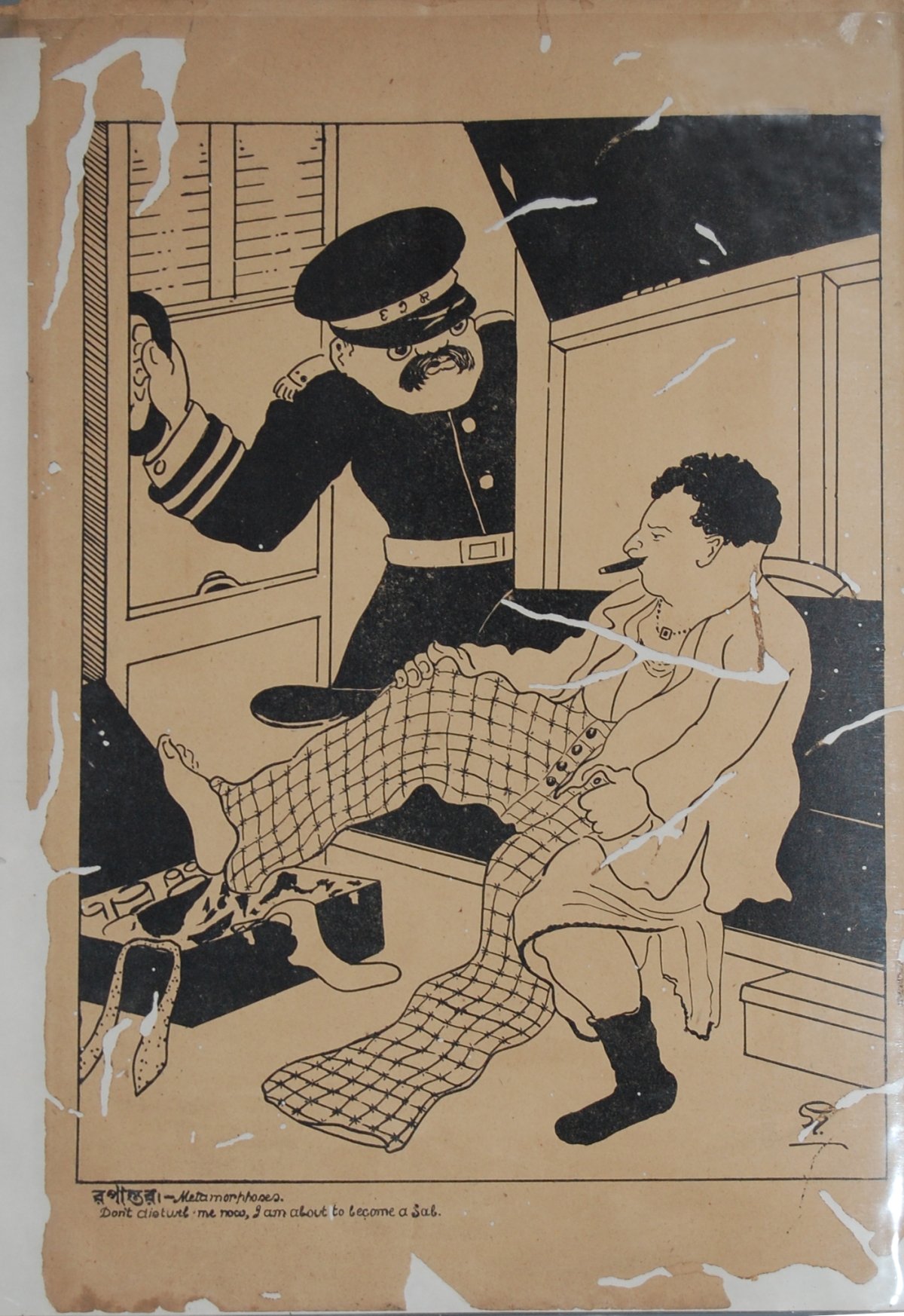
    Gaganendranath Tagore, Metamorphoses, 1917, Lithograph on Paper, 17 x 11 inch

    The practice of printmaking as a fine art medium became extremely popular with the establishment of Kala Bhavan in 1919. It is the fine arts faculty of the Visva Bharati University, Santiniketan. And, it was none other than Nandalal Bose, a student of Abanindranath Tagore, and also the creator of the logo for Bichitra Club, who made printmaking a popular art form in Kala Bhavana. Ramendranath Chakravorty, Mukul Chandra Dey, Rani Dey (Chanda), Ramkinkar Baij were all trained at Santiniketan.

    Tagore’s satirical depiction of urban life

    Artist Gaganendranath Tagore had special interest in lithography, and even went on to set up his own lithographic press in 1917.  He was anti-colonial and had no qualms to express it openly through his art. His prints exhibited at the gallery shows, caricatures that made satiric commentaries on colonial Indian urban life. One of his works on display, titled, Metamorphosis: Don’t disturb me now, I am about to become a sab show a Bengali babu pretending to be a European, as he is shown wearing a trouser on top of his dhuti. Through his humour, he would often take on the corrupt politicians and showcase the hypocrisy that existed in the Indian society. Even today, Tagore is considered one of the finest and influential modernist printmakers, India ever had.

    Depiction of rural and tribal life

    The prints by Chakravorty, Dey, Baij and Chanda at the exhibition, depicts the rural and tribal (santhal) life.  Ramendranath Chakravorty began his formal art education in Government School of Art, Calcutta/Kolkata in 1919, but in two years he left for Santiniketan for the newly established Kala Bhavan. It was here that he found his mentor, Nandalal Bose. Chakravorty’s ability to capture the rural Bengal life can be seen clearly in his wood engravings. His work, Untitled, woodcut from 1935 is one such example. His works often expressed a duality, wherein, it finds influences from both the revivalist movement in Bengal and the Swadeshi Movement that was rising during that period. However, he was always keen on exploring techniques prevalent in Japan and Europe.

    Mukul Dey, Filling the Pitchers, Hand Coloured Dry point Etching on Paper, 6 x 8 inch

    Mukul Chandra Dey, was one of the prominent member of the Bichitra Club. In 1916, he went to US to learn the technique of dry-point etching. He came back to Santiniketan in the 1920s. His exhibit at the gallery titled, Filling the Pitcher looks hand-painted as the artist has used a variety of tints and smudges to define his subjects.

    Ramkinkar Baij went to Santiniketan to become a sculptor and painter, however he also found interest in the process of printmaking. He connected easily with the tribal lifestyle and throughout his lifetime his works revolved around his tribal subjects. In one of his prints at the show, the Vande Mataram chant is inscribed on the top along with a partially visible face of a man and on the foreground the print has jagged uneven broken shapes. His monochromatic woodcuts has dynamic characteristics, combined with a certain ruggedness that makes his prints stand out from the rest.

    Rani (Dey) Chanda, was Mukul Dey’s sister. It was Rabindranath Tagore who encouraged her to pursue art. She went to Santiniketan and studied painting, music and dancing. She was imprisoned for anti-British activities for a while. In 1932, Mukul Dey published a portfolio of 25 linocuts by his sister. Her prints are a beautiful contrast of black-and-white compositions creating a dreamlike effect of rural Bengal. Whether it’s the huts in moonlit night or a boat riding the waves, she created magic with her perfect lines and balance of black and white.

    Event Detail:

    When: On till June 16

    Timings: 11 AM to 7 PM

    Venue: Project 88, Ground Floor, B.M.P. Building, Narayan A Sawant Rd, Azad Nagar, Colaba, Mumbai

    (Image credit courtesy: The artist, Galerie 88 & Project 88, Mumbai)


  • Art Deco: The Mumbai connection

    Art Deco: The Mumbai connection

    freepressjournal_import_2017_09_regal

    When a design movement called Art Deco flourished between the two World Wars in Europe, it made its way to Mumbai around the same time and found many takers in the city. Kalyani Majumdar delves into the story.

    Published in Free Press Journal; Date: 03.09.2017

    freepressjournal_import_2017_09_taxi-1-2

    Did you know that Mumbai has the second largest number of Art Deco buildings in the world right after Miami? For most people, it comes as a surprise. Possibly the reason could be that Mumbai is mostly synonymous with the Gateway of India that is an Indo-Saracenic architecture or the famous CST (formerly the Victoria Terminus), a neo-Gothic architecture. So, where are the Art Deco buildings? There is no doubt that Mumbai cityscape is dotted with iconic architectural masterpieces from the colonial period, and walking around South Mumbai is like visiting a museum displaying different architectural styles. However, if you pay attention on the built structures while walking around the Oval Maidan, Marine Drive and Colaba it is not difficult to spot these Art Deco buildings with their signature design elements such as symmetry, geometric designs and decorative motifs on the façade.  Curiously, one might even wonder what it was about Art Deco-style that it found so many connoisseurs in the city. To understand that we need to dive into the history of Art Deco.

    A movement that started in France

    Art Deco derived its name from the French words “Arts Décoratifs”. It was an exhibition that was held in Paris in 1925 called the Exposition Internationale des Arts Décoratifs et Industriels Modernes (International Exposition of Modern Decorative and Industrial Arts). To get selected for the exhibition the works had to be modern that was without the influence of past design-styles.

    Originally, the exposition was to take place in 1915, but was postponed due to the First World War. To a great extent the War had a strong influence on Art Deco’s popularity. The devastation and loss due to the war had left everyone disillusioned of the future. The horrors of war were being expressed through many new art movements that came up around the 1920s such as Cubism, Surrealism and Fauvism. Literary works by Ernest Hemingway and Scott Fitzgerald give us a fair idea of the society of that time.

    With socio-political changes taking place in Europe and around the world, the exposition was a success. Art Deco found many takers as there was something very appealing about this style that was modern and had moved away from the formal design styles that was prevalent till then. Post World War, the world was looking for optimism and that was exactly what Art Deco represented with its simple geometric lines, decorative motifs that brought in inspirations from around the world, and the use of vibrant colours. It was heralding the machine age with the use of technology.

    The designs could be replicated easily, thus bringing down the manufacturing costs along with the introduction of stainless steel, plastics and other unconventional materials. Apart from architecture, this design movement influenced jewellery, automobiles, and furniture designs as well. In the world of architecture Art Deco was fast becoming popular all around the world with the US giving the world the two iconic Art Deco buildings of that era, the Chrysler Building and the Empire State Building. As Art Deco rose in popularity the world over, it had surely become an international movement from its French origins.

    Art Deco found its way to Mumbai

    The time when Art Deco was taking over America, especially Miami, another city across the globewas fast becoming the second home for Art Deco to flourish in. It was none other than Mumbai. It was on the world map as an important port city for British India. Every new trend that was prevalent in the West found a home in Mumbai. In the 1920s the well-heeled and educated Indians from the city that were making frequent trips to Europe brought back the Art Deco style with them back home.

    freepressjournal_import_2017_09_TAXI

    Between 1920s and 1940s Art Deco graced the South Mumbai landscape, especially the residential buildings on Marine Drive that came up on the newly reclaimed land around the same time, thanks to the Backbay Land Reclamation Scheme.  With its optimistic and modern designs that had moved away from the imprint of colonial design-styles such as the Gothic and the Victorian, the Mumbai home owners wanted to do up their properties in the Art Deco style. Art Deco was vibrant and had a global appeal. It was the trend everyone wanted to be part of. Thus, in India just like in the rest of the world, Art Deco made its presence in a big way.

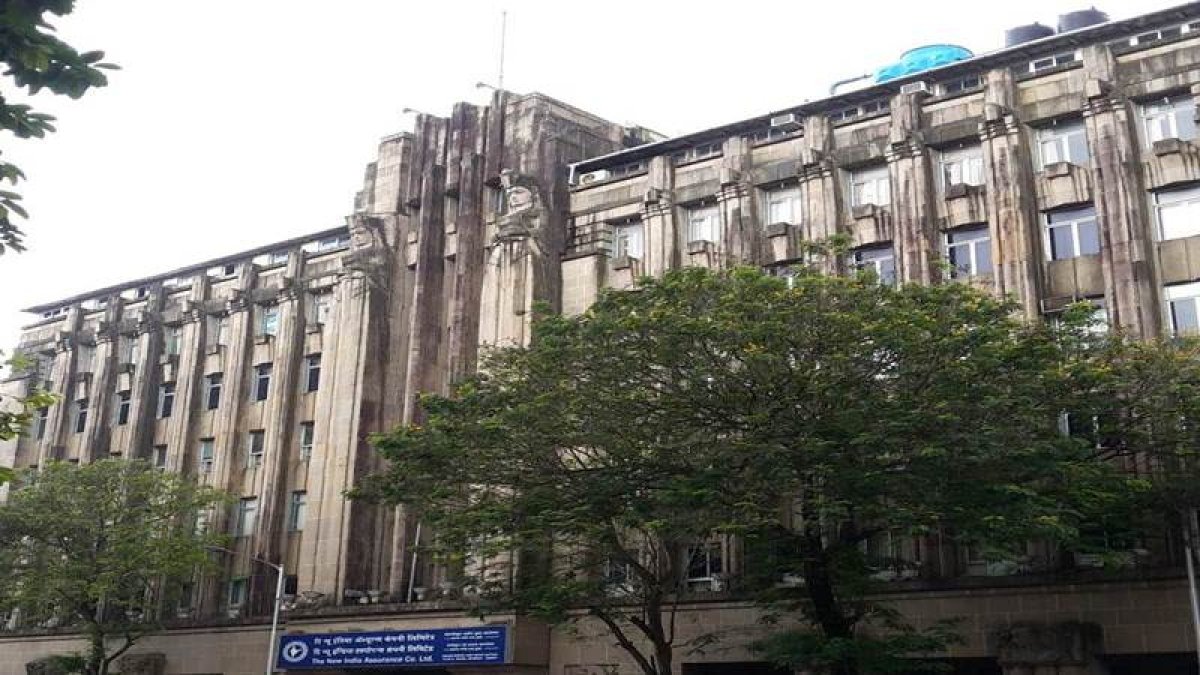
    Apart from the geometric patterns and the need for symmetry, one also observes nautical elements being part of the Art Deco buildings in Mumbai. One can see the new age design elements on buildings such as the Eros Cinema right across Churchgate station that was completed in 1937, or the decorative motifs on the façade of the iconic Regal Cinema in Colaba that was opened to public in 1933. Another notable Art Deco building is on the Mahatma Gandhi Road in Fort — The New India Assurance Building. It has bas reliefs depicting rural life in India, but what catches your attention first are the two huge statues on the façade that appears of Egyptian origin. It is indeed a long list of beautiful Art Deco buildings that exist in the city.

    So, next time when walking on the streets of Mumbai do pay attention to the buildings that you pass by, you might stumble upon an Art Deco hidden somewhere in the urban cluster of high rises that stands as a testimony of the era that was popularly known as the roaring 20s or the Jazz Age.