Category: Travel diary

  • Starry Starry Nights in Lossar village in Spiti.

    I was part of a Heritage project in Lossar village in Spiti. It is at an altitude of 13,402 feet and is the first village in Spiti after crossing Kunzhum Pass.

    By Kalyani Majumdar

    A view of the Lossar Village. Photo clicked by Kalyani Majumdar

    On the day when I arrived to Lossar village in Spiti Valley of the Lahaul and Spiti district, it was not an ordinary day. Someone had died in the village, so there was a general quietness in the already quite and remote village. Lossar also has the check post where the Indian Army checks your passport. When I had arrived I had no idea what adventures and beauty awaited in the village.

    The Manali and the upper regions were going through a dry spell throughout July 2004 but then in the first week of August 2004 all hell broke loose when torrential rains brought along with it flash floods which washed away Kothi bailey bridge, Kothi is around 13 km north of Manali on the Manali-Leh highway. How exactly the people of Spiti were affected? Well, Spiti was already remote, but the landslides made it a valley disconnected from the rest of the civilization for sometime — I am not being a tad bit dramatic when I say that we were cutoff from the rest of the world. (In the following posts I will try to describe the region and the situation more graphically).

    So, the flash floods brought along a huge quantity of debris consisting of old trees left-over timber and large boulders, which completely destroyed this bridge. Just sometime back the Shimla-Spiti circuit had been affected due to a massive landslide at the Malling Nullah making movements from Shimla to Spiti difficult. (This itself has a very interesting story that I will tell in the part 2 of this post).

    I was there to refurbish the Rural Museum at Lossar and its interior along with some conservation work on the manuscripts and Thangkas (Buddhist religious paintings done on silk or cotton).

    Top left: I am cleaning a Thangka painting; Top right: An old manuscript; Right: My fellow team member Jeremie helping me refurbish the rural museum; Bottom: A view of the Lossar rural museum

    Let me remind you, this was also the 2004-2005 when in Himachal Pradesh only BSNL mobile network worked and that too not in the remote areas of Spiti and Lahaul. So, we had to travel all the way to Kaza to make a phone call from a paid booth there were only two booths and there were times when I remember we used to get a ride all the way to Kaza but then the phone lines would be down so an absolute waste of all the travel and an entire day. Yes, such were those places. We had to stay in these places for 3 to 5 months at a stretch till the projects were over and then come down to our head office in Gurgaon. So, we were accustomed to this local lifestyle. Everybody in the village knew us.

    Alongside the heritage project, we were also having a massive Alternative Energy project going on and the Pragya team were to set up a windmill that would produce 6.1 KW of energy, enough to run a primary health centre, a women’s weaving community centre, a rural library and the rural museum. The parts of the windmill were also stuck due to the landslides. How the entire windmill was brought up to Lossar itself makes an interesting story in itself.

    Witnessing a rainbow. Photo by Kalyani Majumdar

    Remote areas such as Lossar had a lack of power supply and due to this zero power supply the night sky at Lossar was the clearest at an altitude of 13,402 feet above sea level, the air was clear and without light pollution it was a magnificent view. You could spot all the constellations so clear with your naked eyes. I remember after the windmill was installed I often used to sit under the solar panels on the roof to protect myself from the strong wind and stare up at the sky and enjoy the silence and the stillness of the night that only a place like Lossar could provide.

    Then one morning I even had the opportunity of seeing a perfect rainbow (left).

    When I look back to these moments, I can only feel fortunate to have been given such work opportunities that made me spend such long times in these places.

    Well the story does not end here. I will publish the second part of this story that will talk about the certain rituals that the villagers follow regarding the dead and more about what happened when the landslides secluded us from the rest of the valley.

    I want to thank: Gargi Banerji (Founder-Director, Pragya) and Sunil Pillai (Director, Pragya).
    The Pragya Team members: Mala, Bhaskar Reddy, Sourav Roy Choudhuri, Jeremie Robert, Anurag Mishra 
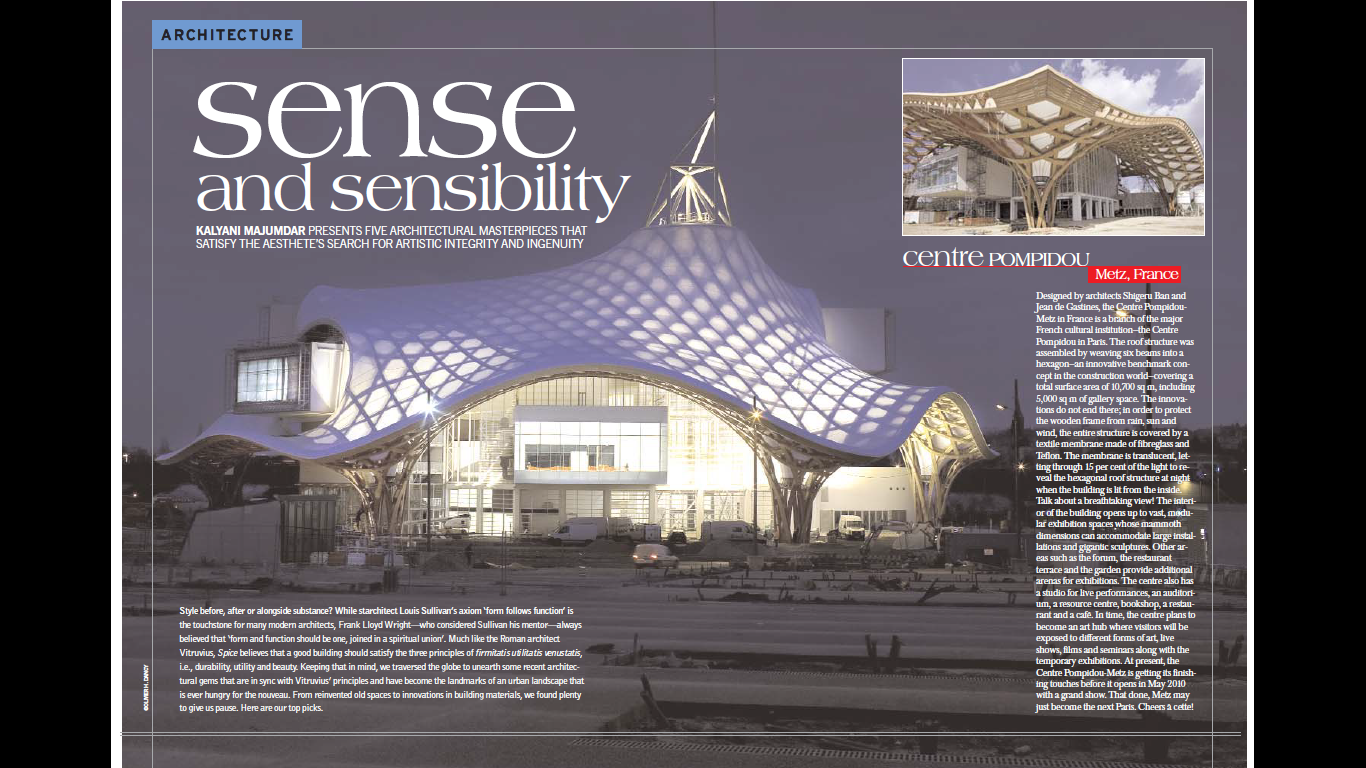
  • Sense and Sensibility

    Sense and Sensibility

    KALYANI MAJUMDAR PRESENTS FIVE ARCHITECTURAL MASTERPIECES THAT

    SATISFY THE AESTHETE’S SEARCH FOR ARTISTIC INTEGRITY AND INGENUITY

    Published in India Today, Spice magazine | 2010

    Style before, after or alongside substance? While starchitect Louis Sullivan’s axiom ‘form follows function’ is the touchstone for many modern architects, Frank Lloyd Wright—who considered Sullivan his mentor—always believed that ‘form and function should be one, joined in a spiritual union’. Much like the Roman architect Vitruvius, Spice believes that a good building should satisfy the three principles of firmitatis utilitatis venustatis, i.e., durability, utility and beauty. Keeping that in mind, we traversed the globe to unearth some recent architectural gems that are in sync with Vitruvius’ principles and have become the landmarks of an urban landscape that is ever hungry for the nouveau. From reinvented old spaces to innovations in building materials, we found plenty to give us pause. Here are our top picks.

    Centre POMPIDOU, Metz, France

    Designed by architects Shigeru Ban and Jean de Gastines, the Centre Pompidou-Metz in France is a branch of the major French cultural institution—the Centre Pompidou in Paris. The roof structure was assembled by weaving six beams into a hexagon—an innovative benchmark concept in the construction world—covering a total surface area of 10,700 sq m, including 5,000 sq m of gallery space. The innovations do not end there; in order to protect the wooden frame from rain, sun and wind, the entire structure is covered by a textile membrane made of fibreglass and Teflon. The membrane is translucent, letting through 15 per cent of the light to reveal the hexagonal roof structure at night when the building is lit from the inside.

    Talk about a breathtaking view! The interior of the building opens up to vast, modular exhibition spaces whose mammoth dimensions can accommodate large installations and gigantic sculptures. Other areas such as the forum, the restaurant terrace and the garden provide additional arenas for exhibitions. The centre also has a studio for live performances, an auditorium, a resource centre, bookshop, a restaurant and a café. In time, the centre plans to become an art hub where visitors will be exposed to different forms of art, live shows, films and seminars along with the temporary exhibitions. At present, the Centre Pompidou-Metz is getting its finishing touches before it opens in May 2010 with a grand show. That done, Metz may just become the next Paris. Cheers à cette!

    Conga ROOM Los Angeles, US

    Designed by the award-winning Belzberg Architects and co-owned by a group of LA glitterati including Jennifer Lopez and Will. I. Am of the Black Eyed Peas, the Conga Room in Los Angeles is no ordinary nightclub. For over a decade, the club was a local cultural landmark and a centre for salsa and rumba. Then, in 2006, it closed down for two years before reopening in December 2008 in the new LA Live complex in downtown Los Angeles, with a grand show that reflected the vibrant energies of Barcelona and Mexico city. Clubbers entering the building at ground level and climbing up a staircase to reach the 1,500 sq m dance floor are greeted by a tornado-like cylindrical, acrylic structure that acts as both a spatial organiser and star attraction. In sync with the club’s Latin feel, the 20-foot tall  ‘tornado’ snakes its way up the floors to the club ceiling where it morphs into a diamond pattern that’s derived from the classic rumba dance step. The thousands of panels that come together to form the gorgeous ceiling work are not just for beautification but also to soundproof the room. To further intensify the experience, the room boasts an LED lighting system which changes the colour and atmosphere of the space at the push of the button.

    Hoto FUDO Mt Fuji, Japan

    Is it an igloo? Or is it an edifice from a sci-fi thriller? Neither, actually. It’s a noodle restaurant at the foot of Mount Fuji. Designed by Takeshi Hosaka Architects in 2009, Hoto Fudo serves quintessential Japanese cuisine alongwith food for the aesthetic soul. The curved organic shape of the one-storey building is formed by a steel rod frame reinforced with concrete. The free standing, cave-like structure is designed to stay open in all but the most extreme weather conditions, with rain falling at the edges of the interiors, fog entering through the large openings in the wall, and winds circulating through the concrete shell. Only on the coldest of days are the curved acrylic doors pulled shut. It’s not as bad as it sounds: 60-mm-thick urethane insulation on the outside of the reinforced concrete shell secures a stable temperature for the building. The lighting inside is simple and the interiors minimalist with fuss-free wooden furniture. The total built-up area runs to 734 sq m, with 530 sq m allocated for seating, 140 sq m for kitchens, and the rest given over to the restrooms. The USP of Hoto Fudo lies in its look and a location that flirts with the elements. Imagine the relish of a perfect bowl of noodles with the spectacular watercolour of Mt. Fuji in the background. There are some things that money can buy!

    Guangzhou OPERA HOUSE Guangzhou, China

    The high notes of Chinese opera will be reverberating across the Guangzhou night sky as the new opera house preps up to open before the Asian Games this November. The credit for the spectacular design of the opera house goes to Pritzker prize winning architect Zaha Hadid. Overlooking the Pearl river, the opera house lies at the heart of Guangzhou’s cultural site development. Its unique ‘twin boulder’ design seeks to enhance urban function by opening access to the riverside and dock areas and creating a new dialogue with the emerging new town. The total building area is 70,000 sq m, of which the opera house covers 42,000 sq m. The ‘larger boulder’ holds a theatre with 1,800 seating capacity and matching rooms for equipment, administration, recording studio and art exhibition hall while the ‘smaller gravel’ holds a 400-seat multifunctional hall. Not bad for a building which almost got destroyed in a fire in May last year.

    Fish MARKET Istanbul, Turkey

    Buying fish will never be the sameagain for the people of Besikta, in Istanbul, with the GAD (Global Architectural Development)designed, state-of-the-art fish market that has replaced the old market that was in a shambles. Completed in 2009, the structure is made of steel and concrete and is triangular in shape. The sea shell-like form covers the entire site of 320 sq m, with large openings at the street level. The sturdy concrete shell provides a column-free interior thus optimising the usage of space. Six stainless steel display stands of various sizes are illuminated by 150-watt Edison bulbs—commonly used in fish markets in Istanbul—suspended from the ceiling. The design of the market is such that both the underside and the top of the shell can be used for artistic interventions— some events are already being planned for this year. The Besikta fish market project is a community effort by the people of Besikta to revitalise and beautify their landscape. The timing couldn’t be better since Istanbul has been selected as the 2010 European Capital of Culture by the EU council. Kemal Pasha would have been pleased!

  • MANY HANDS, MANY FORMS – KUMARTULI

    MANY HANDS, MANY FORMS – KUMARTULI

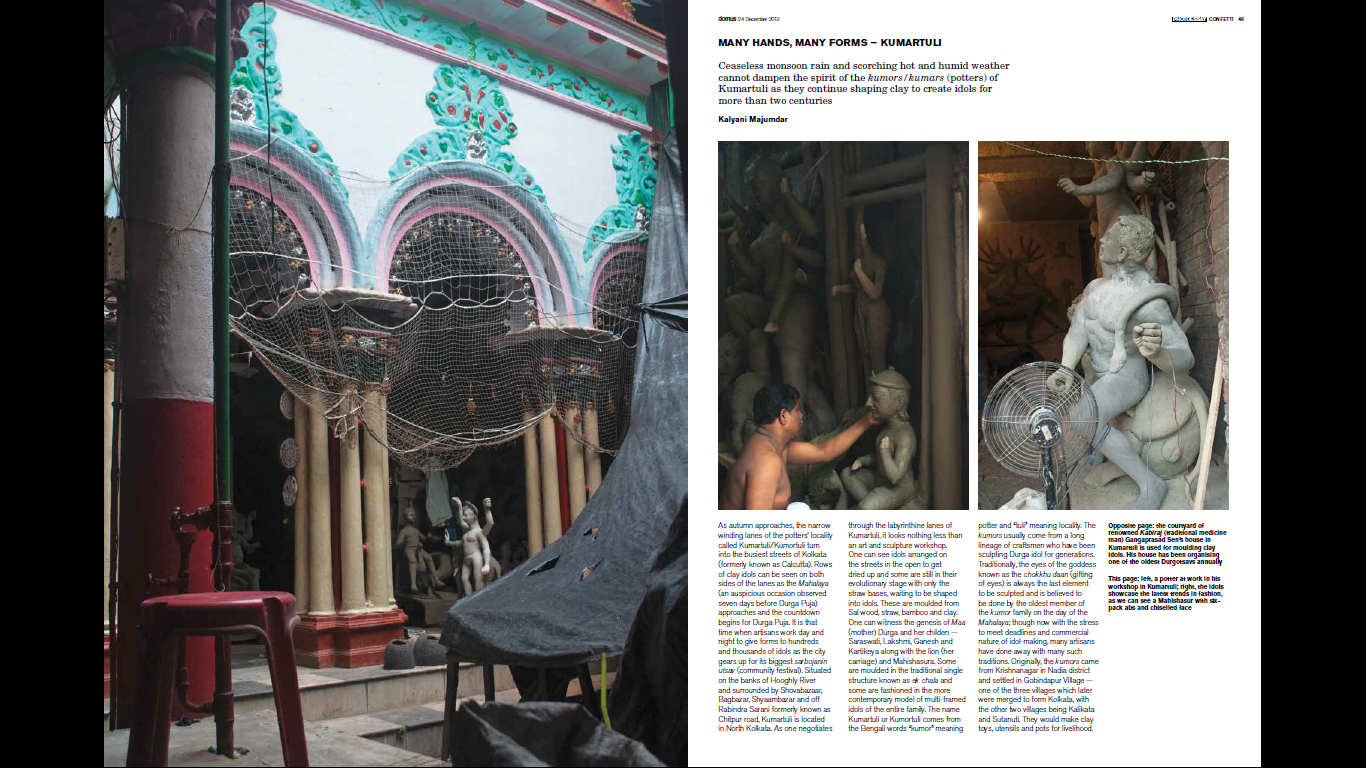
    Photo essay by Kalyani Majumdar | Published in Domus India | Nov, 2013

    Ceaseless monsoon rain and scorching hot and humid weather cannot dampen the spirit of the kumors/kumars (potters) of Kumartuli as they continue shaping clay to create idols for more than two centuries.

    The courtyard of
    renowned Kabiraj (traditional medicine
    man) Gangaprasad Sen’s house in
    Kumartuli is used for moulding clay
    idols. His house has been organising
    one of the oldest Durgotsavs annually

    As autumn approaches, the narrow winding lanes of the potters’ locality called Kumartuli/Kumortuli turn into the busiest streets of Kolkata (formerly known as Calcutta). Rows of clay idols can be seen on both sides of the lanes as the Mahalaya (an auspicious occasion observed seven days before Durga Puja) approaches and the countdown begins for Durga Puja. It is that time when artisans work day and night to give forms to hundreds and thousands of idols as the city gears up for its biggest sarbojaninm utsav (community festival). Situated on the banks of Hooghly River and surrounded by Shovabazaar, Bagbazar, Shyaambazar and off Rabindra Sarani formerly known as Chitpur road, Kumartuli is located in North Kolkata. As one negotiates through the labyrinthine lanes of Kumartuli, it looks nothing less than an art and sculpture workshop.

    One can see idols arranged on the streets in the open to get dried up and some are still in their evolutionary stage with only the straw bases, waiting to be shaped into idols. These are moulded from Sal wood, straw, bamboo and clay. One can witness the genesis of Maa (mother) Durga and her childen —Saraswati, Lakshmi, Ganesh and Kartikeya along with the lion (her carriage) and Mahishasura. Some are moulded in the traditional single structure known as ek chala and some are fashioned in the more contemporary model of multi-framed idols of the entire family. The name Kumartuli or Kumortuli comes from the Bengali words “kumor” meaning potter and “tuli” meaning locality. The kumors usually come from a long lineage of craftsmen who have been sculpting Durga idol for generations.

    Traditionally, the eyes of the goddess known as the chokkhu daan (gifting of eyes) is always the last element to be sculpted and is believed to be done by the oldest member of the kumor family on the day of the Mahalaya; though now with the stress to meet deadlines and commercial nature of idol-making, many artisans have done away with many such traditions. Originally, the kumors came from Krishnanagar in Nadia district and settled in Gobindapur Village — one of the three villages which later were merged to form Kolkata, with the other two villages being Kalikata and Sutanuti. They would make clay toys, utensils and pots for livelihood decided to build Fort William at Gobindapur village, the inhabitants of that area migrated to Sutanati and it is believed that under the instruction of the Company, John Holwell was given orders to designate areas according to the nature of profession of the inhabitants; Kumartuli was one such area that was designated as a residential area for all the potters and craftsmen. In those days these kumors were invited by the old and nouveau rich Indian households —mostly the Zamindars who were also the first few patrons and organised Durga puja in their houses — to make clay images of Durga and other idols. These houses had thakurdalans/thakurbaris (separate building used for annual festivals).

    The thakurdalans were high-ceilinged flat-roofed buildings. Apart from the autumn festival, the artisans were called round the year to sculpt ornamental elements such as the fairies, foliages, other patterns and inlay works on brackets and columns of the houses as many modelled after the Western influence, thus giving rise to a fusion of Indo-Bengal form of ornamental art for residential built forms. With time, as Durgotsav shifted out of the thakurdalans and became a community festival, the common people became the new patrons of Kumartuli. Also, every year one can easily predict the current trends in vogue by looking at the idols; this time it was Mahishasurs’ six-pack abs and chiselled faces that were in popular demand — straight out of a Greek mythology.

    A potter at work in his
    workshop in Kumartuli
    The idols
    showcase the latest trends in fashion,
    as we can see a Mahishasur with sixpack
    abs and chiselled face

    From its humble beginning to post- Independence, Kumartuli has risen to become the exclusive exporter of idols of the goddess to the Bengalis settled in different parts of the world. Clearly, Kumartuli is more than just an urban space in Kolkata that produces clay idols for Durga Puja. It has been an active participant for more than two centuries in maintaining a continuity of cultural tradition and craftsmanship, and has witnessed the trajectory of the changing socioeconomic and political climate of the city — the transition from pre to Post- Independent India and from Calcutta to Kolkata.

    All photographs and text copyright with Kalyani Majumdar

  • The French connection in Bengal

    The French connection in Bengal

    Nestled along the Hooghly River is a tiny town just 35 kilometres from Kolkata that is steeped in history and is definitely worth exploring, writes KALYANI MAJUMDAR.

    Published in Free Press Journal; Date 21.05.2017

    Clock Tower; Image credit: Kalyani Majumdar

    A gentle breeze welcomes you as you step on the Strand. The beautiful promenade along the Hooghly River is a lovely stretch and across it stands a row of beautiful French colonial buildings.  Wait, French? Yes, you read it right! It is a general perception for most that in India the French existed only in Pondicherry. In fact this quaint place called Chandernagore was and still is, the La petit French—the little France—in West Bengal and is only 19 square kilometres in total area. Chandernagore might be a small town but its historical significance cannot be trifled with.

    A town with many names
    The name of the town itself has many derivatives. Some say that the bank of the river forms the shape of the moon—chandra—inBengali; others say it is named after the oldest temple of Goddess Chandi. According to some it was believed to be a centre for selling sandal (chandan). The best way to explore this lovely town is to walk it.

    The advent of the French
    Chandernagore became a French colony in 1673, wherein they established their trading banks, and it became a permanent French settlement by 1688. After the 1757 war with the British the town changed hands a couple of times between the British and the French. However, from 1816 it remained with France till 1950. Although Chandernagore was a French colony, it had a strong convergence of the French and Bengali cultures as many Bengali merchants flourished and played an important role in development of the town.

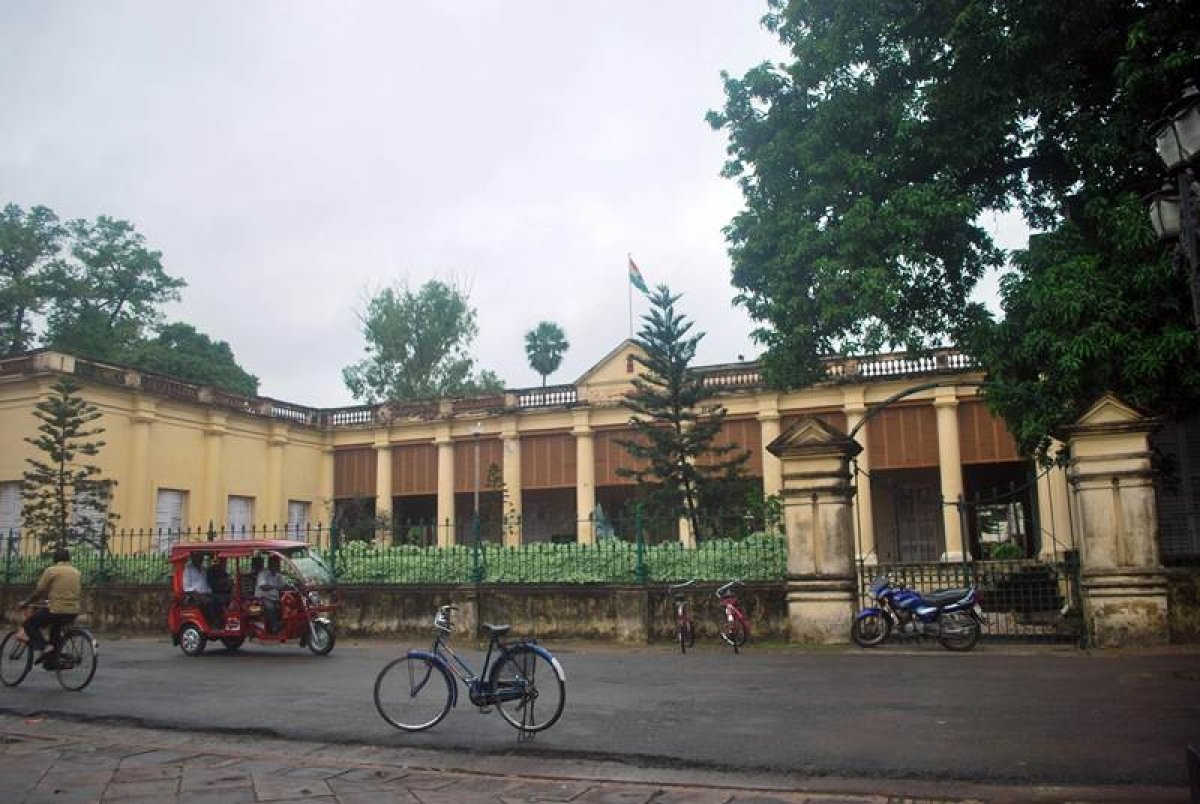
    Institute de Chandernagore – Dupleix Palace ; Photo credit: Kalyani Majumdar

    Institute de Chandernagore – Dupleix Palace
    In 1730, Joseph François Dupleix was appointed governor of Chandernagore. It was during his time that the town became the main center of commerce in Bengal. The Fort d’Orléans, was also built during his time. Today the reminiscence of Dupleix’s glorious years in Chandernagore is housed in the Institute de Chandernagore that stands in a grand manner located on the Strand commanding a view of the Hooghly River. It is a French colonial building with spacious verandahs enveloping the entire building supported by columns. A flight of steps take you to the entrance to the museum that showcases artefacts, old photographs and Dupleix’s personal belongings. You can spend a good few hours strolling in the garden or sit in the verandah and enjoy the scenic view.

    Every building has a story
    Built in 1904, the Patal Bari (underground house) on the Strand is worth a visit as its lowest floor is submerged in the river. Some very prominent personalities have resided in this house during their visit to the town including Rabindranath Tagore. A clock given by Joseph Daumain sits on the tower facing the promenade reminding everyone of the times that this town has seen. The other grand building on this stretch is the sub-divisional court of Chandernagore. However, it was not always a court. It was the Hotel de Paris. You could very well imagine the spacious verandahs and gardenslit up for the typical Parisian evening soirees. The road off the Strand takes you to Sacred Heart Church. This Roman Catholic Church was built around 1875 and has beautiful stained glass paintings. As you continue walking past the church you come across shops, and old houses competing with new buildings.

    Nandodulal temple ; Photo credit: Kalyani Majumdar

    The temple that withstood cannon fire
    This town played a pivotal role in the famous Battle of Plassey in 1757 when Robert Clive destroyed the Fort de Orleans along with houses and places of worship. There are few buildings that still stand as mute witnesses to Clive’s cannon balls. The temple that still exists from that time is the Nandodulal temple. Built in 1740, it is believed to be the largest dui chala (double-sloped roof) temple in Bengal. Located on a picturesque landscape with a little pond on the rear, the wall still carries theimprint of Clive’s cannon balls.

    Refuge for Indian freedom fighters
    As you peel one layer of history of this town you unravel another layer beneath.  Since Chandernagore was a French colony during the same time when Calcutta was under the British, many freedom fighters from British Bengaltook refuge in French Bengal. The most famous name is of Sri Aurobindo Ghosh. The house where Sri Aurobindo went into hiding and used the space to make bombs still stands. In fact many brave hearts such as Kanailala Dutt and Rajbihari Ghosh that fought for the Indian freedom against the British hailed from this town. You can visit the Prabartak Ashram that was established by Motilal Roy. It used to be a safe haven for freedom fighters.One should not miss the Laldighi on the Grand Trunk road, the cemetery across it, and the old library building not very far from there.

    Local flavour
    Although most of Chandernagore’s identity comes from its French association, but one that continues to have the local Bengali flavour is the Jagaddharti Puja. It is celebrated with much fervor. After a heavy duty history tour one should not miss the lovely evenings at Strand. It looks like the entire town is on the promenade. With shopping carts and ferries on either side of the Strand selling trinkets, street food, icecream carts. Music floating from the Rabindra Bhawan across the street and the sight of old people discussing politics and Tagore on the same breath is quiet a sight, not to be missed by anyone. Albeit, officially Chandernagore merged with West Bengal and became part of India in 1951, the vestiges of the Liberty gate on the south of the town acts as a reminder of the French connection with the inscription sayingLiberté, égalité, fraternité—Liberty, equality, fraternity—the three pillars of the French revolution. We tip the hat for those lovely words that continue to give us hope.

  • The French connection in Bengal

    The French connection in Bengal

    Nestled along the Hooghly River is a tiny town just 35 kilometres from Kolkata that is steeped in history and is definitely worth exploring, writes KALYANI MAJUMDAR.

    Published in Free Press Journal; Date 21.05.2017

    Clock Tower; Image credit: Kalyani Majumdar

    A gentle breeze welcomes you as you step on the Strand. The beautiful promenade along the Hooghly River is a lovely stretch and across it stands a row of beautiful French colonial buildings.  Wait, French? Yes, you read it right! It is a general perception for most that in India the French existed only in Pondicherry. In fact this quaint place called Chandernagore was and still is, the La petit French—the little France—in West Bengal and is only 19 square kilometres in total area. Chandernagore might be a small town but its historical significance cannot be trifled with.

    A town with many names
    The name of the town itself has many derivatives. Some say that the bank of the river forms the shape of the moon—chandra—inBengali; others say it is named after the oldest temple of Goddess Chandi. According to some it was believed to be a centre for selling sandal (chandan). The best way to explore this lovely town is to walk it.

    The advent of the French
    Chandernagore became a French colony in 1673, wherein they established their trading banks, and it became a permanent French settlement by 1688. After the 1757 war with the British the town changed hands a couple of times between the British and the French. However, from 1816 it remained with France till 1950. Although Chandernagore was a French colony, it had a strong convergence of the French and Bengali cultures as many Bengali merchants flourished and played an important role in development of the town.

    Institute de Chandernagore – Dupleix Palace ; Photo credit: Kalyani Majumdar

    Institute de Chandernagore – Dupleix Palace
    In 1730, Joseph François Dupleix was appointed governor of Chandernagore. It was during his time that the town became the main center of commerce in Bengal. The Fort d’Orléans, was also built during his time. Today the reminiscence of Dupleix’s glorious years in Chandernagore is housed in the Institute de Chandernagore that stands in a grand manner located on the Strand commanding a view of the Hooghly River. It is a French colonial building with spacious verandahs enveloping the entire building supported by columns. A flight of steps take you to the entrance to the museum that showcases artefacts, old photographs and Dupleix’s personal belongings. You can spend a good few hours strolling in the garden or sit in the verandah and enjoy the scenic view.

    Every building has a story
    Built in 1904, the Patal Bari (underground house) on the Strand is worth a visit as its lowest floor is submerged in the river. Some very prominent personalities have resided in this house during their visit to the town including Rabindranath Tagore. A clock given by Joseph Daumain sits on the tower facing the promenade reminding everyone of the times that this town has seen. The other grand building on this stretch is the sub-divisional court of Chandernagore. However, it was not always a court. It was the Hotel de Paris. You could very well imagine the spacious verandahs and gardenslit up for the typical Parisian evening soirees. The road off the Strand takes you to Sacred Heart Church. This Roman Catholic Church was built around 1875 and has beautiful stained glass paintings. As you continue walking past the church you come across shops, and old houses competing with new buildings.

    Nandodulal temple ; Photo credit: Kalyani Majumdar

    The temple that withstood cannon fire
    This town played a pivotal role in the famous Battle of Plassey in 1757 when Robert Clive destroyed the Fort de Orleans along with houses and places of worship. There are few buildings that still stand as mute witnesses to Clive’s cannon balls. The temple that still exists from that time is the Nandodulal temple. Built in 1740, it is believed to be the largest dui chala (double-sloped roof) temple in Bengal. Located on a picturesque landscape with a little pond on the rear, the wall still carries theimprint of Clive’s cannon balls.

    Refuge for Indian freedom fighters
    As you peel one layer of history of this town you unravel another layer beneath.  Since Chandernagore was a French colony during the same time when Calcutta was under the British, many freedom fighters from British Bengaltook refuge in French Bengal. The most famous name is of Sri Aurobindo Ghosh. The house where Sri Aurobindo went into hiding and used the space to make bombs still stands. In fact many brave hearts such as Kanailala Dutt and Rajbihari Ghosh that fought for the Indian freedom against the British hailed from this town. You can visit the Prabartak Ashram that was established by Motilal Roy. It used to be a safe haven for freedom fighters.One should not miss the Laldighi on the Grand Trunk road, the cemetery across it, and the old library building not very far from there.

    Local flavour
    Although most of Chandernagore’s identity comes from its French association, but one that continues to have the local Bengali flavour is the Jagaddharti Puja. It is celebrated with much fervor. After a heavy duty history tour one should not miss the lovely evenings at Strand. It looks like the entire town is on the promenade. With shopping carts and ferries on either side of the Strand selling trinkets, street food, icecream carts. Music floating from the Rabindra Bhawan across the street and the sight of old people discussing politics and Tagore on the same breath is quiet a sight, not to be missed by anyone. Albeit, officially Chandernagore merged with West Bengal and became part of India in 1951, the vestiges of the Liberty gate on the south of the town acts as a reminder of the French connection with the inscription sayingLiberté, égalité, fraternité—Liberty, equality, fraternity—the three pillars of the French revolution. We tip the hat for those lovely words that continue to give us hope.

  • Bangalore: Exploring the multi-layered history of the city

    Published in Free Press Journal; Date: 14.02.2018

    If the soul of a city is uncovered by walking the streets, then definitely it holds true for Bangalore as it reveals itself beyond its IT hub and impersonal glass buildings. Kalyani Majumdar explores the multi-layered history of the city.

    As you look past the traffic and catch sight of rows of pink and yellow flowers against the clear blue sky, for a second you forget the traffic, and savour the moment. Welcome to Bangalore/Bengaluru.

    Rise of a modern city

    Bangalore came into significance in 1537 AD, when Kempe Gowda I, a feudatory of Vijaynagar Empire laid the foundation of the city by building a mud Fort, wherein people of different vocation had their settlements. After him, it changed many hands from the Marathas to the Mughals, followed by Hyder Ali and then his son Tipu Sultan and finally, the British Empire. They have all left their imprints on Bangalore. However, Bangalore flourished as a city once the British took over. It started with the shifting of British Headquarters from Mysore to Bangalore in 1837. Gradually, the city witnessed a steady development of wider roads, boulevards, railway lines, improved post and telegraph facilities, and buildings.

    A royal experience

    A grand view of the Bangalore Palace; Photo credit: Kalyani Majumdar

    As you approach the Bangalore Palace, it is hard to miss the close resemblance of the exterior with the Windsor Palace in England. It is a magnificent Tudor-style structure facing a beautiful garden and has royalty written all over its façade. The plot was bought by King Chamaraja Wadiyar’s guardians in 1873. The palace was built in 1887. Once inside it is hard to miss the bright yellow-coloured ballroom with its decorated columns, ceiling and arches. After taking in the splendour of the ball room walk up a wooden staircase to the Durbar Hall. The huge room with its embellished interiors, huge chandeliers and a beautiful collection of art is indeed a rich experience. The corridors have exhibits from Maharajas hunting escapades. One of the courtyards has a beautiful coloured-tile bench gifted by an erstwhile Spanish royal. It is highly recommended that you walk the lane lined up with trees on your way to the exit.

    From South Parade to M.G Road

    It is not just now that M.G Road in Bangalore is famous for being the centre of social life. Even during the British era, it had a similar character and was known as South Parade. The building that now has the office of Deccan Herald was once where the popular Funnel’s Restaurant stood. Next to it, is the iconic Higginbotham book store. It has been there since 1905. Recently, it revamped its interiors and now it has reopened with a colourful interior and the façade looks bright as well. The book store has a fantastic collection. There is certainly a sentimental factor attached to this bookshop that has catered to generations of booklovers and still continues to do so. It is lovely to see how the old and the new has blended effectively on this particular stretch. Across the road, alongside the metro station there is a lovely boulevard. The walkway is almost half a kilometer and is lined up with white and pink bougainvillea. It is so refreshing even though it is right next to a busy road.

    The roads from the past 

    Book Society on St. Marks Road; Photo credit: Kalyani Majumdar

    At the intersection where M.G Road meets St. Marks Road, you can see a gothic building with etching in bold letters that say, ‘Book Society’. It was built in 1912. Part of the building is now the Hard Rock Café and apparently, sometime back it also had a HMV record store. As you continue further on St Mark Road the prestigious Bowring Institute is on view. From there you can easily negotiate through wide streets to reach the Museum Road, lest you are not wearing comfortable shoes. In 1865, part of the Cantonment Jail building on this road, now Good Shepherd Convent, served as the Government Museum, before it was shifted to its present location on a beautiful neoclassical structure in Kasturba Road, in 1878. Nevertheless, the road retained its name, thus keeping alive a part of history. Also, on the same road right next to the Post Office stands a 150-year-old tiled-roof building that serve as the office of the senior superintendent of post office.

    Cubbon Park 

    A statue of Queen Victoria stands at one corner of the Cubbon Park; Photo credit: Kalyani Majumdar

    If you approach Cubbon Park from Kasturba Road then you will come across a statue of Queen Victoria standing at the corner of the Park, facing the busy street, perhaps wondering how much the city has changed since 1906. The Cubbon Park was established in 1870 by John Meade and the landscaping was done by Richard Sankey. It is a lovely place to park yourself under a tree with a book.

    Imprints from the past 

    The Glass House at Lalbagh Botanical Garden; Photo credit: Kalyani Majumdar

    At the entrance of the Lalbagh Botanical Garden there is a peninsular gneissic rock, dated to about 3,000 million years, making it one of the oldest rock formations on the planet. And atop the rock is the Kempe Gowda tower. Hyder Ali laid its foundation in 1760. It was a pleasure garden till William New, a gardener from Kew in London came to Lalbagh in 1858 and turned the place into a scientific research centre and maintained a regular inventory of the trees. He lived in a small cottage inside Lalbagh which is now the Lalbagh library. In 1874, John Cameron took over as superintendent of Lalbagh. He too did many experimental cultivations within the garden. He proposed the idea of a Glass House. It was built in 1889 inspired by the famous Crystal Palace of London. It houses many flower shows and is a must-see.

    Outside the Lalbagh gate, there are stalls selling fresh fruit juice in the morning. One might wonder, if this was perhaps the spot where Cameron enthusiastically distributed seeds of new vegetables that he grew, to the passing farmers. We do owe him Chayote, a popular vegetable in Karnataka. Stories such as these crop up when one steps out on the streets of this city to listen to the echoes from the past and weave them into an urban narrative.

  • Why Oise in Northern France is a revelation

    Why Oise in Northern France is a revelation

    Even though Oise in Northern France, not far from Paris is usually missing from most travel itinerary, it is a revelation as KALYANI MAJUMDAR found out after visiting this picturesque place with its landscape, people and history.

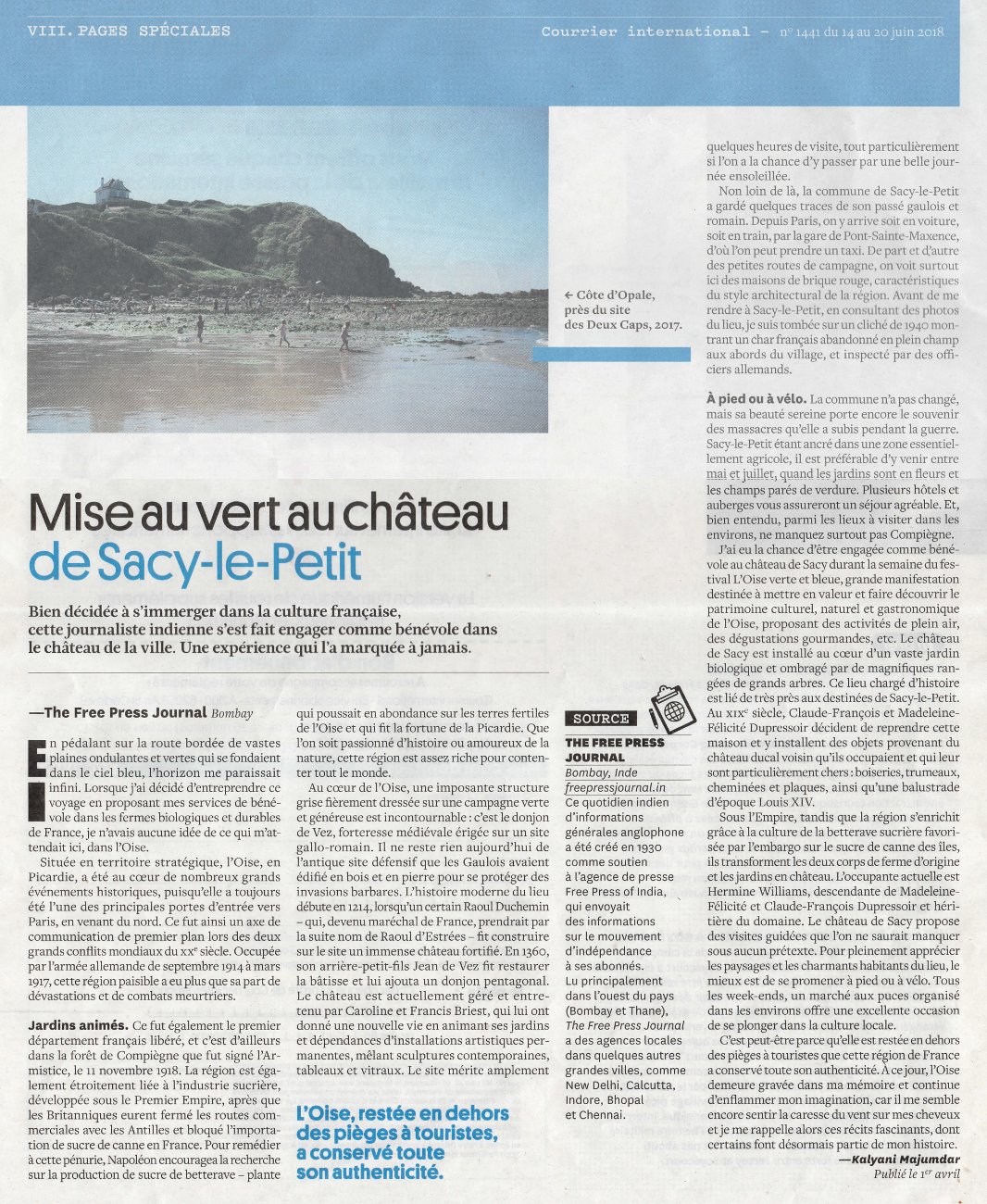
    Published in Free Press Journal; Date: 01.04.2018; My article has been translated by a French Magazine Courier International. Click here to read it in French

    The serene beauty of Sacy-le-Petit in Oise; Image credit: Kalyani Majumdar

    As I bicycled my way through the expansive undulating green flatland on both sides of the road that met the blue sky, it seemed like an endless horizon. When I decided to undertake immersive travelling through volunteering on sustainable and organic farms across France, I had no idea what was in store for me here in Oise.

    Digging into the history

    The geographic location of Oise in Picardy region is strategic to many important events in history as it has always been the passage to Paris and thus played an important role in communication during the two World Wars. Occupied from September 1914 to March 1917, ravaged by the battles of 1918, this peaceful region has had its share of bloodshed and war.

     It was also the first French department to be liberated, and even the signing of the Armistice took place in Compiègne Forest in Oise on 11 November 1918. Moreover, this region is also associated with the sugar embargo of the 19th century. During the Napoleonic war in the 1800s, the British had blocked the French trade routes with the Caribbean Islands which led to massive shortage of sugar in France. As a solution, Napoleon I introduced sugar beet to counter the sugar embargo. The fertile lands of Oise grew it in abundance and the region grew rich. Whether you are a history enthusiast or a nature lover, there is something here for everyone.

    Unmissable dungeon 

    Donjon de Vez; Image credit: Kalyani Majumdar

    Located in the middle of Oise, Donjon de Vez is hard to miss with its imposing grey structure that is surrounded by lush green landscape. It is a medieval dungeon dating back to Gallo-Roman period. Initially, it was a structure mainly made of wood and stone that was built to protect the Gauls against the invasions by the Barbarians, of which nothing is left today. In 1214, Raoul Ducheim, who later Latinised his name and came to be known as d’ Estrees, re-planned, fortified and restored the structure.

    He added the three-storied living quarters, some of which still remains. In 1360, his great-grandson Jehan de Vez added the pentagonal-shaped tower. The terrace consists of machicolations and perhaps it was the primary defense system. At its present state, it is maintained by Caroline and Francis Briest. Because of their efforts they have given a new lease of life to the structure. It showcases permanent art installations—sculptures, paintings and stained glass artworks. Especially on a nice sunny day one could easily spend few hours at the Vez.

    Sacy-le-Petit 

    The expansive flatland in Sacy-le-Petit; Image credit: Kalyani Majumdar

    Sacy-le-Petit is a commune in Oise and dates back to pre-historic and Roman period. One can either drive down from Paris or board a train from Paris to Pont-Sainte-Maxence. There are taxis available at the station. The winding roads are dotted with houses made of red bricks mostly. The villages of Picardy region has a distinct culture and architectural style that can be seen in this commune as well. Before visiting this place while looking through images I had come across a photograph from 1940, of an abandoned French tank sitting on a farmland in Sacy-le-Petit, being inspected by the Germans.

    It is the same commune, yet its serene beauty belies the gruesome bloodshed that this region has seen. From May to July would be the best time to visit this region when the flowers are in full bloom in the gardens, and farm lands are green. Sacy-le-Petit is majorly an agricultural area. There are inns and hotels available here for a comfortable stay. The popular places to visit nearby includes Compiègne.

    Chateau de Sacy 

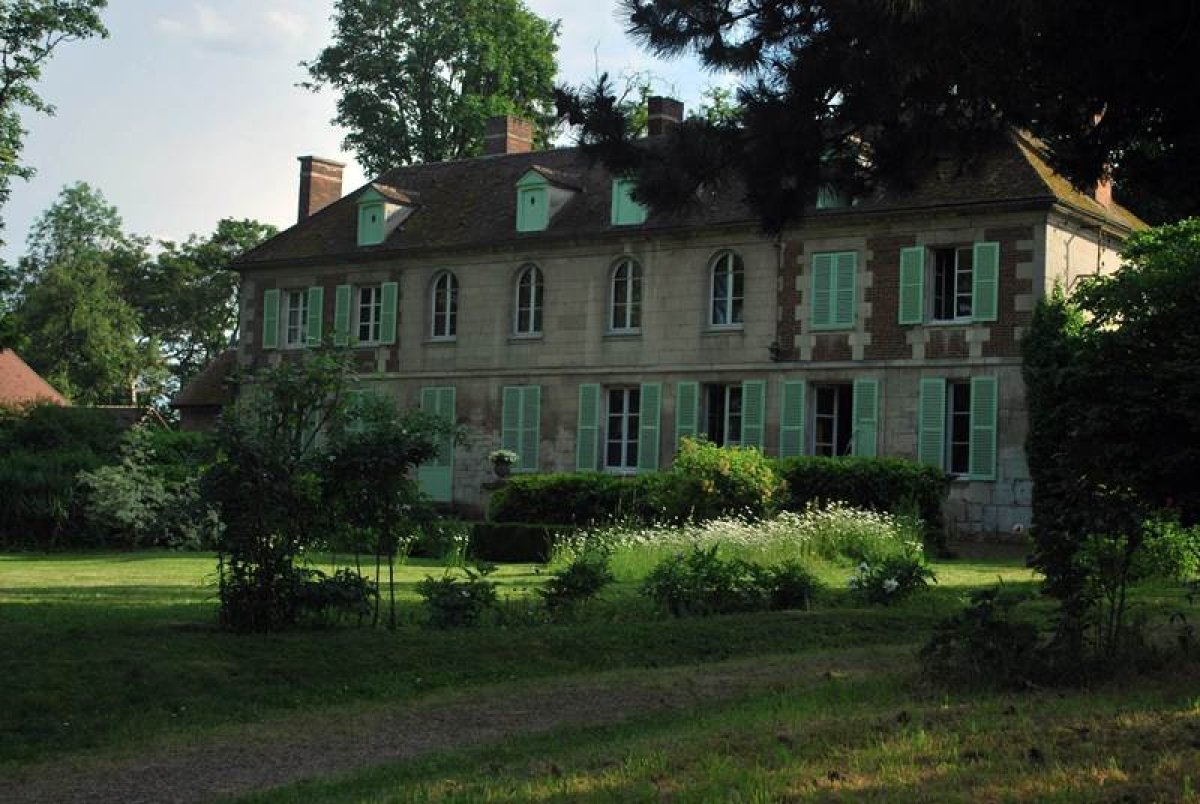
    Chateau de Sacy; Image credit: Kalyani Majumdar

    I was fortunate to volunteer at the Chateau de Sacy in Sacy-le-Petit during the same week as the festival of L’Oise Verte et Bleu, L’événement Grandeur. It is a festival to celebrate and discover the culture of Oise that includes outdoor activities, local culinary feasts and so on. Chateau de Sacy is situated in the middle of a large organic garden and is surrounded by a lovely collection of tall trees. The chateau is steeped in history and is closely linked to the history of Sacy-le-Petit. In the 19th century, Claude-François and Madeleine-Félicité Dupressoir had decided to take over this house and brought along things that were dear to them from their old castle, items such as, woodwork, trumeau, fireplaces and plates, the balustrade Louis XIV.

    Later on, as the region became rich by growing sugar beet during the sugar embargo they turned the two farms and a garden into a chateau. The current occupant is Hermine Williams, who inherited the house and is a descendant of Madeleine-Félicité and Claude-François Dupressoir.  There are organised tours of the Chateau de Sacy that should not be missed. Cycling and walking are the best way to see the sights and mingle with the friendly locals. Every weekend there is a flea market nearby, and is a great opportunity to immerse into the local culture.

    Perhaps the fact that this region of France has remained free from tourist traps, that it is still in its pristine form. For me, even now, Oise is embedded in my memory. It still continues to stir my imagination as I can still feel the wind in my hair and remember the intriguing stories that I have heard, some of which are now part of my story.