Tag: brutalist architecture

  • Revisiting Brutalism

    Text by Kalyani Majumdar

    Published in Domus; Date: May 2014

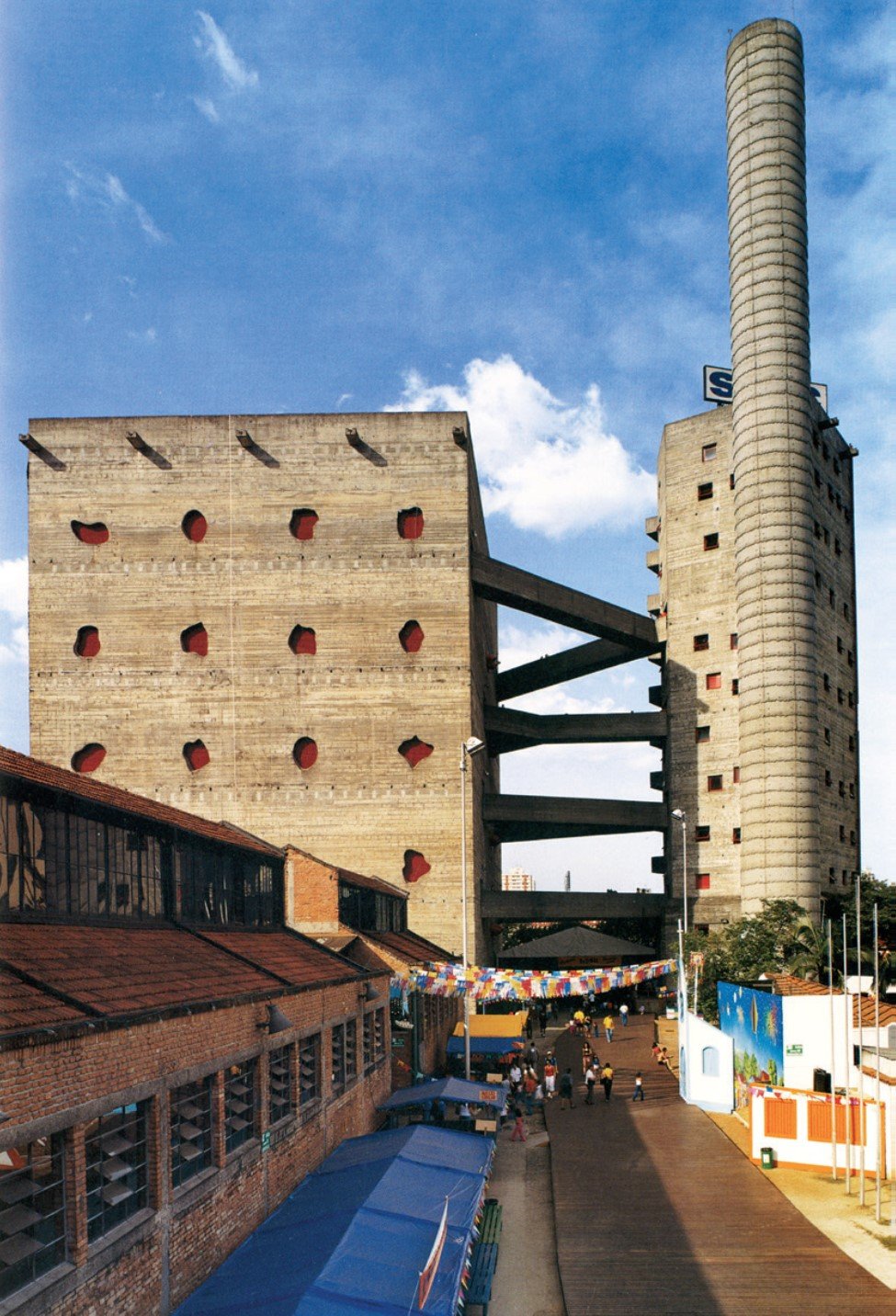
    SESC Pompeia in Sao Paulo, Brazil designed by Lina Bo Bardi

     The term Brutalism evokes a myriad of responses from the architecture and design community — some are extremely critical and some see it as a utopian moment in architecture, but mostly it evokes extreme emotions and debates. And thus it did not come as a surprise that when an event curated by Mohile Parikh Center in collaboration with Studio X, Mumbai had Prof. Yehuda Safran revisiting Brutalism through a presentation, followed by a conversation with architect Mustansir Dalvi, had full attendance at the spacious Studio X. Originating from a French term béton brut, when translated stands for “raw concrete” defines it as literally as possible. Brutalist buildings were known for their sculptural qualities and the rawness that was evident from the display of true materiality — raw concrete. It is believed that this form of architecture was developed between 1950s to the mid 1970s. Some say that Brutalism sprung out of a need to create a classless society and against gentrification in a city. Post-war Britain saw Brutalist buildings coming up everywhere and it was evident that this movement was seen as an evocative solution to create a classless society and to create mini-societies that would comprise schools, hospital, shops/ community centre, banks and other basic amenities for the people living around. Also, there was a grand cost-cutting due to in-situ casting. Among Prof Safran’s presentation of Brutalist buildings was the infamous Robin Hood Gardens in Poplar, London designed by Alison and Peter Smithson in the late 1960s and realised in 1972.

    The idea behind this structure was indeed pragmatic with Smithsons’ social intentions that integrated through the concept of “streets in the sky” and one must admit was a wonderful idea for any city where people crave to get a glimpse of the sky. Every third level of the buildings was designed with a wide concrete balcony jutting off towards the centre of the site, overlooking the garden. After much deliberation Tower Hamlets Council passed the demolition plans for Robin Hood Gardens and just last year it was razed to make way for new structure. During the talk, Prof Safran mentioned that Brutalism by many is associated with the term satanic. One might think probably because it was a movement that did trigger radical thoughts to design cities which did not go down well with many from the design communities. Another Brutalist building from Prof Safran’s presentation was the SESC Pompeia in Sao Paulo, Brazil. After the end of a 20-year military regime SESC Pompeia in Sao Paulo, Brazil designed by Lina Bo Bardi was an important addition to the Sao Paulo skyline and was a fresh start for the country as its two concrete towers connected to each other with pre-stressed concrete walkways. Even though the conversation lasted for two hours, but it did make us ponder on the current take on Brutalism. Is demolishing of these buildings the only way forward? To sum up all the facts Brutalism was a movement of a particular time and it had a great influence and played a part in modern form of architecture. Isn’t it possible to repurpose the architectural form that after all stemmed out of a novel idea to lessen disparity amongst the city dwellers and prevent urban gentrification?


    Event detail:

    Mohile Parikh Center
    www.mohileparikhcenter.org
    Studio X, Mumbai
    www.arch.columbia.edu
    SESC