Tag: french

  • The French connection in Bengal

    The French connection in Bengal

    Nestled along the Hooghly River is a tiny town just 35 kilometres from Kolkata that is steeped in history and is definitely worth exploring, writes KALYANI MAJUMDAR.

    Published in Free Press Journal; Date 21.05.2017

    Clock Tower; Image credit: Kalyani Majumdar

    A gentle breeze welcomes you as you step on the Strand. The beautiful promenade along the Hooghly River is a lovely stretch and across it stands a row of beautiful French colonial buildings.  Wait, French? Yes, you read it right! It is a general perception for most that in India the French existed only in Pondicherry. In fact this quaint place called Chandernagore was and still is, the La petit French—the little France—in West Bengal and is only 19 square kilometres in total area. Chandernagore might be a small town but its historical significance cannot be trifled with.

    A town with many names
    The name of the town itself has many derivatives. Some say that the bank of the river forms the shape of the moon—chandra—inBengali; others say it is named after the oldest temple of Goddess Chandi. According to some it was believed to be a centre for selling sandal (chandan). The best way to explore this lovely town is to walk it.

    The advent of the French
    Chandernagore became a French colony in 1673, wherein they established their trading banks, and it became a permanent French settlement by 1688. After the 1757 war with the British the town changed hands a couple of times between the British and the French. However, from 1816 it remained with France till 1950. Although Chandernagore was a French colony, it had a strong convergence of the French and Bengali cultures as many Bengali merchants flourished and played an important role in development of the town.

    Institute de Chandernagore – Dupleix Palace ; Photo credit: Kalyani Majumdar

    Institute de Chandernagore – Dupleix Palace
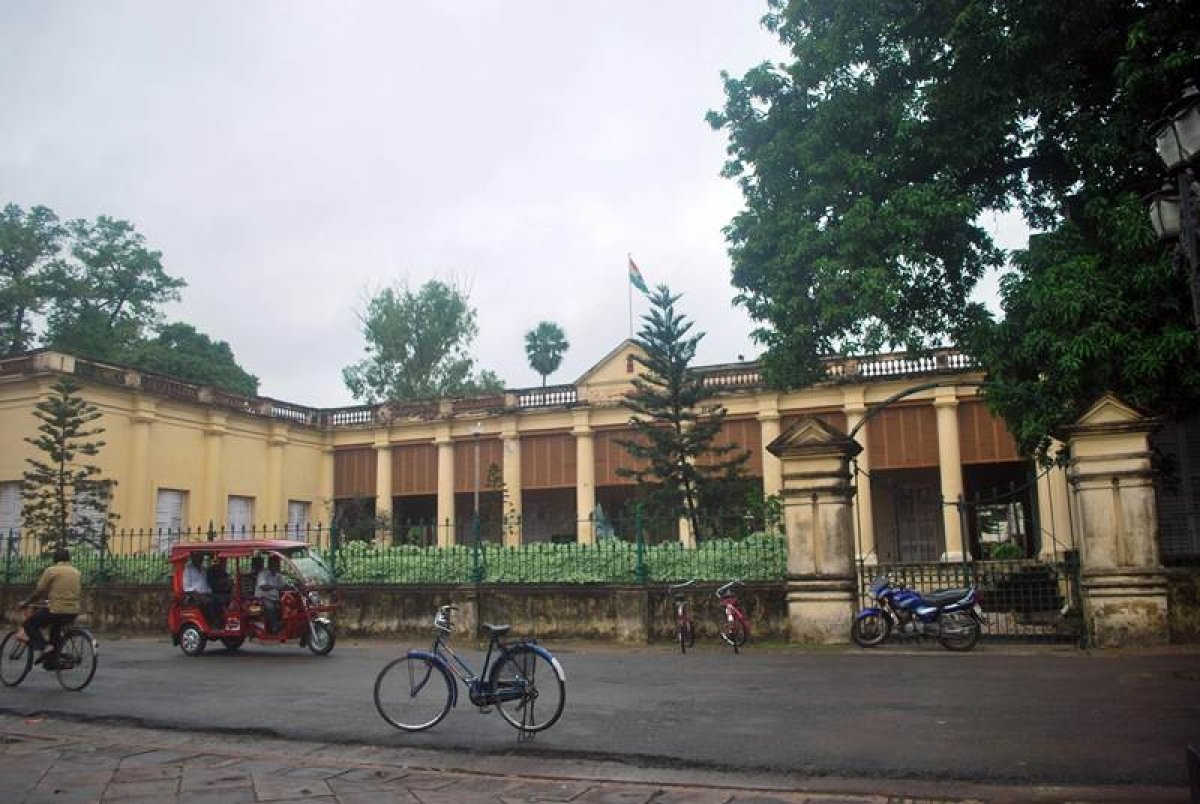
    In 1730, Joseph François Dupleix was appointed governor of Chandernagore. It was during his time that the town became the main center of commerce in Bengal. The Fort d’Orléans, was also built during his time. Today the reminiscence of Dupleix’s glorious years in Chandernagore is housed in the Institute de Chandernagore that stands in a grand manner located on the Strand commanding a view of the Hooghly River. It is a French colonial building with spacious verandahs enveloping the entire building supported by columns. A flight of steps take you to the entrance to the museum that showcases artefacts, old photographs and Dupleix’s personal belongings. You can spend a good few hours strolling in the garden or sit in the verandah and enjoy the scenic view.

    Every building has a story
    Built in 1904, the Patal Bari (underground house) on the Strand is worth a visit as its lowest floor is submerged in the river. Some very prominent personalities have resided in this house during their visit to the town including Rabindranath Tagore. A clock given by Joseph Daumain sits on the tower facing the promenade reminding everyone of the times that this town has seen. The other grand building on this stretch is the sub-divisional court of Chandernagore. However, it was not always a court. It was the Hotel de Paris. You could very well imagine the spacious verandahs and gardenslit up for the typical Parisian evening soirees. The road off the Strand takes you to Sacred Heart Church. This Roman Catholic Church was built around 1875 and has beautiful stained glass paintings. As you continue walking past the church you come across shops, and old houses competing with new buildings.

    Nandodulal temple ; Photo credit: Kalyani Majumdar

    The temple that withstood cannon fire
    This town played a pivotal role in the famous Battle of Plassey in 1757 when Robert Clive destroyed the Fort de Orleans along with houses and places of worship. There are few buildings that still stand as mute witnesses to Clive’s cannon balls. The temple that still exists from that time is the Nandodulal temple. Built in 1740, it is believed to be the largest dui chala (double-sloped roof) temple in Bengal. Located on a picturesque landscape with a little pond on the rear, the wall still carries theimprint of Clive’s cannon balls.

    Refuge for Indian freedom fighters
    As you peel one layer of history of this town you unravel another layer beneath.  Since Chandernagore was a French colony during the same time when Calcutta was under the British, many freedom fighters from British Bengaltook refuge in French Bengal. The most famous name is of Sri Aurobindo Ghosh. The house where Sri Aurobindo went into hiding and used the space to make bombs still stands. In fact many brave hearts such as Kanailala Dutt and Rajbihari Ghosh that fought for the Indian freedom against the British hailed from this town. You can visit the Prabartak Ashram that was established by Motilal Roy. It used to be a safe haven for freedom fighters.One should not miss the Laldighi on the Grand Trunk road, the cemetery across it, and the old library building not very far from there.

    Local flavour
    Although most of Chandernagore’s identity comes from its French association, but one that continues to have the local Bengali flavour is the Jagaddharti Puja. It is celebrated with much fervor. After a heavy duty history tour one should not miss the lovely evenings at Strand. It looks like the entire town is on the promenade. With shopping carts and ferries on either side of the Strand selling trinkets, street food, icecream carts. Music floating from the Rabindra Bhawan across the street and the sight of old people discussing politics and Tagore on the same breath is quiet a sight, not to be missed by anyone. Albeit, officially Chandernagore merged with West Bengal and became part of India in 1951, the vestiges of the Liberty gate on the south of the town acts as a reminder of the French connection with the inscription sayingLiberté, égalité, fraternité—Liberty, equality, fraternity—the three pillars of the French revolution. We tip the hat for those lovely words that continue to give us hope.

  • The French connection in Bengal

    The French connection in Bengal

    Nestled along the Hooghly River is a tiny town just 35 kilometres from Kolkata that is steeped in history and is definitely worth exploring, writes KALYANI MAJUMDAR.

    Published in Free Press Journal; Date 21.05.2017

    Clock Tower; Image credit: Kalyani Majumdar

    A gentle breeze welcomes you as you step on the Strand. The beautiful promenade along the Hooghly River is a lovely stretch and across it stands a row of beautiful French colonial buildings.  Wait, French? Yes, you read it right! It is a general perception for most that in India the French existed only in Pondicherry. In fact this quaint place called Chandernagore was and still is, the La petit French—the little France—in West Bengal and is only 19 square kilometres in total area. Chandernagore might be a small town but its historical significance cannot be trifled with.

    A town with many names
    The name of the town itself has many derivatives. Some say that the bank of the river forms the shape of the moon—chandra—inBengali; others say it is named after the oldest temple of Goddess Chandi. According to some it was believed to be a centre for selling sandal (chandan). The best way to explore this lovely town is to walk it.

    The advent of the French
    Chandernagore became a French colony in 1673, wherein they established their trading banks, and it became a permanent French settlement by 1688. After the 1757 war with the British the town changed hands a couple of times between the British and the French. However, from 1816 it remained with France till 1950. Although Chandernagore was a French colony, it had a strong convergence of the French and Bengali cultures as many Bengali merchants flourished and played an important role in development of the town.

    Institute de Chandernagore – Dupleix Palace ; Photo credit: Kalyani Majumdar

    Institute de Chandernagore – Dupleix Palace
    In 1730, Joseph François Dupleix was appointed governor of Chandernagore. It was during his time that the town became the main center of commerce in Bengal. The Fort d’Orléans, was also built during his time. Today the reminiscence of Dupleix’s glorious years in Chandernagore is housed in the Institute de Chandernagore that stands in a grand manner located on the Strand commanding a view of the Hooghly River. It is a French colonial building with spacious verandahs enveloping the entire building supported by columns. A flight of steps take you to the entrance to the museum that showcases artefacts, old photographs and Dupleix’s personal belongings. You can spend a good few hours strolling in the garden or sit in the verandah and enjoy the scenic view.

    Every building has a story
    Built in 1904, the Patal Bari (underground house) on the Strand is worth a visit as its lowest floor is submerged in the river. Some very prominent personalities have resided in this house during their visit to the town including Rabindranath Tagore. A clock given by Joseph Daumain sits on the tower facing the promenade reminding everyone of the times that this town has seen. The other grand building on this stretch is the sub-divisional court of Chandernagore. However, it was not always a court. It was the Hotel de Paris. You could very well imagine the spacious verandahs and gardenslit up for the typical Parisian evening soirees. The road off the Strand takes you to Sacred Heart Church. This Roman Catholic Church was built around 1875 and has beautiful stained glass paintings. As you continue walking past the church you come across shops, and old houses competing with new buildings.

    Nandodulal temple ; Photo credit: Kalyani Majumdar

    The temple that withstood cannon fire
    This town played a pivotal role in the famous Battle of Plassey in 1757 when Robert Clive destroyed the Fort de Orleans along with houses and places of worship. There are few buildings that still stand as mute witnesses to Clive’s cannon balls. The temple that still exists from that time is the Nandodulal temple. Built in 1740, it is believed to be the largest dui chala (double-sloped roof) temple in Bengal. Located on a picturesque landscape with a little pond on the rear, the wall still carries theimprint of Clive’s cannon balls.

    Refuge for Indian freedom fighters
    As you peel one layer of history of this town you unravel another layer beneath.  Since Chandernagore was a French colony during the same time when Calcutta was under the British, many freedom fighters from British Bengaltook refuge in French Bengal. The most famous name is of Sri Aurobindo Ghosh. The house where Sri Aurobindo went into hiding and used the space to make bombs still stands. In fact many brave hearts such as Kanailala Dutt and Rajbihari Ghosh that fought for the Indian freedom against the British hailed from this town. You can visit the Prabartak Ashram that was established by Motilal Roy. It used to be a safe haven for freedom fighters.One should not miss the Laldighi on the Grand Trunk road, the cemetery across it, and the old library building not very far from there.

    Local flavour
    Although most of Chandernagore’s identity comes from its French association, but one that continues to have the local Bengali flavour is the Jagaddharti Puja. It is celebrated with much fervor. After a heavy duty history tour one should not miss the lovely evenings at Strand. It looks like the entire town is on the promenade. With shopping carts and ferries on either side of the Strand selling trinkets, street food, icecream carts. Music floating from the Rabindra Bhawan across the street and the sight of old people discussing politics and Tagore on the same breath is quiet a sight, not to be missed by anyone. Albeit, officially Chandernagore merged with West Bengal and became part of India in 1951, the vestiges of the Liberty gate on the south of the town acts as a reminder of the French connection with the inscription sayingLiberté, égalité, fraternité—Liberty, equality, fraternity—the three pillars of the French revolution. We tip the hat for those lovely words that continue to give us hope.

  • Art Deco: The Mumbai connection

    Art Deco: The Mumbai connection

    freepressjournal_import_2017_09_regal

    When a design movement called Art Deco flourished between the two World Wars in Europe, it made its way to Mumbai around the same time and found many takers in the city. Kalyani Majumdar delves into the story.

    Published in Free Press Journal; Date: 03.09.2017

    freepressjournal_import_2017_09_taxi-1-2

    Did you know that Mumbai has the second largest number of Art Deco buildings in the world right after Miami? For most people, it comes as a surprise. Possibly the reason could be that Mumbai is mostly synonymous with the Gateway of India that is an Indo-Saracenic architecture or the famous CST (formerly the Victoria Terminus), a neo-Gothic architecture. So, where are the Art Deco buildings? There is no doubt that Mumbai cityscape is dotted with iconic architectural masterpieces from the colonial period, and walking around South Mumbai is like visiting a museum displaying different architectural styles. However, if you pay attention on the built structures while walking around the Oval Maidan, Marine Drive and Colaba it is not difficult to spot these Art Deco buildings with their signature design elements such as symmetry, geometric designs and decorative motifs on the façade.  Curiously, one might even wonder what it was about Art Deco-style that it found so many connoisseurs in the city. To understand that we need to dive into the history of Art Deco.

    A movement that started in France

    Art Deco derived its name from the French words “Arts Décoratifs”. It was an exhibition that was held in Paris in 1925 called the Exposition Internationale des Arts Décoratifs et Industriels Modernes (International Exposition of Modern Decorative and Industrial Arts). To get selected for the exhibition the works had to be modern that was without the influence of past design-styles.

    Originally, the exposition was to take place in 1915, but was postponed due to the First World War. To a great extent the War had a strong influence on Art Deco’s popularity. The devastation and loss due to the war had left everyone disillusioned of the future. The horrors of war were being expressed through many new art movements that came up around the 1920s such as Cubism, Surrealism and Fauvism. Literary works by Ernest Hemingway and Scott Fitzgerald give us a fair idea of the society of that time.

    With socio-political changes taking place in Europe and around the world, the exposition was a success. Art Deco found many takers as there was something very appealing about this style that was modern and had moved away from the formal design styles that was prevalent till then. Post World War, the world was looking for optimism and that was exactly what Art Deco represented with its simple geometric lines, decorative motifs that brought in inspirations from around the world, and the use of vibrant colours. It was heralding the machine age with the use of technology.

    The designs could be replicated easily, thus bringing down the manufacturing costs along with the introduction of stainless steel, plastics and other unconventional materials. Apart from architecture, this design movement influenced jewellery, automobiles, and furniture designs as well. In the world of architecture Art Deco was fast becoming popular all around the world with the US giving the world the two iconic Art Deco buildings of that era, the Chrysler Building and the Empire State Building. As Art Deco rose in popularity the world over, it had surely become an international movement from its French origins.

    Art Deco found its way to Mumbai

    The time when Art Deco was taking over America, especially Miami, another city across the globewas fast becoming the second home for Art Deco to flourish in. It was none other than Mumbai. It was on the world map as an important port city for British India. Every new trend that was prevalent in the West found a home in Mumbai. In the 1920s the well-heeled and educated Indians from the city that were making frequent trips to Europe brought back the Art Deco style with them back home.

    freepressjournal_import_2017_09_TAXI

    Between 1920s and 1940s Art Deco graced the South Mumbai landscape, especially the residential buildings on Marine Drive that came up on the newly reclaimed land around the same time, thanks to the Backbay Land Reclamation Scheme.  With its optimistic and modern designs that had moved away from the imprint of colonial design-styles such as the Gothic and the Victorian, the Mumbai home owners wanted to do up their properties in the Art Deco style. Art Deco was vibrant and had a global appeal. It was the trend everyone wanted to be part of. Thus, in India just like in the rest of the world, Art Deco made its presence in a big way.

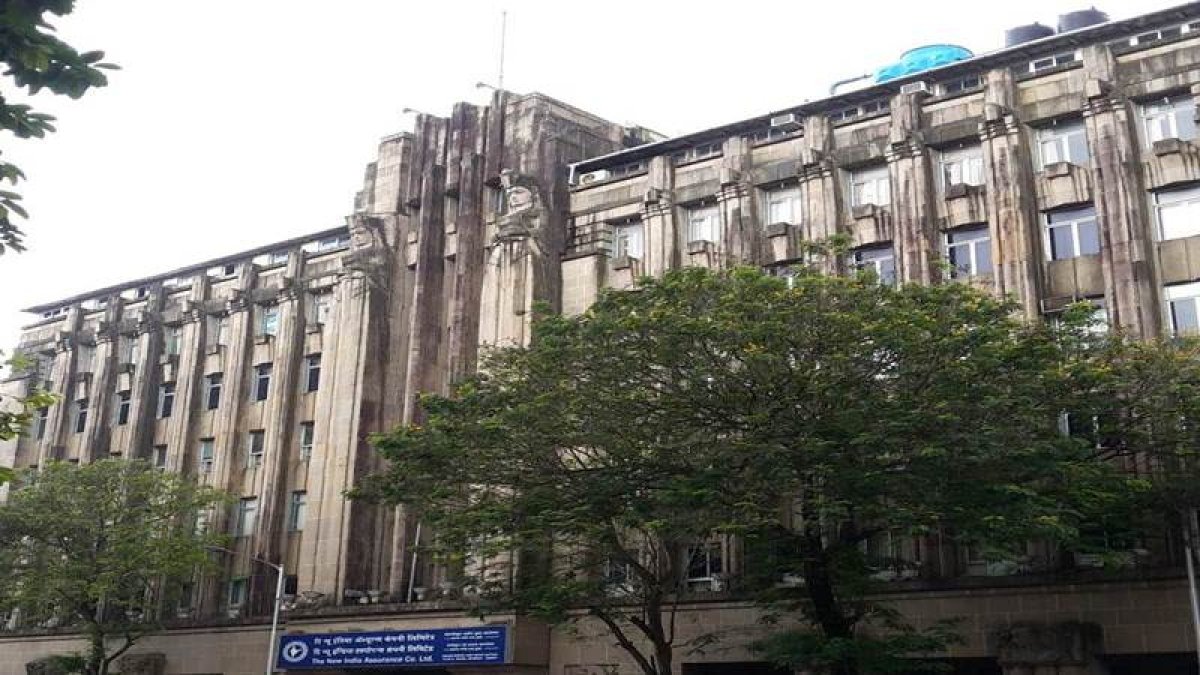
    Apart from the geometric patterns and the need for symmetry, one also observes nautical elements being part of the Art Deco buildings in Mumbai. One can see the new age design elements on buildings such as the Eros Cinema right across Churchgate station that was completed in 1937, or the decorative motifs on the façade of the iconic Regal Cinema in Colaba that was opened to public in 1933. Another notable Art Deco building is on the Mahatma Gandhi Road in Fort — The New India Assurance Building. It has bas reliefs depicting rural life in India, but what catches your attention first are the two huge statues on the façade that appears of Egyptian origin. It is indeed a long list of beautiful Art Deco buildings that exist in the city.

    So, next time when walking on the streets of Mumbai do pay attention to the buildings that you pass by, you might stumble upon an Art Deco hidden somewhere in the urban cluster of high rises that stands as a testimony of the era that was popularly known as the roaring 20s or the Jazz Age.