Tag: Magazine

  • Art of Living

    Art of Living

    WITH ORIGINAL ARTWORKS AND INTRIGUING HISTORIES TO MATCH, THESE ARE
    THE MOST UNIQUE ART HOTELS AROUND THE WORLD, SAYS KALYANI MAJUMDAR.

    First published in India Today Spice Trove

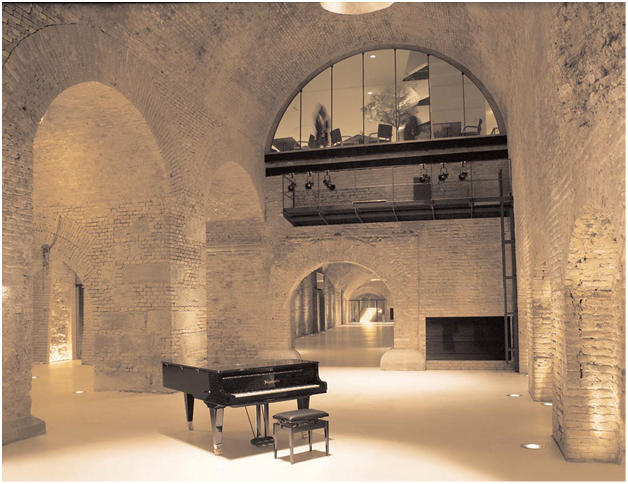
    PALAIS COBURG’S HISTORIC CASEMATE, NOW USED AS A VENUE FOR EVENTS

    There’s an interesting story about a £200,000 (Rs 1.5 crore) work by Turner-prize winning artist Douglas Gordon displayed on the wall of a restaurant in Glasgow. Attempting to show how real life mirrors cinema, the artist put a neon ‘Empire’ sign in the artwork with a light bulb that was deliberately poorly wired to keep the letter ‘P’ blinking, like the one at Empire Hotel in Alfred Hitchcock’s 1958 film Vertigo. Then, one day, real life intervened and a repairman fixed the flickering bulb, not realising its valuable contribution to art. Mercifully, such a travesty can never be committed in a hotel, where art is the only permanent resident. Welcome to their world.

    THE PALAIS COBURG, VIENNA

    Imagine standing on the same spot in The Palais Coburg hotel where, centuries ago, music composer Johann Strauss performed with his orchestra; such is the glorious history of this hotel that spans six centuries and stands witness to some major events in history. Art, culture and technology cohabit gloriously at The Palais Coburg Hotel Residenz in Vienna, which looks more like an art museum than a hotel with a gleaming neoclassical building and plenty of restored gilt and marble dating back to the mid-19th century. Each of the 35 suites is individually furnished and designed to look traditional but with a contemporary twist replete with antiques, oil paintings and crystal chandeliers. The structure was built in 1840-45 by Duke Ferdinand of Saxe-Coburg and Gotha (1785-1851) on the Brown Bastion—a part of the city’s defenses dating back to the 16th century. Owing largely to the superior construction, a large part of the Renaissance fortification, in particular the casemates, have been preserved for posterity. As you walk through the corridors, the canvases imbue colour to the grand architecture that has been superbly preserved. Where history stands guard, a date with the past is a present for the future.

    BYBLOS ART HOTEL

    SALVADOR DALI’S WINE RED BIG KISS SOFA BYBLOS ART HOTEL AT VILLA AMISTA, VERONA

    Nestled amid the luxuriant expanse of a 20,000 sq m park, the Byblos art hotel Villa Amistà is located just minutes away from the old town of Verona. Two distinctive architectural and decor styles reside at this property. If the classical building is a perfect example of 15th century baroque style; inside breathes the very modern design of architect Alessandro Mendini. Much like a museum, Villa Amista hosts works by brilliant artists from around the world, artists like Mimmo Rotella, Anish Kapoor, Peter Halley and David Tremlett, to name a few. The hotel offers 60 rooms, all piquantly filled with futuristic design furniture and antique-style headboards, accessorized with full-length mirrors with neon-orange and pop-art green insets. The central hall—the most monumental part of the villa–is traditional and dominated by a Venetian chandelier; other rooms beg to copy its elaborate ceiling decoration and murals. Below, however, sit pop art in the shape of poufes and tables. The spa is designed to evoke ancient Pompeii, while the wine cellar is furnished with classical furniture and coordinated with design components and works of contemporary art.

    HENRY JONES ART HOTEL

    A CORRIDOR OF THE HENRY JONES ART HOTEL EXPRESSES DISTINCTIVE AND AVANT GARDE ART WORKS

    Fancy waking up to the sound of clattering boat masts or listening to stories of early settlements as you sip your freshly- brewed Java? Try the Henry Jones art hotel in Tasmania—it’s jam-packed with history and littered with contemporary art. It stands in the very spot from where the town of Hobart began sprouting 200 years ago; a row of historic warehouses from the 1820s and a former jam factory have come together to be transformed into Australia’s first art hotel. An abundance of contemporary Tasmanian art relating to the settlement years in a setting of great historic value allow guests to linger in an era long past. The Oriental and Art installation suites, the restored machinery from the jam factory, the magnificent all-glass atrium get you tripping to another era altogether. The Peacock Terrace, the original home of jam factory founders George and Margaret Peacock, even houses Tasmania’s oldest spiral staircase. On your next visit to Australia, check out the Sydney harbour bridge and Opera House if you must, but don’t forget to check into the Henry Jones Art Hotel.

    ABBEY DE LA BUSSIÈRE, BURGUNDY

    THE HALLWAY AT THE ABBEY DE LA BUSSIÈRE WITH ITS ENDLESS ARCHES

    If the very Monet-like look of Abbey de la Bussière, with its 15-acre park around a pond, weren’t enough, the property also boasts an interesting history. Turns out that it was founded in 1131 by an Englishman named Stephen Harding, who was the third Abbot of Cîteaux, as a spiritual retreat for religious groups and pilgrims. Some 874 years later, another Englishman called Clive Cummings bought it and decided to turn it into a luxurious hotel. The first round of renovation inside the building revealed gorgeous frescoes that have since been meticulously cleaned and restored by experts. The old monks’ cells have been transformed into junior suites and luxury bedrooms, all appropriately named after the greatest Burgundian ecclesiastical monuments. Each room is packed with antique furniture, art and artefacts picked up from auctions. Occasionally, the old abbey also acts as a venue for art classes. Not surprising when you consider that it is situated in an art hub: bang in the heart of Burgundy with its abundant vineyards, chateaus and monasteries and at a half-hour’s drive from the historic towns of Beaune and Dijon, with their medieval cathedrals and art galleries.

    ARTE LUISE KUNSTHOTEL, BERLIN

    THE FACADE OF THE ARTE LUISE KUNSTHOTEL

    From the sculptures that greet you in the lobby to the imaginatively-designed rooms, Arte Luise Kunsthotel is a repository of surprises. Situated near Berlin’s historic Reichstag building, the Spree river and the Brandenburg Gate, this neo-classical residential palace (circa 1825) used to be an artists’ club during the GDR period. In 1994, it was converted into an art hotel. Today, each of the 50 rooms in the hotel—often referred to as a ‘gallery in which you can spend the night’—is an original work of art. That’s because over 50 artists have worked on these rooms, on the invitation of the hotel, creating scenarios that ‘reflect the time, place and situation of the traveller’. The artists receive approximately 5 per cent of the profit from ‘their’ room as payment as well as a number of free night stays. Each room is recommissioned every two to five years. The lobby has eye-popping sculptures by Hans van Meeuwen and a wall piece by Markus Linnenbrink. Profound graffiti in vivid colour illuminates the walls of the stairways. On the ground floor stands an art and events gallery where the hotel hosts readings as part of the International Literary Festival and fashion shows.

    (I wrote this article originally for India Today Spice Trove, special issue, published in 2010.)