Tag: mumbai

  • Discussing Indian Cities

    Discussing Indian Cities

    Text and Photo by Kalyani Majumdar | Published in Domus India | 2013

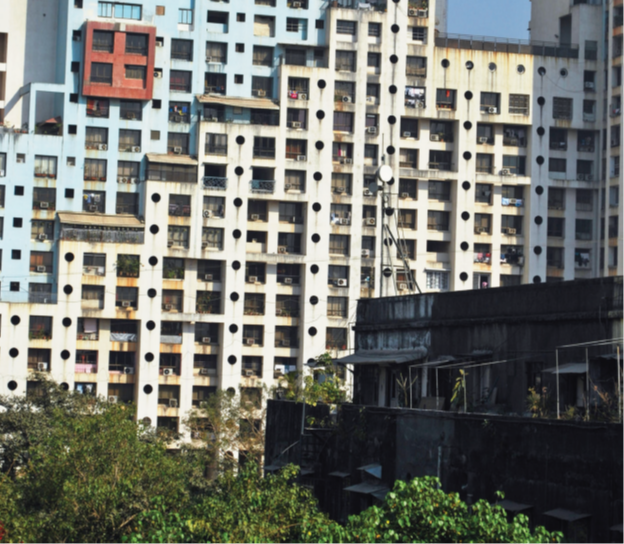
    The rapid growth of cities has led to increasing demand for more residential, office, commercial and retail spaces and the core area of older town and mega cities are saturated, it is estimated that more than half to 95 per cent of the new buildings will come up in resource stressed suburbs and new townships, not to forget that the lack of sound infrastructure and planning coupled with ad-hoc construction in Indian cities have taken its toll. A workshop organised by Centre for Science and Environment (CSE) on Urbanscapes: How sustainable are our buildings and cities, stressed on issues of affordable housing and the notion of what is a sustainable building. According to the 2013 Union Ministry of Housing and Urban Poverty Alleviation (MoHUPA) the number of obsolescent dwelling units (excluding those that are less than 40 years old and those aged 80 years or more) was estimated to be 2.27 million in March 2012.

    Mega cities such as Mumbai, Delhi, Hyderabad, Kolkata, Bengaluru and Chennai have seen maximum urbanisation and that is effecting water, land and other natural resources. Creation of new towns in green areas have further accelerated the perils of striking a balance between demand and supply. With changing lifestyles, cities are and will use up more and more of precious water and energy and will generate massive amounts of waste. So what is the way forward? How do we provide a city that has sustainable housing which works on a two-pronged manner in serving the needs and comfort of the city dwellers on one hand, and not creating pressure on the environment? What are green buildings and are they really a solution? These are some of the questions that surfaced at the workshop. CSE executive director (Research and Advocacy) Anumita Roychowdhury, took the example of traditional Chettinad homes which have sufficient cross-ventilation with big verandahs and courtyards as common feature in most traditional homes in Chennai, as the climate there is hot and humid and hence, it does not require air-tight glass buildings. However, quite a few tight glass buildings in Chennai are being constructed.

    City planners and architect need to look back at traditional wisdom and techniques to find design solutions for modern Indian cities. She also added, “What is worrisome is that Indian cities use more of precious water and energy and generate massive amounts of waste. The construction boon can be a bane as unfettered growth can have a damaging impact. In India, buildings are responsible for 40 per cent of the energy use, 30 per cent of the raw material use, 20 per cent of water use and 20 per cent of land use. At the same time, they generate 40 per cent of carbon emissions, 30 per cent of solid waste generation and 20 per cent of water effluents. With almost 70 per cent of the building stock in India yet to come up, the country is looking ahead to a critical situation.” Sunita Narain, the director general of CSE, cited a very valid problem in terms of the certification of a building being green when she pointed out that there is no clarity on the parameters for a building to be a “green building” also, how do we retrofit modern innovations to an already existing building? These were some of the thoughts to ponder upon.

    Kalyani Majumdar

    www.cseindia.org

  • Of bodies, armour and cages

    Art installation by Shakuntala Kulkarni; Photo courtesy: Chemould Prescott Road

    What does physical protection mean and what are the solutions? These are some of the questions that Shakuntala Kulkarni explores in her recent project.

    Text: Kalyani Majumdar

    Published in Domus India; Date: October 2012

    If only we could walk around the city with a house-like structure around us then we would have protected ourselves from the assault that our physical form is subjected to every day. The constant invasion of personal space is unavoidable in the over-populated Indian cities and Shakuntala Kulkarni has been working on this idea and her recent exhibition at Chemould Prescott Road gallery titled, Of bodies, armour and cages showcased cane armours and costumes that could possibly be used as mediums for protection when walking around in the cities. She has brought historical armours in the modern context but has given them the format of elaborate period costumes and dresses from different times and cultures. Shakuntala is fascinated by the idea of armours made of cane as even though it is masculine, rigid and stiff yet the cane armour has a sense of fluidity and is linear, fragile and has a feminine quality about it.

    Interestingly, her project has conflicting theories as while the armour is protecting the physical self, at the same time it is also restricting the body from exploring and being flexible. The feeling of claustrophobia is clearly reflected in these cane structures. Shakuntala has worked with metals, wires, rubber and leather in her previous projects but somehow none of those mediums worked for her this time. She has always been fond of cane but she never thought of exploring it for her projects. She added, “When Dinesh Pardeshi, a cane worker from the city burnt the cane to give a particular shape to it, the yellow colour of the cane changed to a brownish-black, which I really liked. Initially it was just the visual liking, but then I really fell in love with this material because of the possibilities. And I went by how the cane spoke to me.”

    The cane armours look very delicate and yet they are very strong. Shakuntala worked on the mechanics of the costume. In this project, her work explores outside the realms of photographs and two-dimensional medium to another form of visual space. As part of her art performance she wore the cane costume and walked around the city and she could experience the feeling of being caged and it was difficult to move and the discomfort caused by the armour set limits to her movement, which again represented the limitations that the society imposes on women. When she narrates her experience of wearing the costume, she said that sometimes her hand or her fingers would come in the way while wearing the costume, and it translated to a feeling of binding oneself. The entire costume also involved accessories — bangles, rings — made of cane in order to protect the parts of her body that were exposed. Another interesting fact that Shakuntala observed was that when the cane armour was dismantled and lying on the floorit formed different shapes  crabs, flowers and lamp shades  and the same when assembled to form the costume imbibed a different aura. The project involved her walking around the city and standing amidst the unplanned urbanisation and re-development of the city and here her armour acts as a metaphor for the issues that are plaguing the city. The armour symbolises a medium for protection of the physical space at one level, and also represents the resistance of the physical form towards the ad hoc changes in the urban fabric at another, but this entire process of protection has trapped the form itself in a cage-like structure.

  • Art Deco: The Mumbai connection

    Art Deco: The Mumbai connection

    freepressjournal_import_2017_09_regal

    When a design movement called Art Deco flourished between the two World Wars in Europe, it made its way to Mumbai around the same time and found many takers in the city. Kalyani Majumdar delves into the story.

    Published in Free Press Journal; Date: 03.09.2017

    freepressjournal_import_2017_09_taxi-1-2

    Did you know that Mumbai has the second largest number of Art Deco buildings in the world right after Miami? For most people, it comes as a surprise. Possibly the reason could be that Mumbai is mostly synonymous with the Gateway of India that is an Indo-Saracenic architecture or the famous CST (formerly the Victoria Terminus), a neo-Gothic architecture. So, where are the Art Deco buildings? There is no doubt that Mumbai cityscape is dotted with iconic architectural masterpieces from the colonial period, and walking around South Mumbai is like visiting a museum displaying different architectural styles. However, if you pay attention on the built structures while walking around the Oval Maidan, Marine Drive and Colaba it is not difficult to spot these Art Deco buildings with their signature design elements such as symmetry, geometric designs and decorative motifs on the façade.  Curiously, one might even wonder what it was about Art Deco-style that it found so many connoisseurs in the city. To understand that we need to dive into the history of Art Deco.

    A movement that started in France

    Art Deco derived its name from the French words “Arts Décoratifs”. It was an exhibition that was held in Paris in 1925 called the Exposition Internationale des Arts Décoratifs et Industriels Modernes (International Exposition of Modern Decorative and Industrial Arts). To get selected for the exhibition the works had to be modern that was without the influence of past design-styles.

    Originally, the exposition was to take place in 1915, but was postponed due to the First World War. To a great extent the War had a strong influence on Art Deco’s popularity. The devastation and loss due to the war had left everyone disillusioned of the future. The horrors of war were being expressed through many new art movements that came up around the 1920s such as Cubism, Surrealism and Fauvism. Literary works by Ernest Hemingway and Scott Fitzgerald give us a fair idea of the society of that time.

    With socio-political changes taking place in Europe and around the world, the exposition was a success. Art Deco found many takers as there was something very appealing about this style that was modern and had moved away from the formal design styles that was prevalent till then. Post World War, the world was looking for optimism and that was exactly what Art Deco represented with its simple geometric lines, decorative motifs that brought in inspirations from around the world, and the use of vibrant colours. It was heralding the machine age with the use of technology.

    The designs could be replicated easily, thus bringing down the manufacturing costs along with the introduction of stainless steel, plastics and other unconventional materials. Apart from architecture, this design movement influenced jewellery, automobiles, and furniture designs as well. In the world of architecture Art Deco was fast becoming popular all around the world with the US giving the world the two iconic Art Deco buildings of that era, the Chrysler Building and the Empire State Building. As Art Deco rose in popularity the world over, it had surely become an international movement from its French origins.

    Art Deco found its way to Mumbai

    The time when Art Deco was taking over America, especially Miami, another city across the globewas fast becoming the second home for Art Deco to flourish in. It was none other than Mumbai. It was on the world map as an important port city for British India. Every new trend that was prevalent in the West found a home in Mumbai. In the 1920s the well-heeled and educated Indians from the city that were making frequent trips to Europe brought back the Art Deco style with them back home.

    freepressjournal_import_2017_09_TAXI

    Between 1920s and 1940s Art Deco graced the South Mumbai landscape, especially the residential buildings on Marine Drive that came up on the newly reclaimed land around the same time, thanks to the Backbay Land Reclamation Scheme.  With its optimistic and modern designs that had moved away from the imprint of colonial design-styles such as the Gothic and the Victorian, the Mumbai home owners wanted to do up their properties in the Art Deco style. Art Deco was vibrant and had a global appeal. It was the trend everyone wanted to be part of. Thus, in India just like in the rest of the world, Art Deco made its presence in a big way.

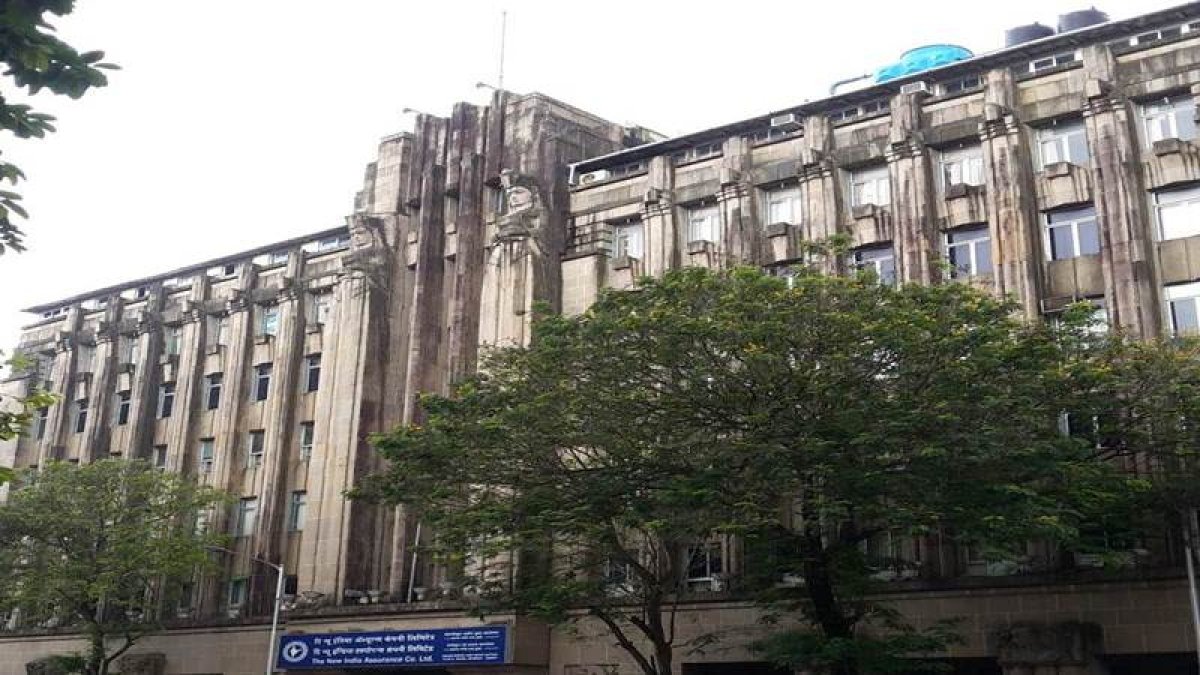
    Apart from the geometric patterns and the need for symmetry, one also observes nautical elements being part of the Art Deco buildings in Mumbai. One can see the new age design elements on buildings such as the Eros Cinema right across Churchgate station that was completed in 1937, or the decorative motifs on the façade of the iconic Regal Cinema in Colaba that was opened to public in 1933. Another notable Art Deco building is on the Mahatma Gandhi Road in Fort — The New India Assurance Building. It has bas reliefs depicting rural life in India, but what catches your attention first are the two huge statues on the façade that appears of Egyptian origin. It is indeed a long list of beautiful Art Deco buildings that exist in the city.

    So, next time when walking on the streets of Mumbai do pay attention to the buildings that you pass by, you might stumble upon an Art Deco hidden somewhere in the urban cluster of high rises that stands as a testimony of the era that was popularly known as the roaring 20s or the Jazz Age.

  • Haunting Notes from Mumbai

    KALYANI MAJUMDAR explores Sarnath Banerjee’s ongoing exhibition, which brings a trove of stories from the supernatural realm that engages with the city of Mumbai. 

    (Published in Free Press Journal; Date: 26.05.2019)

    freepressjournal_import_2019_05_W_end_May26_pg4_anchor-left-1

    Every city has its fair share of ghost stories. I remember when I first arrived in Mumbai, I was told stories by people coming from various walks of life about certain buildings and roads in the city that are associated with apparitions. The Spectral Times is an exhibition of works by the Berlin-based renowned artist and graphic novelist, Sarnath Banerjee at Dr Bhau Daji Lad Museum (BDL). The exhibition brings forth stories that take the visitors through a wonderful journey into the temporality of haunting, wherein, the past and the present seems to overlap. The exhibition is curated by Tasneem Zakaria Mehta, Managing Trustee of BDL, and co-curated by Himanshu Kadam. This is part of the museum’s decade-long series, Engaging Traditions, which invites contemporary artists to engage with its archives and history.

    The exhibition space

    From the entrance of the BDL Museum, and through the hallway on the ground floor you make your way up a flight of stairs onto a hall that leads you to a room with an interesting choice of lighting that creates a strong contrast of dark and light, very different from the rest of the museum space, lending it a feel of an old painting or a photograph with chiaroscuro lighting. It has a cabinet filled with a collection of objects such as a man’s head, a book on Arabic surgeries and so on. There are few chairs arranged in a circle for the visitors to sit. The exhibition area is divided into three sections. The next section of the room showcases Banerjee’s artworks. The illustrations combined with sound installations narrating fictional tales that mostly have an eerie ending, creates an engaging environment. The exhibition commands full engagement of all your senses as it is recommended that once you listen to the narratives, you must revisit the artworks, and see the characters come alive and you as an onlooker become a part of the process of storytelling. The third section of the room is separated with a black curtain, you step in the section and sit on one of the chairs arranged facing an old radio. While you sit and listen to another story with an anticlimactic ending with the storyteller being a woman with the severed head, you can’t help but take in the surrounding of the room with a derelict spiral staircase at the corner that has lost its functionality with time and you wonder how the theme of the exhibition fits the museum space as the past keeps reasserting itself through the stories. Narrated in the form of a magazine interview, Birjis Bari, a fictional reporter continues to provide us scintillating tales through the news periodical, The Spectral Times.

    Magic of storytelling

    The exhibition uses the radio component and takes us back in time when the only source of news, entertainment and information was radio. Now, we have videos for everything, however listening to a story in a radio provides us the freedom to imagine the characters of the story, the atmosphere and everything else. It has its own magic.

    Illustrations and narratives

    Although almost all the stories have eerie endings each story also depicts city life and its people. For instance, there is a couple that meets at Dom’s Guesthouse. Even though they belong to the city and yet they ritualistically make it a point to spend few days at the guesthouse and experience the city as two strangers. Of course, there is a spectral angle to this narrative as well. Then there is Shehri Adamkhor that recounts the story of a man, who has shifted cities and is trying to quit smoking and talks about his cannibalistic behaviours. The narration is laced with dark humour. Then there is an artwork titled, Milk Colony, that has a narration revolving around the Aarey forest wherein several auto-rickshaw wallas share their experience of spotting a ghostly figure that appears out of nowhere and sings a very famous Hindi movie song. However, there are some stories that are more unsettling than the others, like the Fidaly Mansion.

    After spending a good amount of time soaking in the dramatic atmosphere accompanied with the narratives, when you step out of the room into the hall with its bright light and merge into the sea of visitors to the museum, there is a sort of longing for that atmosphere that you just left behind in the room with its spectres and their tales. You are forced to wonder about this inherent fascination that we have for apparitions and the unexplained phenomenon. Is it the ghost narratives that are merely reasserting itself in our stable present that makes it unsettling for our logical understanding of concepts that are linear? Or, are we just fascinated by the idea of temporality of haunting, through which events and people return from the limits of time and mortality? Perhaps, both!

    Event details:

    On till May 26, 2019

    Timings: 10 am– 6 pm (Wednesday closed)

    Venue: Dr Bhau Daji Lad Museum, Ranibaug, Byculla East, Mumbai