Tag: travel

  • Six must-do activities in Kolkata

    Six must-do activities in Kolkata

    By Kalyani Majumdar | Published in Free Press Journal |10.06.2017

    Whether you are a foodie, an architecture enthusiast, a book worm, a history buff, or a poet at heart, Kolkata has something for everyone, says Kalyani Majumdar who lists six must-do activities to do in the city

    Through the meandering streets and by lanes flanked with a mix of colonial, vernacular and modern built structures you land on a busy street where along with cars, bikes and buses you see a tram moving at its own pace. That is Kolkata for you! With all the hustle and bustle of a city it still manages to have a whiff of leisurely pace to it.

    The Trams from yore
    Did you know that the trams in Kolkata are the oldest electrically operated trams in Asia?At first when it was introduced by the British in 1873 it was horse drawn. In 1902 they became electric. This is the only tram network in India which is still operating. The slow pace of a tram ride gives you an opportunity to enjoy the sight and sound of the city properly and has the added feel good factor that your mode of transport is environment friendly. The old trams still have wooden interiors. If you want to feel nostalgic of the good old days then choose a tram ride that take you northwards of the city as that is the old part of Kolkata.

    Trams still run on Kolkata streets | Image credit: Kalyani Majumdar

    College Street and Coffee House
    The name College Street goes back to 1817 when Sir David Hare started the Hindu College. Now of course, it also has Kolkata’s most prestigious and renowned academic institutions such as the University Of Calcutta, Calcutta Medical College, Presidency College, Sanskrit College and Hare School. This stretch is a paradise for book lovers. It is a one stop place for all your book search.

    Once you are done with your book browsing, stop at the legendary Coffee House. Even if the coffee they serve is too sweet for your palate, and the fact that the place does not have fancy amenities, it can beat any modern coffee shop for its old world charm.  A spiral staircase takes you to the coffee house. Waiters wearing headdress greets you, as a young Rabindranath Tagore looks on over everyone from his life size portrait. The place has been graced by notable personalities such as Rabindranath Tagore, Subhas Chandra Bose, Satyajit Ray, Manna Dey, Amartya Sen, Shashi Kapoor and Aparna Sen to name a few.

    Exploring the streets, museums and ghats

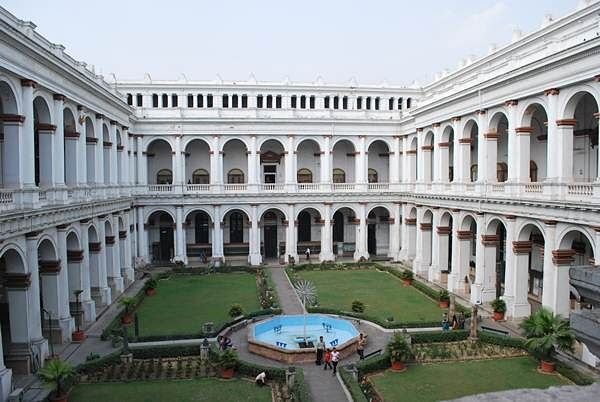
    The oldest museum in India The Indian Museum, Kolkata | Image credit: Kalyani Majumdar
    Jorasankho is the house where Rabindranath Tagore lived, now it is a museum | Image credit: Kalyani Majumdar

    Walking is the best way to not miss the vibrant energy of the city. Amix of architectural styles can be observed such as the Victorian, Neo classical, Indo-Saracenic and also few art-deco buildings.Do not miss the majestic Esplanade mansion, built in 1910. Also, visit the Indian Museum. It is the oldest in India founded in 1814. In 1878 it was transferred to the present building. It houses an Egyptian mummy.

    Make a trip to the Marble Palace in North Kolkata. Walking around this property takes you back to the 19th century. It is a popular location for movie shoots. Also, nearby is the JorasankhoThakurbari. It was built in 1785and was the ancestral home of Rabindranath Tagore. It houses a lovely museum which is worth visiting.

    The Ganga ghat and the boat rides beacon | Image credit: Kalyani Majumdar

    After a good measure of history and culture take a leisurely walk either at the Princep Ghat or the Outram Ghat in the evening. It is highly recommended that you take a boat ride under the starlit sky and appreciate the Vidyasagar Setu, a cable-stayed bridge from the river.

    A dose of spirituality
    Plan an early morning visit to the beautiful Dakkhineshwar temple. It was built in 1855 by Rani Rashmoniand has a traditional Bengali nine-spired architectural style. The spacious temple complexis dedicated to Goddess Kali and is associated with the spiritual leader Shri Ramakrishna Paramhansa.From here take a boat ride across Hooghly River to visit Belur Math. It was founded in 1938 by Swami Vivekananda. The serene and quiet atmosphere at Belur is a perfect place to unwind while providing a splendid view of the river.

    The potters of Kumartuli (to read more about Kumartuli visit my article here)
    A trip to Kolkata is incomplete without visiting Kumartuli. The name Kumartuli or Kumortuli comes from the Bengali word kumor meaning potter and tuli meaning locality. As you negotiate through the labyrinthine lanes of this area it is like visiting an art and crafts workshop. Rows of idols of Durga and the entire pantheon can be seen standing on either sides of the narrow lanes as you see sculptors in action. The idols for Durga Puja are prepared here and also exported to different parts of the world. It is an amazing place for budding photographers and is a delightful experience to interact with the potters.

    Although the name of the city changed from Calcutta to Kolkata in 2001, the city has managed to keep the unique mix of both worlds alive in a graceful manner, and that is perhaps what adds to the extraordinary charm that Kolkata imbues.

  • Bangalore: Exploring the multi-layered history of the city

    Published in Free Press Journal; Date: 14.02.2018

    If the soul of a city is uncovered by walking the streets, then definitely it holds true for Bangalore as it reveals itself beyond its IT hub and impersonal glass buildings. Kalyani Majumdar explores the multi-layered history of the city.

    As you look past the traffic and catch sight of rows of pink and yellow flowers against the clear blue sky, for a second you forget the traffic, and savour the moment. Welcome to Bangalore/Bengaluru.

    Rise of a modern city

    Bangalore came into significance in 1537 AD, when Kempe Gowda I, a feudatory of Vijaynagar Empire laid the foundation of the city by building a mud Fort, wherein people of different vocation had their settlements. After him, it changed many hands from the Marathas to the Mughals, followed by Hyder Ali and then his son Tipu Sultan and finally, the British Empire. They have all left their imprints on Bangalore. However, Bangalore flourished as a city once the British took over. It started with the shifting of British Headquarters from Mysore to Bangalore in 1837. Gradually, the city witnessed a steady development of wider roads, boulevards, railway lines, improved post and telegraph facilities, and buildings.

    A royal experience

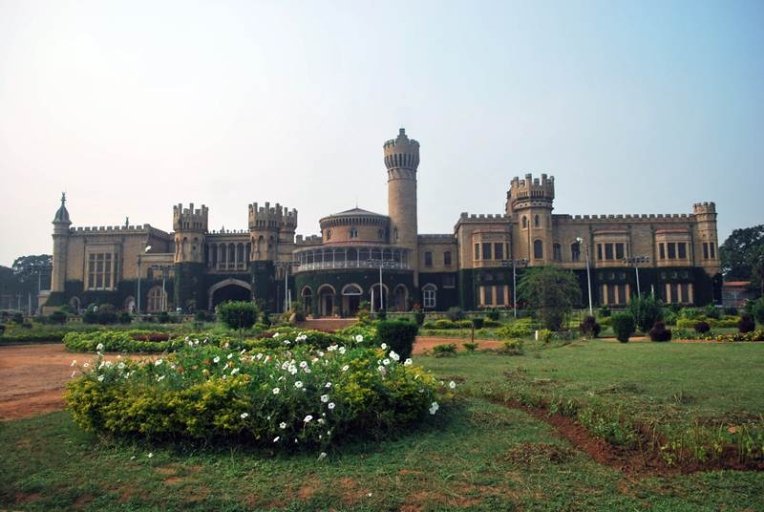
    A grand view of the Bangalore Palace; Photo credit: Kalyani Majumdar

    As you approach the Bangalore Palace, it is hard to miss the close resemblance of the exterior with the Windsor Palace in England. It is a magnificent Tudor-style structure facing a beautiful garden and has royalty written all over its façade. The plot was bought by King Chamaraja Wadiyar’s guardians in 1873. The palace was built in 1887. Once inside it is hard to miss the bright yellow-coloured ballroom with its decorated columns, ceiling and arches. After taking in the splendour of the ball room walk up a wooden staircase to the Durbar Hall. The huge room with its embellished interiors, huge chandeliers and a beautiful collection of art is indeed a rich experience. The corridors have exhibits from Maharajas hunting escapades. One of the courtyards has a beautiful coloured-tile bench gifted by an erstwhile Spanish royal. It is highly recommended that you walk the lane lined up with trees on your way to the exit.

    From South Parade to M.G Road

    It is not just now that M.G Road in Bangalore is famous for being the centre of social life. Even during the British era, it had a similar character and was known as South Parade. The building that now has the office of Deccan Herald was once where the popular Funnel’s Restaurant stood. Next to it, is the iconic Higginbotham book store. It has been there since 1905. Recently, it revamped its interiors and now it has reopened with a colourful interior and the façade looks bright as well. The book store has a fantastic collection. There is certainly a sentimental factor attached to this bookshop that has catered to generations of booklovers and still continues to do so. It is lovely to see how the old and the new has blended effectively on this particular stretch. Across the road, alongside the metro station there is a lovely boulevard. The walkway is almost half a kilometer and is lined up with white and pink bougainvillea. It is so refreshing even though it is right next to a busy road.

    The roads from the past 

    Book Society on St. Marks Road; Photo credit: Kalyani Majumdar

    At the intersection where M.G Road meets St. Marks Road, you can see a gothic building with etching in bold letters that say, ‘Book Society’. It was built in 1912. Part of the building is now the Hard Rock Café and apparently, sometime back it also had a HMV record store. As you continue further on St Mark Road the prestigious Bowring Institute is on view. From there you can easily negotiate through wide streets to reach the Museum Road, lest you are not wearing comfortable shoes. In 1865, part of the Cantonment Jail building on this road, now Good Shepherd Convent, served as the Government Museum, before it was shifted to its present location on a beautiful neoclassical structure in Kasturba Road, in 1878. Nevertheless, the road retained its name, thus keeping alive a part of history. Also, on the same road right next to the Post Office stands a 150-year-old tiled-roof building that serve as the office of the senior superintendent of post office.

    Cubbon Park 

    A statue of Queen Victoria stands at one corner of the Cubbon Park; Photo credit: Kalyani Majumdar

    If you approach Cubbon Park from Kasturba Road then you will come across a statue of Queen Victoria standing at the corner of the Park, facing the busy street, perhaps wondering how much the city has changed since 1906. The Cubbon Park was established in 1870 by John Meade and the landscaping was done by Richard Sankey. It is a lovely place to park yourself under a tree with a book.

    Imprints from the past 

    The Glass House at Lalbagh Botanical Garden; Photo credit: Kalyani Majumdar

    At the entrance of the Lalbagh Botanical Garden there is a peninsular gneissic rock, dated to about 3,000 million years, making it one of the oldest rock formations on the planet. And atop the rock is the Kempe Gowda tower. Hyder Ali laid its foundation in 1760. It was a pleasure garden till William New, a gardener from Kew in London came to Lalbagh in 1858 and turned the place into a scientific research centre and maintained a regular inventory of the trees. He lived in a small cottage inside Lalbagh which is now the Lalbagh library. In 1874, John Cameron took over as superintendent of Lalbagh. He too did many experimental cultivations within the garden. He proposed the idea of a Glass House. It was built in 1889 inspired by the famous Crystal Palace of London. It houses many flower shows and is a must-see.

    Outside the Lalbagh gate, there are stalls selling fresh fruit juice in the morning. One might wonder, if this was perhaps the spot where Cameron enthusiastically distributed seeds of new vegetables that he grew, to the passing farmers. We do owe him Chayote, a popular vegetable in Karnataka. Stories such as these crop up when one steps out on the streets of this city to listen to the echoes from the past and weave them into an urban narrative.

  • Why Oise in Northern France is a revelation

    Why Oise in Northern France is a revelation

    Even though Oise in Northern France, not far from Paris is usually missing from most travel itinerary, it is a revelation as KALYANI MAJUMDAR found out after visiting this picturesque place with its landscape, people and history.

    Published in Free Press Journal; Date: 01.04.2018; My article has been translated by a French Magazine Courier International. Click here to read it in French

    The serene beauty of Sacy-le-Petit in Oise; Image credit: Kalyani Majumdar

    As I bicycled my way through the expansive undulating green flatland on both sides of the road that met the blue sky, it seemed like an endless horizon. When I decided to undertake immersive travelling through volunteering on sustainable and organic farms across France, I had no idea what was in store for me here in Oise.

    Digging into the history

    The geographic location of Oise in Picardy region is strategic to many important events in history as it has always been the passage to Paris and thus played an important role in communication during the two World Wars. Occupied from September 1914 to March 1917, ravaged by the battles of 1918, this peaceful region has had its share of bloodshed and war.

     It was also the first French department to be liberated, and even the signing of the Armistice took place in Compiègne Forest in Oise on 11 November 1918. Moreover, this region is also associated with the sugar embargo of the 19th century. During the Napoleonic war in the 1800s, the British had blocked the French trade routes with the Caribbean Islands which led to massive shortage of sugar in France. As a solution, Napoleon I introduced sugar beet to counter the sugar embargo. The fertile lands of Oise grew it in abundance and the region grew rich. Whether you are a history enthusiast or a nature lover, there is something here for everyone.

    Unmissable dungeon 

    Donjon de Vez; Image credit: Kalyani Majumdar

    Located in the middle of Oise, Donjon de Vez is hard to miss with its imposing grey structure that is surrounded by lush green landscape. It is a medieval dungeon dating back to Gallo-Roman period. Initially, it was a structure mainly made of wood and stone that was built to protect the Gauls against the invasions by the Barbarians, of which nothing is left today. In 1214, Raoul Ducheim, who later Latinised his name and came to be known as d’ Estrees, re-planned, fortified and restored the structure.

    He added the three-storied living quarters, some of which still remains. In 1360, his great-grandson Jehan de Vez added the pentagonal-shaped tower. The terrace consists of machicolations and perhaps it was the primary defense system. At its present state, it is maintained by Caroline and Francis Briest. Because of their efforts they have given a new lease of life to the structure. It showcases permanent art installations—sculptures, paintings and stained glass artworks. Especially on a nice sunny day one could easily spend few hours at the Vez.

    Sacy-le-Petit 

    The expansive flatland in Sacy-le-Petit; Image credit: Kalyani Majumdar

    Sacy-le-Petit is a commune in Oise and dates back to pre-historic and Roman period. One can either drive down from Paris or board a train from Paris to Pont-Sainte-Maxence. There are taxis available at the station. The winding roads are dotted with houses made of red bricks mostly. The villages of Picardy region has a distinct culture and architectural style that can be seen in this commune as well. Before visiting this place while looking through images I had come across a photograph from 1940, of an abandoned French tank sitting on a farmland in Sacy-le-Petit, being inspected by the Germans.

    It is the same commune, yet its serene beauty belies the gruesome bloodshed that this region has seen. From May to July would be the best time to visit this region when the flowers are in full bloom in the gardens, and farm lands are green. Sacy-le-Petit is majorly an agricultural area. There are inns and hotels available here for a comfortable stay. The popular places to visit nearby includes Compiègne.

    Chateau de Sacy 

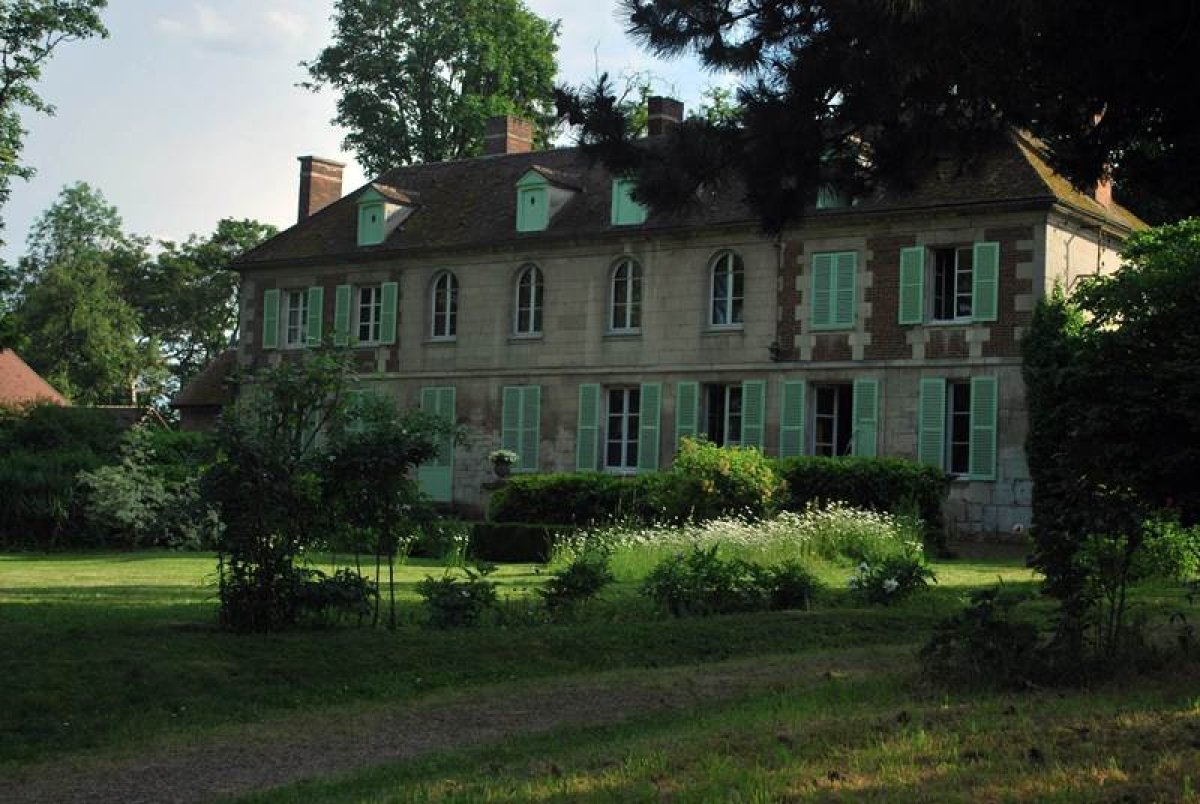
    Chateau de Sacy; Image credit: Kalyani Majumdar

    I was fortunate to volunteer at the Chateau de Sacy in Sacy-le-Petit during the same week as the festival of L’Oise Verte et Bleu, L’événement Grandeur. It is a festival to celebrate and discover the culture of Oise that includes outdoor activities, local culinary feasts and so on. Chateau de Sacy is situated in the middle of a large organic garden and is surrounded by a lovely collection of tall trees. The chateau is steeped in history and is closely linked to the history of Sacy-le-Petit. In the 19th century, Claude-François and Madeleine-Félicité Dupressoir had decided to take over this house and brought along things that were dear to them from their old castle, items such as, woodwork, trumeau, fireplaces and plates, the balustrade Louis XIV.

    Later on, as the region became rich by growing sugar beet during the sugar embargo they turned the two farms and a garden into a chateau. The current occupant is Hermine Williams, who inherited the house and is a descendant of Madeleine-Félicité and Claude-François Dupressoir.  There are organised tours of the Chateau de Sacy that should not be missed. Cycling and walking are the best way to see the sights and mingle with the friendly locals. Every weekend there is a flea market nearby, and is a great opportunity to immerse into the local culture.

    Perhaps the fact that this region of France has remained free from tourist traps, that it is still in its pristine form. For me, even now, Oise is embedded in my memory. It still continues to stir my imagination as I can still feel the wind in my hair and remember the intriguing stories that I have heard, some of which are now part of my story.