Author: Kalyani Majumdar

  • Keep your date with your Yoga mat

    Keep your date with your Yoga mat

    Clockwise from far top left: Stretching my leg while in Setubandha asana (the bridge pose); Ashwa Sanchalanasana (part of the Surya Namaskar); Singing a song during Shavasana at the Sivananda Ashram, Kerala; Bhujanaga Asana (cobra pose); Prananmasana (prayer pose); Shirshasana (one of my favourites); Adho Mudha Savana asana (part of Surya Namaskar, here I am demonstrating it in a Sivananda Yoga class); Variation of Shirshasana (Goa beach); That’s just me doing a bit of acrobatics at the Sivananda dorm; stretching exercise while exhaling.

  • Starry Starry Nights in Lossar village in Spiti.

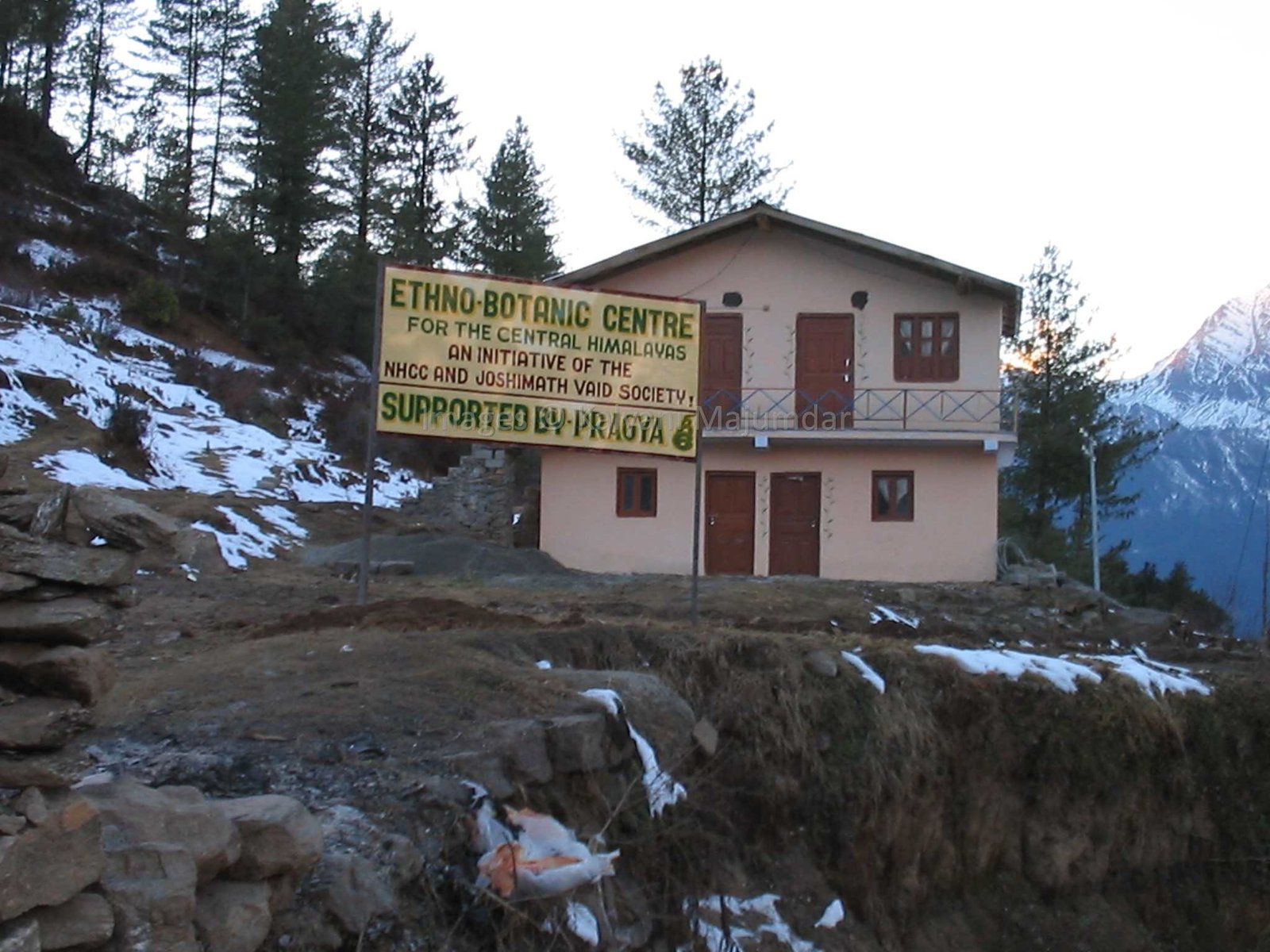
    I was part of a Heritage project in Lossar village in Spiti. It is at an altitude of 13,402 feet and is the first village in Spiti after crossing Kunzhum Pass.

    By Kalyani Majumdar

    A view of the Lossar Village. Photo clicked by Kalyani Majumdar

    On the day when I arrived to Lossar village in Spiti Valley of the Lahaul and Spiti district, it was not an ordinary day. Someone had died in the village, so there was a general quietness in the already quite and remote village. Lossar also has the check post where the Indian Army checks your passport. When I had arrived I had no idea what adventures and beauty awaited in the village.

    The Manali and the upper regions were going through a dry spell throughout July 2004 but then in the first week of August 2004 all hell broke loose when torrential rains brought along with it flash floods which washed away Kothi bailey bridge, Kothi is around 13 km north of Manali on the Manali-Leh highway. How exactly the people of Spiti were affected? Well, Spiti was already remote, but the landslides made it a valley disconnected from the rest of the civilization for sometime — I am not being a tad bit dramatic when I say that we were cutoff from the rest of the world. (In the following posts I will try to describe the region and the situation more graphically).

    So, the flash floods brought along a huge quantity of debris consisting of old trees left-over timber and large boulders, which completely destroyed this bridge. Just sometime back the Shimla-Spiti circuit had been affected due to a massive landslide at the Malling Nullah making movements from Shimla to Spiti difficult. (This itself has a very interesting story that I will tell in the part 2 of this post).

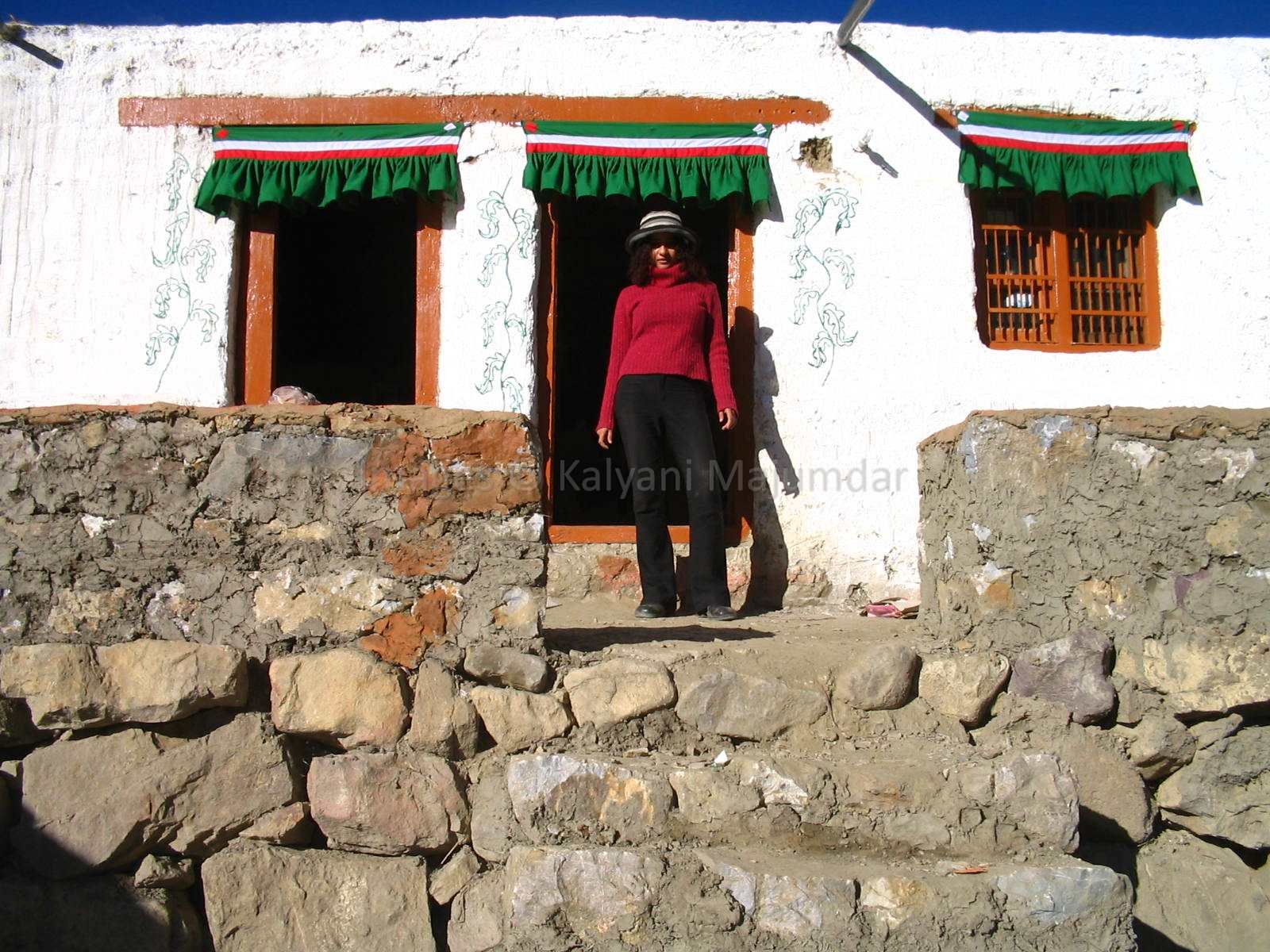
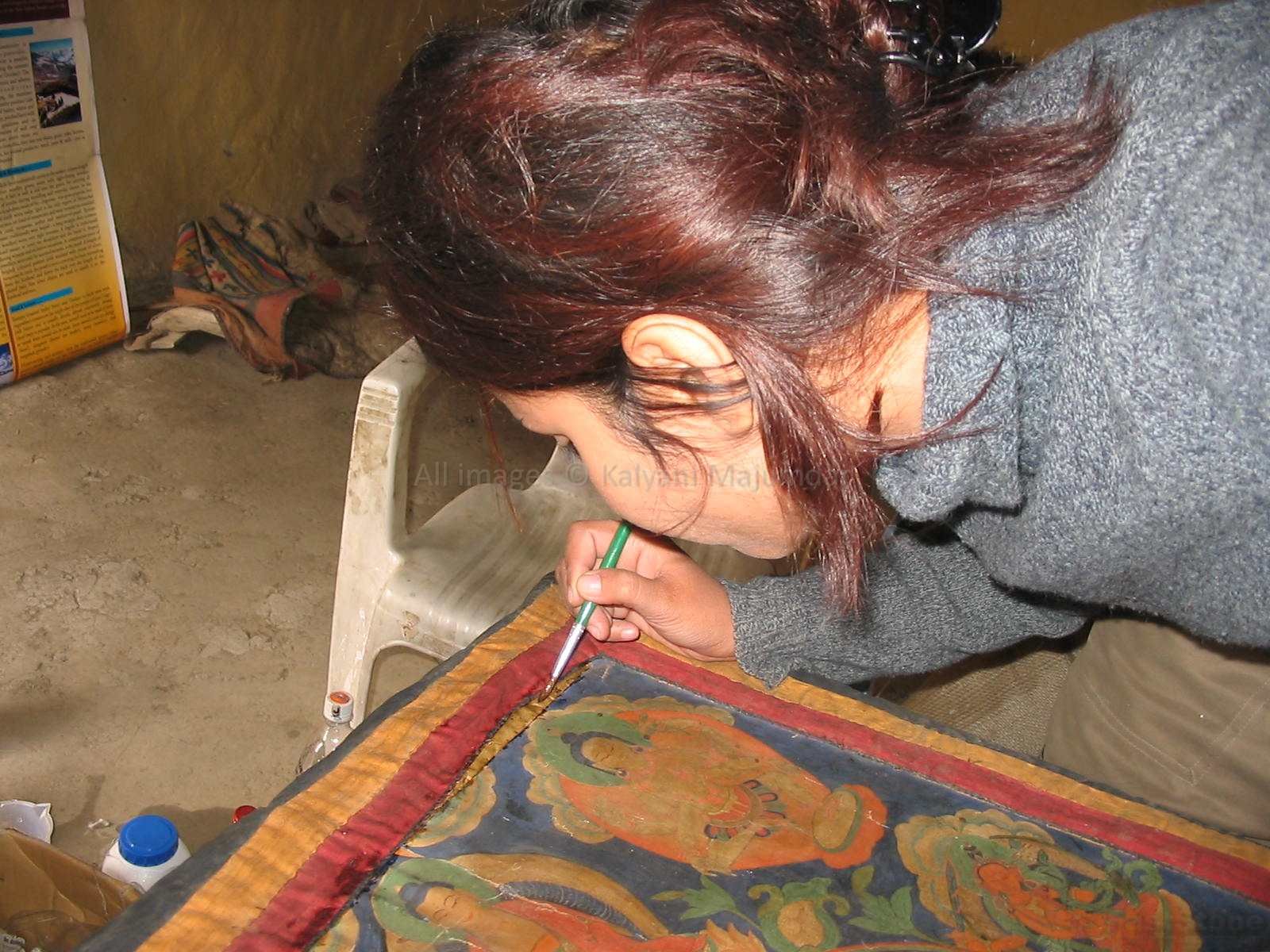
    I was there to refurbish the Rural Museum at Lossar and its interior along with some conservation work on the manuscripts and Thangkas (Buddhist religious paintings done on silk or cotton).

    Top left: I am cleaning a Thangka painting; Top right: An old manuscript; Right: My fellow team member Jeremie helping me refurbish the rural museum; Bottom: A view of the Lossar rural museum

    Let me remind you, this was also the 2004-2005 when in Himachal Pradesh only BSNL mobile network worked and that too not in the remote areas of Spiti and Lahaul. So, we had to travel all the way to Kaza to make a phone call from a paid booth there were only two booths and there were times when I remember we used to get a ride all the way to Kaza but then the phone lines would be down so an absolute waste of all the travel and an entire day. Yes, such were those places. We had to stay in these places for 3 to 5 months at a stretch till the projects were over and then come down to our head office in Gurgaon. So, we were accustomed to this local lifestyle. Everybody in the village knew us.

    Alongside the heritage project, we were also having a massive Alternative Energy project going on and the Pragya team were to set up a windmill that would produce 6.1 KW of energy, enough to run a primary health centre, a women’s weaving community centre, a rural library and the rural museum. The parts of the windmill were also stuck due to the landslides. How the entire windmill was brought up to Lossar itself makes an interesting story in itself.

    Witnessing a rainbow. Photo by Kalyani Majumdar

    Remote areas such as Lossar had a lack of power supply and due to this zero power supply the night sky at Lossar was the clearest at an altitude of 13,402 feet above sea level, the air was clear and without light pollution it was a magnificent view. You could spot all the constellations so clear with your naked eyes. I remember after the windmill was installed I often used to sit under the solar panels on the roof to protect myself from the strong wind and stare up at the sky and enjoy the silence and the stillness of the night that only a place like Lossar could provide.

    Then one morning I even had the opportunity of seeing a perfect rainbow (left).

    When I look back to these moments, I can only feel fortunate to have been given such work opportunities that made me spend such long times in these places.

    Well the story does not end here. I will publish the second part of this story that will talk about the certain rituals that the villagers follow regarding the dead and more about what happened when the landslides secluded us from the rest of the valley.

    I want to thank: Gargi Banerji (Founder-Director, Pragya) and Sunil Pillai (Director, Pragya).
    The Pragya Team members: Mala, Bhaskar Reddy, Sourav Roy Choudhuri, Jeremie Robert, Anurag Mishra 

  • Six must-do activities in Kolkata

    Six must-do activities in Kolkata

    By Kalyani Majumdar | Published in Free Press Journal |10.06.2017

    Whether you are a foodie, an architecture enthusiast, a book worm, a history buff, or a poet at heart, Kolkata has something for everyone, says Kalyani Majumdar who lists six must-do activities to do in the city

    Through the meandering streets and by lanes flanked with a mix of colonial, vernacular and modern built structures you land on a busy street where along with cars, bikes and buses you see a tram moving at its own pace. That is Kolkata for you! With all the hustle and bustle of a city it still manages to have a whiff of leisurely pace to it.

    The Trams from yore
    Did you know that the trams in Kolkata are the oldest electrically operated trams in Asia?At first when it was introduced by the British in 1873 it was horse drawn. In 1902 they became electric. This is the only tram network in India which is still operating. The slow pace of a tram ride gives you an opportunity to enjoy the sight and sound of the city properly and has the added feel good factor that your mode of transport is environment friendly. The old trams still have wooden interiors. If you want to feel nostalgic of the good old days then choose a tram ride that take you northwards of the city as that is the old part of Kolkata.

    Trams still run on Kolkata streets | Image credit: Kalyani Majumdar

    College Street and Coffee House
    The name College Street goes back to 1817 when Sir David Hare started the Hindu College. Now of course, it also has Kolkata’s most prestigious and renowned academic institutions such as the University Of Calcutta, Calcutta Medical College, Presidency College, Sanskrit College and Hare School. This stretch is a paradise for book lovers. It is a one stop place for all your book search.

    Once you are done with your book browsing, stop at the legendary Coffee House. Even if the coffee they serve is too sweet for your palate, and the fact that the place does not have fancy amenities, it can beat any modern coffee shop for its old world charm.  A spiral staircase takes you to the coffee house. Waiters wearing headdress greets you, as a young Rabindranath Tagore looks on over everyone from his life size portrait. The place has been graced by notable personalities such as Rabindranath Tagore, Subhas Chandra Bose, Satyajit Ray, Manna Dey, Amartya Sen, Shashi Kapoor and Aparna Sen to name a few.

    Exploring the streets, museums and ghats

    The oldest museum in India The Indian Museum, Kolkata | Image credit: Kalyani Majumdar
    Jorasankho is the house where Rabindranath Tagore lived, now it is a museum | Image credit: Kalyani Majumdar

    Walking is the best way to not miss the vibrant energy of the city. Amix of architectural styles can be observed such as the Victorian, Neo classical, Indo-Saracenic and also few art-deco buildings.Do not miss the majestic Esplanade mansion, built in 1910. Also, visit the Indian Museum. It is the oldest in India founded in 1814. In 1878 it was transferred to the present building. It houses an Egyptian mummy.

    Make a trip to the Marble Palace in North Kolkata. Walking around this property takes you back to the 19th century. It is a popular location for movie shoots. Also, nearby is the JorasankhoThakurbari. It was built in 1785and was the ancestral home of Rabindranath Tagore. It houses a lovely museum which is worth visiting.

    The Ganga ghat and the boat rides beacon | Image credit: Kalyani Majumdar

    After a good measure of history and culture take a leisurely walk either at the Princep Ghat or the Outram Ghat in the evening. It is highly recommended that you take a boat ride under the starlit sky and appreciate the Vidyasagar Setu, a cable-stayed bridge from the river.

    A dose of spirituality
    Plan an early morning visit to the beautiful Dakkhineshwar temple. It was built in 1855 by Rani Rashmoniand has a traditional Bengali nine-spired architectural style. The spacious temple complexis dedicated to Goddess Kali and is associated with the spiritual leader Shri Ramakrishna Paramhansa.From here take a boat ride across Hooghly River to visit Belur Math. It was founded in 1938 by Swami Vivekananda. The serene and quiet atmosphere at Belur is a perfect place to unwind while providing a splendid view of the river.

    The potters of Kumartuli (to read more about Kumartuli visit my article here)
    A trip to Kolkata is incomplete without visiting Kumartuli. The name Kumartuli or Kumortuli comes from the Bengali word kumor meaning potter and tuli meaning locality. As you negotiate through the labyrinthine lanes of this area it is like visiting an art and crafts workshop. Rows of idols of Durga and the entire pantheon can be seen standing on either sides of the narrow lanes as you see sculptors in action. The idols for Durga Puja are prepared here and also exported to different parts of the world. It is an amazing place for budding photographers and is a delightful experience to interact with the potters.

    Although the name of the city changed from Calcutta to Kolkata in 2001, the city has managed to keep the unique mix of both worlds alive in a graceful manner, and that is perhaps what adds to the extraordinary charm that Kolkata imbues.

  • Sense and Sensibility

    Sense and Sensibility

    KALYANI MAJUMDAR PRESENTS FIVE ARCHITECTURAL MASTERPIECES THAT

    SATISFY THE AESTHETE’S SEARCH FOR ARTISTIC INTEGRITY AND INGENUITY

    Published in India Today, Spice magazine | 2010

    Style before, after or alongside substance? While starchitect Louis Sullivan’s axiom ‘form follows function’ is the touchstone for many modern architects, Frank Lloyd Wright—who considered Sullivan his mentor—always believed that ‘form and function should be one, joined in a spiritual union’. Much like the Roman architect Vitruvius, Spice believes that a good building should satisfy the three principles of firmitatis utilitatis venustatis, i.e., durability, utility and beauty. Keeping that in mind, we traversed the globe to unearth some recent architectural gems that are in sync with Vitruvius’ principles and have become the landmarks of an urban landscape that is ever hungry for the nouveau. From reinvented old spaces to innovations in building materials, we found plenty to give us pause. Here are our top picks.

    Centre POMPIDOU, Metz, France

    Designed by architects Shigeru Ban and Jean de Gastines, the Centre Pompidou-Metz in France is a branch of the major French cultural institution—the Centre Pompidou in Paris. The roof structure was assembled by weaving six beams into a hexagon—an innovative benchmark concept in the construction world—covering a total surface area of 10,700 sq m, including 5,000 sq m of gallery space. The innovations do not end there; in order to protect the wooden frame from rain, sun and wind, the entire structure is covered by a textile membrane made of fibreglass and Teflon. The membrane is translucent, letting through 15 per cent of the light to reveal the hexagonal roof structure at night when the building is lit from the inside.

    Talk about a breathtaking view! The interior of the building opens up to vast, modular exhibition spaces whose mammoth dimensions can accommodate large installations and gigantic sculptures. Other areas such as the forum, the restaurant terrace and the garden provide additional arenas for exhibitions. The centre also has a studio for live performances, an auditorium, a resource centre, bookshop, a restaurant and a café. In time, the centre plans to become an art hub where visitors will be exposed to different forms of art, live shows, films and seminars along with the temporary exhibitions. At present, the Centre Pompidou-Metz is getting its finishing touches before it opens in May 2010 with a grand show. That done, Metz may just become the next Paris. Cheers à cette!

    Conga ROOM Los Angeles, US

    Designed by the award-winning Belzberg Architects and co-owned by a group of LA glitterati including Jennifer Lopez and Will. I. Am of the Black Eyed Peas, the Conga Room in Los Angeles is no ordinary nightclub. For over a decade, the club was a local cultural landmark and a centre for salsa and rumba. Then, in 2006, it closed down for two years before reopening in December 2008 in the new LA Live complex in downtown Los Angeles, with a grand show that reflected the vibrant energies of Barcelona and Mexico city. Clubbers entering the building at ground level and climbing up a staircase to reach the 1,500 sq m dance floor are greeted by a tornado-like cylindrical, acrylic structure that acts as both a spatial organiser and star attraction. In sync with the club’s Latin feel, the 20-foot tall  ‘tornado’ snakes its way up the floors to the club ceiling where it morphs into a diamond pattern that’s derived from the classic rumba dance step. The thousands of panels that come together to form the gorgeous ceiling work are not just for beautification but also to soundproof the room. To further intensify the experience, the room boasts an LED lighting system which changes the colour and atmosphere of the space at the push of the button.

    Hoto FUDO Mt Fuji, Japan

    Is it an igloo? Or is it an edifice from a sci-fi thriller? Neither, actually. It’s a noodle restaurant at the foot of Mount Fuji. Designed by Takeshi Hosaka Architects in 2009, Hoto Fudo serves quintessential Japanese cuisine alongwith food for the aesthetic soul. The curved organic shape of the one-storey building is formed by a steel rod frame reinforced with concrete. The free standing, cave-like structure is designed to stay open in all but the most extreme weather conditions, with rain falling at the edges of the interiors, fog entering through the large openings in the wall, and winds circulating through the concrete shell. Only on the coldest of days are the curved acrylic doors pulled shut. It’s not as bad as it sounds: 60-mm-thick urethane insulation on the outside of the reinforced concrete shell secures a stable temperature for the building. The lighting inside is simple and the interiors minimalist with fuss-free wooden furniture. The total built-up area runs to 734 sq m, with 530 sq m allocated for seating, 140 sq m for kitchens, and the rest given over to the restrooms. The USP of Hoto Fudo lies in its look and a location that flirts with the elements. Imagine the relish of a perfect bowl of noodles with the spectacular watercolour of Mt. Fuji in the background. There are some things that money can buy!

    Guangzhou OPERA HOUSE Guangzhou, China

    The high notes of Chinese opera will be reverberating across the Guangzhou night sky as the new opera house preps up to open before the Asian Games this November. The credit for the spectacular design of the opera house goes to Pritzker prize winning architect Zaha Hadid. Overlooking the Pearl river, the opera house lies at the heart of Guangzhou’s cultural site development. Its unique ‘twin boulder’ design seeks to enhance urban function by opening access to the riverside and dock areas and creating a new dialogue with the emerging new town. The total building area is 70,000 sq m, of which the opera house covers 42,000 sq m. The ‘larger boulder’ holds a theatre with 1,800 seating capacity and matching rooms for equipment, administration, recording studio and art exhibition hall while the ‘smaller gravel’ holds a 400-seat multifunctional hall. Not bad for a building which almost got destroyed in a fire in May last year.

    Fish MARKET Istanbul, Turkey

    Buying fish will never be the sameagain for the people of Besikta, in Istanbul, with the GAD (Global Architectural Development)designed, state-of-the-art fish market that has replaced the old market that was in a shambles. Completed in 2009, the structure is made of steel and concrete and is triangular in shape. The sea shell-like form covers the entire site of 320 sq m, with large openings at the street level. The sturdy concrete shell provides a column-free interior thus optimising the usage of space. Six stainless steel display stands of various sizes are illuminated by 150-watt Edison bulbs—commonly used in fish markets in Istanbul—suspended from the ceiling. The design of the market is such that both the underside and the top of the shell can be used for artistic interventions— some events are already being planned for this year. The Besikta fish market project is a community effort by the people of Besikta to revitalise and beautify their landscape. The timing couldn’t be better since Istanbul has been selected as the 2010 European Capital of Culture by the EU council. Kemal Pasha would have been pleased!

  • Art Couture

    Art Couture

    THE COMMEDIA DELL’ ARTE CHARACTERS HAVE NEW CLOTHES, COURTESY 16 TOP DESIGNERS. KALYANI MAJUMDAR HAS THE STORY.

    Published in India Today, Spice Solo | 2009

    When you think of couture, the name Porzellan ManufakturNymphenburg does not naturally leap to mind. But with the Commedia Dell’Arte Couture Edition 2008, this company from Munich has definitely figured out the changing appetite of collectors, and fashioned its figures in a brand new way. To celebrate 260 years of making pristine porcelain, CEO Jorg Richtsfeld enlisted the help of the fashion world to design new clothes for the 18th-century Italian sculptor Franz Anton Bustelli’s 16 Commedia dell’Arte figurines.

    The original story began in 1759-60, when Bustelli, the famous Rococo model maker, was so inspired by the colourful characters of the Italian Commedia Dell’Arte that he moulded the characters into a series of figurines that have become the highlight of the Nymphenburg Porcelain Works’ history. In the 21st century, 16 of the world’s top fashion designers have given a contemporary interpretation to these characters. Colombine, the clever partner of Harlequin, has been dressed in black-on-black checks by Dutch designers Viktor & Rolf as she holds up a mask.

    Christian Lacroix has given the lovely Julia, whose hand gestures brush off the advances of the lecherous Pantalone, a black-and-white floral gown worthy of the Paris runways, and yellow gloves and scarlet handkerchief that make a definite style statement.

    The character of the dynamic Capitano, dressed in geometrical shapes by Gareth Pugh, has been transformed into an abstract work of art. The designer says he reflects “the struggle between light and darkness,” which is central to Pugh’s designs.

    A limited-edition Collector’s Book by photographer Florian Bohm accompanies the figurines, which are currently on show at Palais Beauharnais in Paris. Each figurine has been reproduced in a limited edition of 25 and the entire set of 16 retails for €160,000 (Rs 1 crore). Those who don’t want so much history to haunt the contemporary, can shell out €13,600 (Rs 8.7 lakh) for a single piece.

  • Emerald Haze

    Emerald Haze

    From being an artists’ muse to earning an infamous reputation, absinthe has had an eventful history. It is time to delve into the chequered past of this mystical and legendary green elixir.

    Text by Kalyani Majumdar | Published in Liquid magazine | 2011

    Originally used as a medicinal elixir to cure various ailments during ancient times, absinthe quickly grew in popularity as the favourite alcoholic beverage among the aristocrats in France. Affectionately called La Fee Verte by the French, it soon rose to fame across the channel and came to be known as The Green Fairy in England. By the 1870s, France was drowning in the green muse. Artists believed that this potent drink was stirring their minds and inspiring deeper creativity and many became absinthe connoisseurs — legend has it that Van Gogh cut off his ear under the influence of absinthe, and famous writers like Oscar Wilde and Ernest Hemingway mentioned the drink in their literary works.

    With an alcoholic proof ranging from 45% to 75% and the presence of wormwood in the spirit, which is derived from the essence thujone, absinthe soon gained notoriety among drinkers. The ‘Fairy’ was associated with transformation, a freer state of mind and artistic expressions. In 1893, Edgar Degas painted L’Absinthe, portraying a French actress drinking absinthe in a Parisian café. The artwork was too nouvelle for England’s straightlaced Victorian taste and was, as a consequence, removed from the Christie’s auction. The tide began to turn against absinthe, and it was suddenly being associated with society’s evils.

    Interestingly, it is believed that the 1870s blight in France led to a wine shortage and resulted in the popularity of absinthe, and by the end of the 19th century, France was gulping down more than two million litres of the spirit. This popularity, however, ended in the 20th century when the Belgians, the Swiss and then the French banned the alcohol. Absinthe was a great leveller in society, as it was popular across all classes, but the notorious legends attached to it, coupled with the global temperance movement — a social movement urging the reduced use of alcoholic beverages — instigated the ban.

    Adding fuel to the fire was the bad press that was generated when a Monsieur Lanfray from Switzerland killed his entire family while under the influence of absinthe. However, the fact that he had also consumed several litres of wine and brandy was overlooked. This was the last blow to the already bruised reputation of the green fairy. After enduring an almost 100-year ban, this elusive green elixir is back on bar tables all over the world. Christophe Clement, a celebrated freelance bartender in France, comments, “It is not an easy drink to mix, and only a few chosen ones have the passion and the guts to make good and innovative cocktails with absinthe.” When asked about the popularity of absinthe among regular drinkers, he said, “I think people are not scared to try absinthe anymore as it is very safe, and every bar should have a bottle of absinthe on its shelves because it is one of the legendary alcoholic beverages.”

    Making an absinthe drink is considered an art. Absinthe is elegantly served with a sugar cube sitting atop a slotted silver spoon. Water is then slowly poured onto the sugar cube, which slides through the spoon and mixes into the absinthe, creating a misty jade drink – a magical ritual indeed! Traversing from the bohemian bars of Paris, absinthe has made its way to India and is gaining popularity here. The familiar flavours of aniseeds — often chewed as a palate cleanser between meals — also find adaptability with the taste profiles in the country. “Absinthe has just been introduced in India, hence there are few takers. But, the good news is that, we have tried two recipes, Long Island Iced Tea with absinthe and Absinthe Bull, and both have received great response,” said Leorith Ashtamkar, a freelance bartender in India.

    The Green Fairy Absinthe Company (TGFAC) imports absinthe in India from the Pontarlier district of France – the holy grail of absinthe. Initially, TGFAC was importing Green Fairy absinthe by Liqueurs de France (LDF), but now it has been replaced by Enigma, also a product by LDF. Both are distilled absinthes, prepared in the traditional way with the herbs that give absinthe its unique flavour. This year, TGFAC has also introduced another product in the Indian market called Nemesinthe. It is a developed quality oil-mix priced at R3,300. It is much lighter on the wallet compared to the classic distilled high quality Enigma, which is priced at Rs 5,200.  Farrokh Maneckshaw of TGFAC says, “We think that this will be a popular and affordable drink for the club-goers, and looking at the response in Goa, I can clearly say that absinthe is already a very popular drink among young Indians.” So, next time when you go out drinking, order a glass of absinthe and experience the legend in every sip of this enchanting green spirit. Sante!

  • A cooperage dynasty

    A cooperage dynasty

    The heritage of Tonnellerie Demptos (the Demptos Cooperage) is nothing less than a magical tale, of how a simple piece of oak becomes the keystone in the magnificent story of wine. And, the Demptos family has been intimately involved with this magical journey for nearly two centuries, as the knowledge of coopering passed on from father to son. Hence, it was no surprise when Francois Witasse, the President of Demptos Cooperage shared his passion and insight about the effect and added value that oak provides to wines as well as spirits at an event in Mumbai at the Four Seasons Hotel, the magic of oak unfolded in every sip of wine.

    Francois Witasse Interviewed by Kalyani Majumdar | Images courtesy: Tonnellerie Demptos | Published in Liquid magazine

    Kalyani Majumdar: Could you briefly take us through the magical journey of Demptos and its worldwide recognition? Also do tell us how a piece of oak becomes the keystone in the magnificent story of winemaking.

    Francois Witasse: Tonnellerie Demptos is a 200 years old cooperage, based in Bordeaux, France. Through a strategy of implantations worldwide and a strong Research programme on oak quality and interaction between oak and wine/spirit, Demptos became year after year a real partner in the “wine ageing” field.

    KM: Please tell us about your journey so far with Tonnellerie Demptos. How did it start for you and what is your experience with the brand?

    I joined the company 20 years ago, after finishing my master’s degree in Agricultural Sciences, as an export manager for countries such as Chile, Argentina, Uruguay, Spain, Italy, and Greece. I then leaded the project of Demptos in Spain, building a cooperage in Rioja and lived there for 7 years. I finally came back to Bordeaux to become General Manager of Demptos. I think that the brand has a fantastic balance between traditional know-how, innovation, Research, worldwide network and implantations (we produce barrels in 5 countries). Demptos is proud to serve the finest winemakers in more than 30 countries.

    KM: Please take us through the barrel-making process at Demptos. And, how oak can influence a particular wine?

    FW: Oak is a fascinating material and combines greatly with wine as an ageing tool, providing tannins, aromas, oxidative evolution, clarifying the wine, delivering them roundness, mouthful and balance, stabilizing their structure and infusing them with a better resistance to time! Our job is to control and fine tune our selections to match every enologist’s ageing ‘goals’. From the log to the stave, from the stave to the barrel, our barrel making process is dedicated to the user.

    KM: How do the experts at Demptos judge that it is the right moment to start making the oak planks for barrels?

    FW: We actually buy raw material from auctions. The ONF, French Administration of Forest Management, organises the oak market. We then split the logs in our stave mills and let the oak planks (staves) season for a minimum of two/three years.

    KM: How does wood grain affect the character and expression of the wine stored?

    FW: Oak growth speed (grain) has direct consequences on oak porosity and chemical composition. French forest management is based on high density forest principle and mostly provides tight grain. We harvest 180 to 230 year-old trees. While some wine would take more benefits from a very tight grain, porous and flavourful, some wines structure will require a stronger content of elagitannins. An ‘open grain’ will then work better.

    KM: Do explain how Demptos fine tunes their barrels to the personality of each wine?

    FW: Due to the different effects of ageing and the multiple combinations, we obviously see our work as a partnership with our clients. Understanding the winemaker’s ageing strategy is the only way to reach, year after year, the best marriage of oak and wine. Also, ways to offer the best return on invest, using the most accurate tool in every situation. It is amazing how many ageing strategies exist in the world.

    KM: Is French oak the first choice all over the world for the way in which it conserves and improves wine? And, if it is the first choice then why and if not, then which one would you consider as the most suitable oak or the first choice for any winemaker?

    FW: French oak represents today a little more than 50% of the wine barrels. It is very hard to define what is right or wrong and what is better or not. In Demptos we believe that the success is to help winemakers to reach their goals. When looking for high content of lactones (sweetness), American oak would then be the first choice.

    KM: Is there any particular season that is preferred for harvesting oak trees for barrel-making? What are the precautions you take while seasoning the oak staves before turning them into barrels?

    FW: Oak trees should be harvested at sap-going-down season, mainly winter time. The logs will be then processed into staves within a one year period. The process of seasoning starts only after that, when the piles are stored with about 20 per cent of air to help natural ventilation and moisture diffusion. The Aurelio Basilium pullulans and Trichoderma—are the two microorganisms that are responsible for the chemico-physico transformation of oak. They have been identified by Dr. Nicolas Vivas, Director of Demptos Research Center. They do their job by transforming some phenolic contents of oak into more compatible ones with a wine ageing profile. The green and rough tannins turn into smoother ones.

    KM: Please point out the observations you made while visiting the Indian vineyards that you think needs improvement or are already at par with the worldwide standards.

    FW: I would certainly be very humble in providing recommendations. In my point of view, the level of protection of some Indian wines should be a point of attention. When it comes to exportation, resistance to oxygen will be a key. In some countries the wines are drunk after several years in the bottle. If the wine structure is not compatible with this time, the wine will oxidate or/and alter. I realised that Indian bottles are opened ‘young’ and the bottles are opened soon after their release in the domestic market. Anyway, SO2—Sulphite is an antioxidant that protects wine—is not the only way to protect wine. I detected that this level of protection on Indian wines is not high, but fits the consumption mode. A good balance between colour material and tannins also brings stability. Oak is a fantastic tool to work on the density and expression also. I met some enologists who feared the use of lees in red wines. In some cases, it is a free natural ‘treatment’ that could be used a little more…

    KM: What is your take on the wine market in India, anything you have noticed about the Indian palate? Also, in tune with the last question, do you think oaky wine would work better for the Indian palate with its hot and spicy food?

    FW: I have been very interested about how the wine industry fits well with Indian taste and gastronomy. I would say that Indian wines have their own identity, definitely at world class standards. However they do adapt to Indian taste-buds, offering roundness and a little bit of sweetness. I realize that astringency is considered as a strong default and that a little oxidation is not necessarily rejected… My belief is American oak, rich in lactones, would complement nicely Indian wines and would underline the “sweet sensation” that is appreciated. However, French oak tannins would work well on the structure and stability. The level of “mix” should be adapted to every wine and winemaker’s style. I don’t think that the general level of grape extraction right now is adapted to age in 100% new oak, but definitely there is room for more “ageing” process and work.

    KM: In terms of wine and barrel markets, which according to you is the most exciting country and why?

    FW: USA is the biggest market for oak barrels, but any new challenge is exciting! The success is not only the number. If we can help a winemaker to reveal his terroir and participate in the added value of his wine, we are happy. The star is never the barrel, always the wine !

    KM: What according to you is a big barrel making no-no?

    FW: In my opinion, reducing barrel ageing to its flavouring impact is a big mistake. A barrel producer who would build a barrel in that direction will not succeed. Selection, patience, control, harmony and users’ feedback and understanding are the only way.

    KM: What are the trends in the Indian wine and spirits market that you would cite as key, in so much as defining your current and future strategy? Which are the Indian wine brands that are ageing their wine in oak barrels?

    FW: Few wineries already age some wines in barrels but most of them already get benefits of oak through other modalities (like oak infusion for example). The education of the audience is the real key. Wine quality is worldly linked to its density, its expression, its resistance to time… All these aspects are improved by the ageing process. Demptos strategy is and will always be the same and that is to be a partner to the industry, creating added value, sharing experiences, offering adaptability and competitiveness… That is how we became the “ageing” world leader.

    KM: How good or large is the Indian market for oak barrels?

    FW: India is a little market still… A very small proportion of wine is aged in oak barrels. But remember that only 2% of wine does worldwide! It is important for us to be here early.

    KM: What are the key challenges that you think your product will be facing in the current scenario of the Indian market?

    FW: Year after year, the different trials and experiences will fine tune barrel selection and use in the Indian industry. I am sure this is going to happen. I don’t know how much time it will take… But we have been making barrels for 200 years now, and we will be there in another 200!

    KM: In India since the market is price-driven, what do you think is the future of wine ageing in oak barrels as it is after all an expensive affair? Could you also give a rough estimate of the price difference of a wine that has been aged in oak barrels and a wine that is flavoured by oak through, staves and cubes?

    FW: Oak in wine treatment might cost from Rs 2 to Rs 15 a bottle; ageing wine in barrel will cost from Rs 60 to Rs 150 per bottle. Expected values are also very different. If the audience values the quality, they will ask for more ageing. But we also will be happy to support the benefits of oak in any wine segment…

    KM: Is there anything you would like to suggest to a winemaker in terms of what kind of barrel must s/he select and what vital points should be kept in mind before selecting the barrels?

    FW: There is no general rule. I would suggest any way to do an initial diagnostic of the phenolic balance of the grapes and then define a real strategy to age wine. Result of ageing not only depends on the barrel selection, but also on the maturation of the grape, extraction during maceration and lees management… Considering a barrel as a ‘magic box’ will always lead to problems. Percentage of new oak, doing the malolactic in barrels or not, racking management and time of the process should also be seriously considered and adapted to the objectives of the winemakers. We as coopers are here to serve, not to impose our point of view!

  • Earthy innovation

    Earthy innovation

    Text by Kalyani Majumdar | Photos by Bhati N. & Mansukh Prajapati |

    Published in Domus India & Italian edition | Nov 2011

    Despite the challenges of moulding clay products in a world populated with plastics and electronics, Mansukh Prajapati continues to harness green technology from clay for the village and the city

    Those in town, city and suburb who alike have experienced the nightmare of relocating to a new house and finding out that one needs more electrical sockets than the place provides, surely remember the wish for certain appliances that could function without electricity. Even as the urban world throws such challenges at us, a humble potter in Gujarat decided to further develop the art and science of moulding clay with his innovative applications and designs to answer a fundamental problem related to household gadgets.

    Mansukhbhai Prajapati is an ordinary potter with extra-ordinary ideas and has proven the truth of that famous adage—necessity is the mother of all invention. Hailing from Rajkot, Gujarat, Mansukhbhai belongs to a traditional potter family. While working in a tile-making factory he learnt how the big terracotta-manufacturing units worked. Then in 1988, securing a loan of r30,000 from a local lender, he started out on his own. For the next three years he improved on the design and material for the manufacture of clay tavas and in 1992 he came up with a tava that was far more durable than the ones then being made. Since his constant inspiration has been the needs of common people, and knowing the perils of not having access to clean drinking water, he began designing water purifiers made of clay with the dual-function of purifying and cooling at the same time. Durable and reasonably priced, the product was an instant success with the local rural population.

    Mansukh Prajapati posing with his Mitticool products

    But, the real innovation was yet to come. In the aftermath of the 2001 earthquake epicentered at Bhuj, which shook the entire region of Gujarat bringing heavy loss of life and material, mostvillagers lost the clay pots they used to store and cool water in. The plight they faced motivated Mansukhbhai to engineer a refrigerator made out of clay—cheap and free of the need for an electrical outlet. It took four years of work on a suitable moulding technique and to develop a machine that could separate clay from sand to make a purer form of clay, and then work on the technique of firing it at a controlled temperature of 1250 degree Celsius—this process is used to increase the porosity of clay, to successfully prototype the idea. The handmade Mitticool refrigerator which emerged from this research can store 10 litres of water and vegetables for eight days, and dairy products for one day with a total storagecapacity of five kilograms of vegetables; this technology also helps preserve the original freshness of vegetables. This clay product works without electricity and uses the same principle of cooling as traditional terracotta pots. It takes about eight days to produce one and is priced at r2,500. Facilitators like the Gujarat Grassroots Innovation Augmentation Network (GIAN) have helped him for the past six years with patents, market visibility and technical inputs for his products, while design assistance has been provided by the National Institute of Design (NID). Interestingly, the Mitticool range of products is slowly gaining popularity among city dwellers. Today, in addition to Ahmedabad he supplies to vendors in Pune, Mumbai, Gujarat, Hyderabad and Chennai.

    In a world populated with cheap plastics and electronics, the unassuming Mansukhbhai is considering the marketing of these products internationally, while continuing to focus on building as many Mitticool products for village-dwellers and city-folk as he can practically produce. One of his ambitions, at a very different scale, is to build eco-friendly houses from organic materials which consume negligible electricity and are earthquake-proof.

    Apart from creating patented products like the Mitticool refrigerator and water purifier, Mansukh Prajapati has also designed contemporary terracotta kitchen products: cookers, serving dishes
    and bowls

    It is a modern paradox that even as the world begins to slowly crave for sustainable everyday products, a small town potter like Mansukhbhai, with creations which are a proven precursor to deeper innovation in clean technologies at the mass level of everyday products, still struggles to achieve a firm grasp on the market which began foremost as a market built on a bank of traditional intelligence.

  • MANY HANDS, MANY FORMS – KUMARTULI

    MANY HANDS, MANY FORMS – KUMARTULI

    Photo essay by Kalyani Majumdar | Published in Domus India | Nov, 2013

    Ceaseless monsoon rain and scorching hot and humid weather cannot dampen the spirit of the kumors/kumars (potters) of Kumartuli as they continue shaping clay to create idols for more than two centuries.

    The courtyard of
    renowned Kabiraj (traditional medicine
    man) Gangaprasad Sen’s house in
    Kumartuli is used for moulding clay
    idols. His house has been organising
    one of the oldest Durgotsavs annually

    As autumn approaches, the narrow winding lanes of the potters’ locality called Kumartuli/Kumortuli turn into the busiest streets of Kolkata (formerly known as Calcutta). Rows of clay idols can be seen on both sides of the lanes as the Mahalaya (an auspicious occasion observed seven days before Durga Puja) approaches and the countdown begins for Durga Puja. It is that time when artisans work day and night to give forms to hundreds and thousands of idols as the city gears up for its biggest sarbojaninm utsav (community festival). Situated on the banks of Hooghly River and surrounded by Shovabazaar, Bagbazar, Shyaambazar and off Rabindra Sarani formerly known as Chitpur road, Kumartuli is located in North Kolkata. As one negotiates through the labyrinthine lanes of Kumartuli, it looks nothing less than an art and sculpture workshop.

    One can see idols arranged on the streets in the open to get dried up and some are still in their evolutionary stage with only the straw bases, waiting to be shaped into idols. These are moulded from Sal wood, straw, bamboo and clay. One can witness the genesis of Maa (mother) Durga and her childen —Saraswati, Lakshmi, Ganesh and Kartikeya along with the lion (her carriage) and Mahishasura. Some are moulded in the traditional single structure known as ek chala and some are fashioned in the more contemporary model of multi-framed idols of the entire family. The name Kumartuli or Kumortuli comes from the Bengali words “kumor” meaning potter and “tuli” meaning locality. The kumors usually come from a long lineage of craftsmen who have been sculpting Durga idol for generations.

    Traditionally, the eyes of the goddess known as the chokkhu daan (gifting of eyes) is always the last element to be sculpted and is believed to be done by the oldest member of the kumor family on the day of the Mahalaya; though now with the stress to meet deadlines and commercial nature of idol-making, many artisans have done away with many such traditions. Originally, the kumors came from Krishnanagar in Nadia district and settled in Gobindapur Village — one of the three villages which later were merged to form Kolkata, with the other two villages being Kalikata and Sutanuti. They would make clay toys, utensils and pots for livelihood decided to build Fort William at Gobindapur village, the inhabitants of that area migrated to Sutanati and it is believed that under the instruction of the Company, John Holwell was given orders to designate areas according to the nature of profession of the inhabitants; Kumartuli was one such area that was designated as a residential area for all the potters and craftsmen. In those days these kumors were invited by the old and nouveau rich Indian households —mostly the Zamindars who were also the first few patrons and organised Durga puja in their houses — to make clay images of Durga and other idols. These houses had thakurdalans/thakurbaris (separate building used for annual festivals).

    The thakurdalans were high-ceilinged flat-roofed buildings. Apart from the autumn festival, the artisans were called round the year to sculpt ornamental elements such as the fairies, foliages, other patterns and inlay works on brackets and columns of the houses as many modelled after the Western influence, thus giving rise to a fusion of Indo-Bengal form of ornamental art for residential built forms. With time, as Durgotsav shifted out of the thakurdalans and became a community festival, the common people became the new patrons of Kumartuli. Also, every year one can easily predict the current trends in vogue by looking at the idols; this time it was Mahishasurs’ six-pack abs and chiselled faces that were in popular demand — straight out of a Greek mythology.

    A potter at work in his
    workshop in Kumartuli
    The idols
    showcase the latest trends in fashion,
    as we can see a Mahishasur with sixpack
    abs and chiselled face

    From its humble beginning to post- Independence, Kumartuli has risen to become the exclusive exporter of idols of the goddess to the Bengalis settled in different parts of the world. Clearly, Kumartuli is more than just an urban space in Kolkata that produces clay idols for Durga Puja. It has been an active participant for more than two centuries in maintaining a continuity of cultural tradition and craftsmanship, and has witnessed the trajectory of the changing socioeconomic and political climate of the city — the transition from pre to Post- Independent India and from Calcutta to Kolkata.

    All photographs and text copyright with Kalyani Majumdar

  • Discussing Indian Cities

    Discussing Indian Cities

    Text and Photo by Kalyani Majumdar | Published in Domus India | 2013

    The rapid growth of cities has led to increasing demand for more residential, office, commercial and retail spaces and the core area of older town and mega cities are saturated, it is estimated that more than half to 95 per cent of the new buildings will come up in resource stressed suburbs and new townships, not to forget that the lack of sound infrastructure and planning coupled with ad-hoc construction in Indian cities have taken its toll. A workshop organised by Centre for Science and Environment (CSE) on Urbanscapes: How sustainable are our buildings and cities, stressed on issues of affordable housing and the notion of what is a sustainable building. According to the 2013 Union Ministry of Housing and Urban Poverty Alleviation (MoHUPA) the number of obsolescent dwelling units (excluding those that are less than 40 years old and those aged 80 years or more) was estimated to be 2.27 million in March 2012.

    Mega cities such as Mumbai, Delhi, Hyderabad, Kolkata, Bengaluru and Chennai have seen maximum urbanisation and that is effecting water, land and other natural resources. Creation of new towns in green areas have further accelerated the perils of striking a balance between demand and supply. With changing lifestyles, cities are and will use up more and more of precious water and energy and will generate massive amounts of waste. So what is the way forward? How do we provide a city that has sustainable housing which works on a two-pronged manner in serving the needs and comfort of the city dwellers on one hand, and not creating pressure on the environment? What are green buildings and are they really a solution? These are some of the questions that surfaced at the workshop. CSE executive director (Research and Advocacy) Anumita Roychowdhury, took the example of traditional Chettinad homes which have sufficient cross-ventilation with big verandahs and courtyards as common feature in most traditional homes in Chennai, as the climate there is hot and humid and hence, it does not require air-tight glass buildings. However, quite a few tight glass buildings in Chennai are being constructed.

    City planners and architect need to look back at traditional wisdom and techniques to find design solutions for modern Indian cities. She also added, “What is worrisome is that Indian cities use more of precious water and energy and generate massive amounts of waste. The construction boon can be a bane as unfettered growth can have a damaging impact. In India, buildings are responsible for 40 per cent of the energy use, 30 per cent of the raw material use, 20 per cent of water use and 20 per cent of land use. At the same time, they generate 40 per cent of carbon emissions, 30 per cent of solid waste generation and 20 per cent of water effluents. With almost 70 per cent of the building stock in India yet to come up, the country is looking ahead to a critical situation.” Sunita Narain, the director general of CSE, cited a very valid problem in terms of the certification of a building being green when she pointed out that there is no clarity on the parameters for a building to be a “green building” also, how do we retrofit modern innovations to an already existing building? These were some of the thoughts to ponder upon.

    Kalyani Majumdar

    www.cseindia.org